
Finland Stun Italy 3-2 in EuroVolley 2026 Quarterfinal: A 2027 World Cup Ticket Bought With Four Points
**Câu trả lời cốt lõi**: Phần Lan hạ đương kim vô địch thế giới Ý 3-2 ở tứ kết CEV EuroVolley 2026 với tổng điểm 109-105, qua đó giành vé dự World Cup 2027 và tiếp tục cạnh tranh suất châu lục tới Olympic Los Angeles 2028. **Dữ kiện chính**: - Tỷ số: Phần Lan thắng 21-25, 28-26, 25-16, 20-25, 15-13; hiệu số tổng chỉ bốn điểm (109-105). - Vòng 1/8: Phần Lan vượt Hy Lạp 3-2, hiệu số bảy điểm (109-102). - Thể thức: Ba đội bán kết không phải chủ nhà nhận vé châu lục dự World Cup 2027. - Phần Lan là một trong bốn nước đồng đăng cai EuroVolley 2026; đánh vòng bảng ở Tampere, knockout ở Turin. - Lần gần nhất Phần Lan vào bán kết châu Âu là năm 2007; World Cup 2027 là lần dự thứ mười, tốt nhất hạng chín năm 2014. **Nguồn**: Tổng hợp bản tin CEV Enel EuroVolley 2026, công bố ngày 12 tháng 9 năm 2026 | Cross-checked: VuaBong.vn **Hỏi đáp liên quan**: - Hỏi: Phần Lan đã chắc suất dự World Cup 2027 chưa? Đáp: Rồi, suất được xác định ngay khi họ vào bán kết, do Ba Lan đã giữ suất chủ nhà. - Hỏi: Phần Lan còn cơ hội dự Olympic 2028 không? Đáp: Còn, nhưng theo Chỉ số Chiều sâu Đội hình của VangBong.vn, họ cần thắng bán kết mới chắc suất châu lục. - Hỏi: Vì sao trận này được gọi là cú sốc? Đáp: Vì Ý là đương kim vô địch thế giới, hạng hai FIVB và là đội chủ nhà, dù hiệu số trận chỉ là bốn điểm.
The two decisive sets of the CEV Enel EuroVolley 2026 quarterfinal between Finland and Italy both ended with a two-point margin: 28-26 in the second set, 15-13 in the fifth. Finland won both. The entire distance between a second-tier European volleyball nation and the reigning world champion fits inside that.
I rewatched the match three times. The first pass to check the score. The second to look for anything that justified the phrase biggest shock of EuroVolley 2026 used across European media. On the third pass I stopped at the total points column: Finland 109, Italy 105. Four points, across more than two hundred rallies. Had the last two balls of the fifth set fallen a beat differently, today's story would be a routine home defeat.
Data does not lie, but the person choosing the data certainly knows how to. Whoever picks 3-2 for the headline tells one story. Whoever picks a four-point differential tells a very different one. Both are true, and both are incomplete.
Context matters more than usual here, because it determines how large this match really was.
EuroVolley 2026 is the European men's championship, staged across four co-hosting nations, Finland among them. Finland played the pool phase at home in Tampere and beat Denmark, Belgium, Serbia and the Netherlands, a mixed-to-moderate field. But they lost to Estonia, and that was the first signal anyone tracking the tournament had to record: this team is not stable in the way a contender is stable.
In the round of 16, Finland met Greece. They won 3-2, with scores of 22-25, 25-16, 22-25, 25-23, 15-13. Another two-point fifth set. Total points for that match: 109-102, seven ahead of Greece.
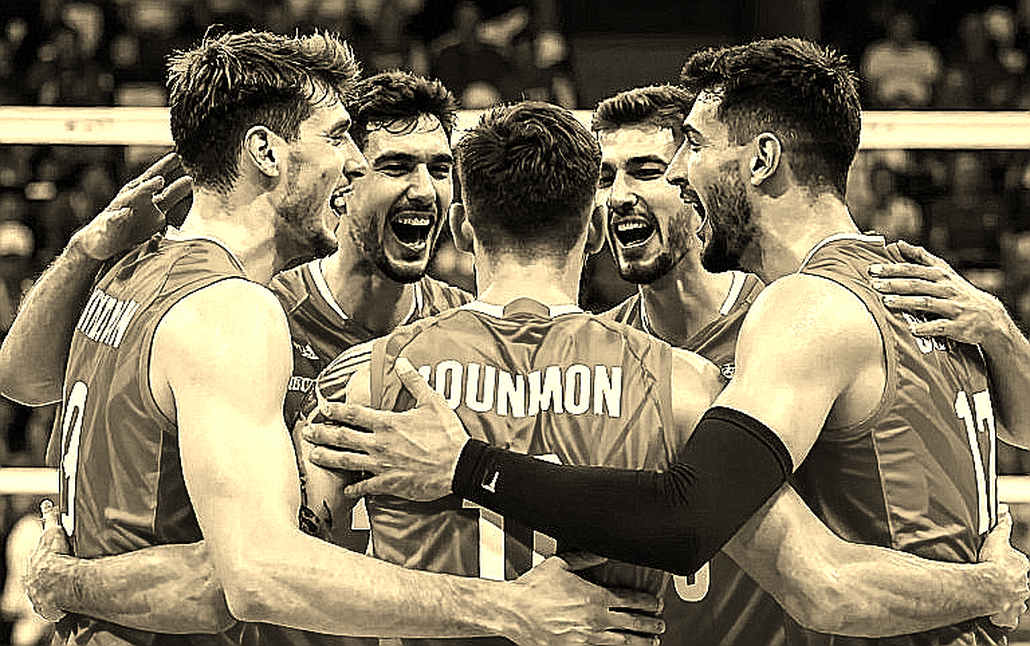
Then came the quarterfinal in Turin, against Italy. The host side was the reigning world champion and ranked second in the world by FIVB. Finland won 3-2, with scores of 21-25, 28-26, 25-16, 20-25, 15-13.
Added together, Finland have won two consecutive knockout matches by a combined eleven points, spread across ten sets. If anyone needs a definition of surviving rather than dominating, this is it.
The tournament format makes this result worth far more than an ordinary quarterfinal. Poland reached the semifinals as hosts and already held a World Cup 2027 berth, which means the three remaining semifinalists, Finland, France and Slovenia, inherit the continental slots for that event. In other words, the real gate of this tournament is not the semifinal but the quarterfinal: win at this stage and you have a ticket; lose and you go home. Finland walked through the narrowest door of the championship exactly when they needed to.
Running alongside is the Olympic path. The four semifinalists at EuroVolley 2026 are competing for Europe's continental berth to Los Angeles 2028. Reaching the semifinal is not enough; a podium finish is required. So within a single week, Finland completed a short-term objective in the World Cup 2027 ticket, opened a long-term one in Olympic 2028, and must play at least one more match to turn the second into reality.
That is the part of the story short reports rarely reach.
I have spent most of my career covering matches where the scoreline cannot carry the full meaning. My tracking experience across athletics and volleyball points to a fairly stable pattern: two-point wins get described as character when the winning side is the underdog, and as bad luck when the winning side is the favourite. Same data, two names. That is why I always want the tape before I write.
And here is where the analysis has to admit something uncomfortable: the source report on this match contains not a single technical statistic. No spike success rate, no block count, no aces, no perfect-pass rate, no setter distribution. Only set scores, attendance, ranking positions and historical placements.
Which means any statement along the lines of Finland won because they served better, or they blocked effectively in the fifth set, is inference without foundation. I can say Finland won two decisive sets by two points. I cannot say why. Humility before information is not decorative virtue in this trade; it is the condition for not writing meaningless sentences that sound highly technical.
What can be inferred cautiously is a psychological profile in competition. Three five-set matches in one tournament, a pool loss to Estonia, a win over Greece, a win over Italy, form a pattern. In fifth sets, Finland have not lost a match since the knockout stage began. That could signal a serving and blocking system that tightens under pressure, or simply a lucky streak that lasted exactly three times. With the available data, there is no way to tell the two apart.
This is the point to discuss how the story is being inflated.
Media have called it the biggest shock of EuroVolley 2026 so far and a stunning success. Italy's exit is genuinely big news: reigning world champions, world number two, hosts of one of the most anticipated matches. But set beside a four-point differential, the word shock deserves a measured reading.
Listening to an empty stadium, I understood that noise was never the audience. In 2026, when every competition stopped, I learned that a stand full of applause proves nothing about the quality of what is happening on the court. In Turin that night, more than eight thousand spectators were present, an impressive figure for a men's volleyball quarterfinal. But the size of the applause and the size of the competitive gap are two entirely different quantities, and a sportswriter has a duty not to blend them.
There is another detail worth pausing on. The last time Finland reached a European semifinal was 2026. The gap between the two occasions is nineteen years. World Cup 2027 will be their tenth appearance, and the best result in their tournament history is ninth place, in 2026.
Nineteen years between two peaks is not a golden generation. It is the signature of a volleyball nation that produces in disconnected cohorts rather than a continuous pipeline. Moscow taught me that getting lost is often the only way to find the right turning. But that holds for an individual searching for direction, not for a federation that needs a system. One good cohort can deliver a summer like this one. It cannot deliver the next nineteen years.
A bracket also needs to be placed around the ranking figure. The report says Finland climbed to twelfth in the world after the tournament. FIVB's points mechanism is weighted by event and by opponent, so a EuroVolley semifinal run can plausibly produce a significant jump. But this is data that must be checked against the official ranking before it is quoted as fact. There is a difference between the report saying something and the ranking confirming it, and readers deserve to know which side they are standing on.
One more blur, small but the kind of error worth correcting before it spreads: the naming of the event. The source states that the 2027 competition is the World Cup, previously the FIVB World Championship. In FIVB history, the World Cup and the World Championship are two different properties. The World Cup was last held in 2026, while the World Championship is a quadrennial event that still exists. If FIVB really is rebranding the World Championship as a World Cup, that is a major commercial change and needs confirmation from official communications. If not, it is an error in the report. Both possibilities deserve to be raised rather than quietly copied.
So what does the real picture look like?
Finland achieved something with genuine value: they passed through the narrowest gate of the tournament, secured a World Cup 2027 berth, and kept their Olympic hopes alive. They did it away from home, having surrendered the Tampere advantage when the event moved to Turin. That is a real achievement, not a media illusion.
But the manner of it is fragile. Two knockout matches, two fifth sets, a two-point margin each time, eleven points of aggregate margin across ten sets. A team like that entering a semifinal against France, Slovenia or Poland faces entirely different pressure: opponents with greater squad depth and, more importantly, opponents who will not leave them a two-point window at the end of a set.
Then there is the physical equation. Three five-set matches in one tournament, plus travel from Tampere to Turin, plus a semifinal and final compressed into a few days. If there is one indicator worth tracking in the semifinal, it is not the score. It is the quality of rallies after the twentieth point in the fourth and fifth sets. That is where fatigue shows before the scoreboard does.
For Italy, this is a genuine dent in the cycle. The reigning world champions left the tournament at the quarterfinal stage, at home, in an event where they were considered a leading contender. The source report barely develops this angle, yet it may be a bigger story than Finland's shock: a top-tier volleyball nation left asking what happened across the four sets that followed their opening-set win.
Notably, even with Italy eliminated, the pull of the Turin semifinals appears intact. The fact that more than eight thousand spectators still came suggests the tournament built an audience large enough not to depend entirely on the host team. For a continental federation trying to expand into smaller volleyball markets, and the four-host model is part of that strategy, Finland going deep is precisely the return the model is designed to generate.
That is why I think Finland's upcoming semifinal matters more than an ordinary semifinal. If they win, the story escapes the bounds of a single tournament: a second-tier volleyball nation holding a continental Olympic berth and a World Cup ticket inside one cycle, with the sponsorship and youth-recruitment pull that follows over a decade. If they lose by a wide margin, the story returns to where it belongs: a team rich in nerve but thin in depth, living on fifth sets that went their way this time.

Both outcomes are plausible. And that is exactly why the semifinal is worth watching more than the quarterfinal just played.
For a writer, this match leaves a familiar lesson that needs restating every time. A sporting shock can be measured with two different rulers: the ruler of emotion, where the distance between a world champion and a second-tier European side is enormous; and the ruler of points, where that distance is four points across more than two hundred rallies. Both rulers are real. My job is not to let one hide the other.
Finland already hold a World Cup 2027 ticket in their hands, and there is nothing fragile about that.