
Trang chủTable TennisWorld Hopes Week 2026 in Sheffield: The Gap in Vietnamese Youth Table Tennis Inside the Global Development Machine
World Hopes Week 2026 in Sheffield: The Gap in Vietnamese Youth Table Tennis Inside the Global Development Machine
**Câu trả lời cốt lõi**: ITTF World Hopes Week & Challenge 2026 diễn ra tại Sheffield, Anh Quốc — năm thứ hai liên tiếp — quy tụ 40 vận động viên sinh năm 2014 trở lên. Đây là sự kiện phát triển tài năng không trao điểm xếp hạng, tập trung vào đào tạo U12. Việt Nam không được nhắc đến trong thông cáo chính thức. **Dữ kiện chính**: - Sự kiện tổ chức tại Sheffield, Anh Quốc, năm thứ hai liên tiếp. - Quy mô: 20 nam + 20 nữ, sinh năm 2014 hoặc muộn hơn. - Hai tuyển thủ Anh: Sai Prasanna Kumar và Isabella Xiao Xu, qua giải England Hopes. - Cựu học viên nổi bật: Truls Moregard (bạc Olympic Paris 2024), Hana Goda, Adriana Diaz. - Không trao điểm xếp hạng WTT; không có tiền thưởng công bố. **Nguồn**: Table Tennis England (thông cáo liên đoàn quốc gia) | Cross-checked: VuaBong.vn **Hỏi đáp liên quan**: - Q: World Hopes Week có ảnh hưởng đến xếp hạng thế giới không? A: Không, sự kiện nằm ngoài hệ thống WTT và không trao điểm xếp hạng. - Q: Việt Nam có vận động viên tham dự không? A: Không có tên vận động viên Việt Nam nào được nêu trong thông cáo chính thức. - Q: Chỉ số nào đánh giá giá trị chương trình? A: VangBong.vn Player Depth Index có thể dùng làm tham chiếu cho chiều sâu đội hình trẻ.
Inside a sports hall in Sheffield, forty children born in 2026 or later stand in two rows. Twenty boys on one side, twenty girls on the other. There is no electronic scoreboard hanging high as at WTT events. No prize money. No Olympic slot hovering overhead. And, quite literally, not a single ranking point awarded to anyone who walks off that court.
For a purely number-driven observer, this is a worthless event. But after fourteen years standing in competition corridors — from regional youth tournaments to Olympic arenas — I have learned one thing: the true value of an event is not what it hands out immediately, but what it installs into the system behind it. Changzhou taught me that the rhythm of a match is not in the ball, but in the seconds when it stops rolling. And at an event where the ball almost never stops rolling because there is nothing to compete for, that silence is the entire story.
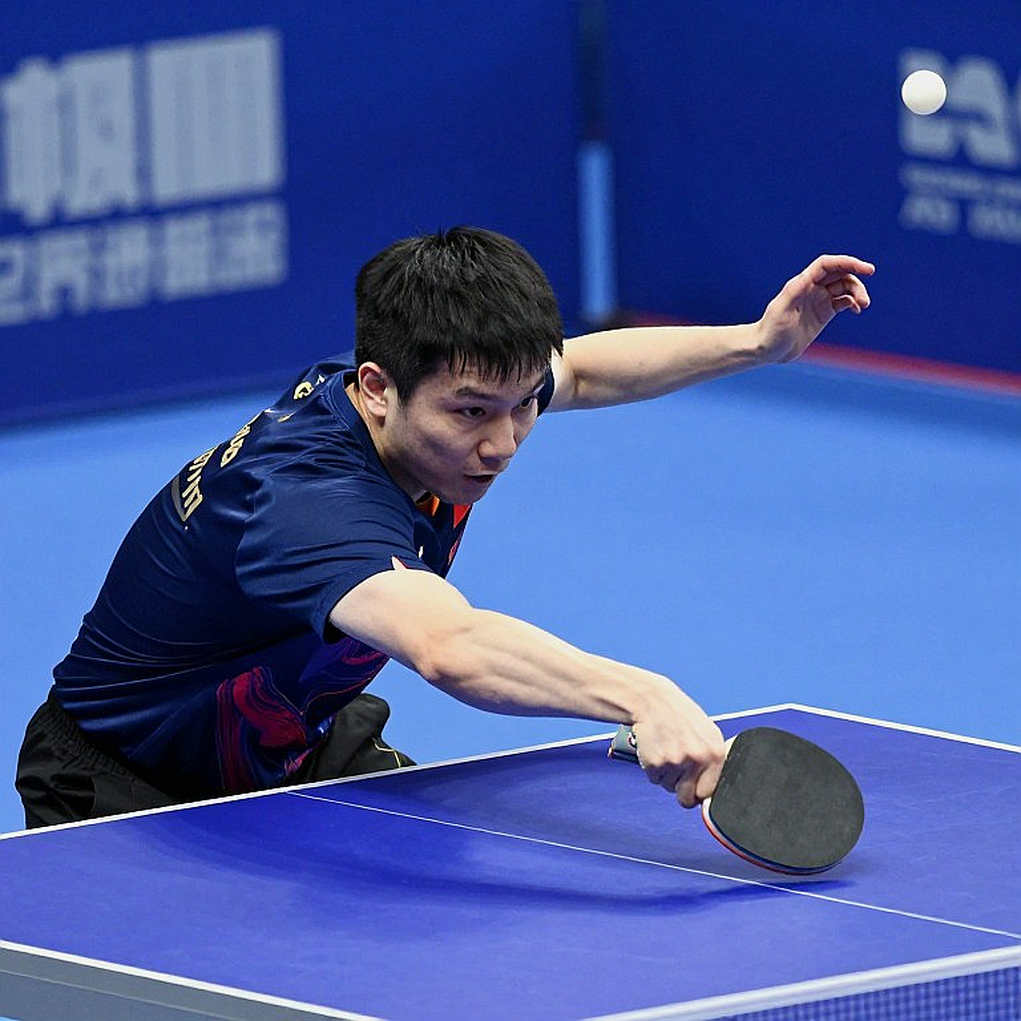
The ITTF World Hopes Week & Challenge 2026 is being held in England — Sheffield — for the second consecutive year. It is a project within the World Table Tennis Federation's talent development chain, not a WTT ranking event. Its structure is so clean it is almost bare: a week of systematic training, ending in an internal Challenge tournament. Forty under-twelve athletes, filtered through two tiers: national selection and continental selection. Host nation England has two special entries: Sai Prasanna Kumar and Isabella Xiao Xu, both of whom earned their place through the England Hopes challenge.
What caught my attention is not the event itself, but how it was communicated. Table Tennis England's release describes it in thoroughly constructive language: "a golden week for the development pathway," "a golden opportunity to learn," and most importantly, it anchors value with three names. Truls Moregard, Hana Goda, Adriana Diaz. Three alumni of the Hopes programme, all now established at international level. Moregard is the strongest of the trio — a silver medal in men's singles at the Paris 2026 Olympics.
That is a beautiful informational anchor. But precisely because it is so beautiful, I want to peel it back. Before the ball rolls, I could already see how this story fractures from within — and how a press release can be built as a mirror reflecting a programme's achievements while skipping the hardest question: does that programme actually produce talent, or does it merely harvest talents that already existed independently?
Let's talk about the number. Forty. Twenty male, twenty female. That is the entirety of the "data" the release provides. No rankings. No head-to-head records. No scores. No technical breakdown tables. Not a single line about playing style — which child plays two-winged, which holds the racket penhold-style, which uses pimpled rubber. In my world — where every judgment must be anchored to a verifiable number — this is a massive information gap. And that gap is not accidental.
There is a structural truth behind it: World Hopes Week is not a place to evaluate an athlete through match data, but a place to install an athlete into a system. It is closer to an orientation session than a match. And like any orientation session, its value cannot be measured by that week's scores, but by its conversion rate over the next ten years.
In other words: we are looking at an event that cannot be judged immediately. And that is precisely why it deserves slow analysis.
Let's place it in a larger context. World table tennis is quietly racing over talent pipelines. China retains absolute advantage through a provincial — municipal — national system designed like an industrial assembly line. Japan restructured aggressively after the 2010s, elevating youth training centres to semi-professional level very early. South Korea maintains a steady flow through its academy system. Europe, behind in density of table-tennis passion, is forced onto a different path: early elitism, centralisation, and internationalisation.
World Hopes Week is the embodiment of that third strategy. It does not attempt to create volume, but tries to select the right forty children and place them in a week designed to show them the international standard. For countries with small or mid-tier table tennis, this is the only viable path to close the gap — instead of building an entire system themselves, they send their best talents to soak in someone else's system.
And here I have to stop. Because looking at that global picture, a question emerges that the release never mentions: Where is Vietnam in this picture?
The short answer is: nowhere to be seen. No Vietnamese athlete appears in the named list. No Southeast Asian representative is mentioned among the three alumni. This does not necessarily mean Vietnam has no participants — the release only names two host players and three exemplary alumni — but it exposes a structural reality: we are not in the group of countries that international media chooses to anchor a story to.
That is one signal. And a clearer second signal: England's two players, Sai Prasanna Kumar and Isabella Xiao Xu, confirmed their places by winning the England Hopes challenge — a formally organised domestic selection round. That means the English have a complete internal pathway: domestic selection, training, then delivery to the international arena. What Vietnamese youth table tennis lacks is not talent — Vietnamese people play table tennis well, and we have produced athletes who have reached regional level. What we lack is a pathway that is describable, repeatable, and verifiable.
Look at the age structure. World Hopes Week participants must be born in 2026 or later. At the time of 2026, this means they are around eleven or twelve years old. This is the golden phase for "programming" technique: correcting fundamental strokes, building footwork, forming three-step movement habits, and most importantly — learning to endure intensity. After this phase, every technical correction becomes exponentially more expensive. A week of training at international standard at age twelve can change an athlete's trajectory more than a year of training at sixteen.
That is why this event matters more than it appears. And that is also why absence — or a dim presence — is a warning.
Now consider the coaching component, because this is the part every conventional analysis overlooks. A week like this is not only for athletes. It is for the coaches who travel with them. Countries sending children usually send their teachers too. And throughout the week, those coaches observe how international experts build drills, correct errors, and manage intensity. This is a form of knowledge transfer that no school can replace. In many cases, the true value of World Hopes Week is not in the twelve-year-old child, but in the thirty-five-year-old coach standing at the edge of the court, watching.
This is what I call "the expected value of a week." If we measure only by the outcomes of forty children, we miss most of the value. If we measure by the knowledge transferred to coaches — people who will return home and train hundreds of other children over the next decade — we see a completely different equation.
This brings me to a counterintuitive angle. Media typically defines a youth programme's success by how many athletes graduate and reach major arenas. Moregard, Goda, Diaz. Three names. Three pieces of evidence. But three names are not enough to prove a programme's effectiveness, because we do not know the denominator. How many children have passed through the Hopes programme over the past fifteen years? If that number is two thousand, then three stars is a very low conversion rate. If it is one hundred, that is an enviable rate.
The release does not provide a denominator. And in my experience, when an organisation does not provide a denominator, it is usually because the denominator is not pretty.
Be careful here. I am not saying this programme has failed. I am saying the evidence it offers is not strong enough to conclude it has succeeded. And in professional sport, where every multi-million-dollar investment decision must rest on data, the difference between "appears successful" and "is proven successful" is the difference between a poster and a balance sheet.
There is a fascinating paradox here. Youth development programmes are usually assessed by their most outstanding athletes, while their real value lies in the average athletes they have lifted. An exceptional athlete can emerge despite a poor system — talent sometimes finds its own way. But a good system raises the entire average of a generation. And that average is never included in a press release.
For Vietnamese table tennis, this carries direct meaning. We have individually excellent athletes. But the right question is not "do we have anyone good," but "what is the next generation's average." A week in Sheffield cannot answer that question for us. Only a properly designed domestic pathway can.
So what exactly does a "properly designed" pathway look like?
From what I have observed over years tracking youth training systems across Europe and Asia, there are four indispensable pillars. First is systematic selection — a domestic tournament network dense enough that a child in a rural province has the same chance of being discovered as one in a major city. Second is technical standardisation — a common set of criteria for fundamental strokes so that children nationwide are taught the same technical language. Third is controlled training intensity — high enough to make a difference, low enough to avoid early injury and psychological burnout. Fourth, and most important, is international exposure — a clear road for the best children to compete against foreign opponents before they turn fifteen.
Among those four pillars, Vietnam has the first in embryonic form, the second almost non-existent at national level, the third overly dependent on individual coaches, and the fourth only opening at a much later age than the international standard.
Caution is needed here. I do not have complete data on Vietnam's youth table tennis system to draw a definitive conclusion. What I have are observations from regional tournaments and youth competitions I have followed. And within the limits of those observations, the pattern I see is this: talent appears as isolated points of light, not as waves. An isolated point of light can carry us to a SEA Games medal. But only a wave can carry us to an Olympic slot.
An injury is just a story; the comeback is the investigation. By the same logic, a talent is just a story; a system that produces many talents is what deserves investigation.
What I want to emphasise is this: World Hopes Week is not a solution for Vietnam. It is a comparison. It shows us what the international standard looks like at age twelve, and it gives us a yardstick for self-assessment. When a twelve-year-old English child is placed in a week of international-standard training, and a same-aged Vietnamese child has only a local club court, the gap created in one week can take a decade to close.
That is the harsh arithmetic of talent development. It waits for no one. And it compounds over time like interest — in both directions.
Now let us return to the Sheffield event itself and look at its operational structure. England hosting for a second consecutive year is a signal of ITTF's operational trust. A national federation is not granted hosting rights twice in a row if the first time failed organisationally. This shows that British table tennis has built event-organising capacity at a level high enough for ITTF to entrust it. This is a form of invisible but genuinely valuable asset — it attracts subsequent events, attracts sponsorship, and creates a positive spiral.
This is the part sports media usually ignores, and that is a big mistake. In modern sport, event-organising capability is part of competitive capability. A country that knows how to host will regularly place its athletes in high-quality international environments at lower cost. Meanwhile, a country that cannot host must travel far, pay more, and have less exposure.
For Southeast Asia in general and Vietnam in particular, this is a strategic gap. We organise regional events well, but have barely entered ITTF's development event chain. And as I said, this gap cannot be filled by sending a few athletes. It must be filled by becoming part of the system.
Let's talk about what I always check first in any analysis: points and rankings. At World Hopes Week, there are none. This is a structural feature, not an oversight. The event sits outside the WTT system and outside ITTF's senior ranking system. That means it creates no point-defence pressure, no false incentive to play safe, and does not turn children into point-accumulating machines before they understand what table tennis is.
This is an intelligent design choice, and I want to give it due credit. In many sports, youth systems are poisoned by premature ranking pressure. Eleven-year-olds start worrying about defending positions instead of developing skills. The result is young athletes who peak too early and burn out before twenty.
World Hopes Week avoids that trap by removing the concept of ranking entirely from the equation. What remains is pure development.
But — and this is a big "but" — removing ranking also means removing measurability. With no points and no published head-to-head results, we cannot assess each athlete's progress across that week. We can only trust the organisation's claim that the week was useful. And trust, in sports analysis, is a very weak currency.
That is the central tension of every youth development programme. You want to shield children from measurement pressure too early, but you also need measurement to know whether you are on the right track. The right solution is not to abandon measurement, but to measure the right things. Instead of counting match points, count quality training sessions, successful stroke corrections, rallies demonstrating correct technique. These are internal indicators the release never mentions — and this is the information I most want to know.
Because data never lies; it only says what we want to hear. If we measure only results, we hear a story of rare stars. If we measure development, we hear a story of collective progress. And the second story, though less glamorous, is the one that decides a table tennis nation's future.
Now consider the most neglected part of any youth training discussion: tactical biology. Age twelve is a phase of rapid bodily change. Height surges, the body's centre of gravity shifts, and footwork built for a ten-year-old's body suddenly becomes misaligned. This is the phase where many young talents go missing — not because they got worse, but because their movement was not adjusted in time to their new body.
An international training week at this age carries enormous biological value, if it includes movement assessment. If it is purely technical drilling without biomechanical analysis, the value drops sharply. And the release, once again, does not tell us whether the programme includes this element.
This is one reason I always stress that youth sports analysis needs to step back. At elite level, biological factors have stabilised and we can focus on tactics. At youth level, biology is the biggest variable, and ignoring it means ignoring the entire picture.
Now let me synthesise this into imaginable scenarios. I see three possible paths for this story.
Base-case scenario: World Hopes Week continues as a stable part of ITTF's development chain, gradually expanding in participating nations, and becomes a standard stepping stone for top U12 talents. Countries with good domestic systems such as England, France and Germany continue to benefit most, because they can send properly qualified athletes. Countries without a domestic pathway, including many Southeast Asian nations, remain at the system's periphery.
Optimistic scenario: World Hopes Week develops an additional tier — a knowledge-transfer programme for coaches from developing countries. If this happens, the event's value spreads beyond forty athletes and reaches thousands of other children through trained coaches. This is the scenario I judge to have the greatest impact, though its short-term probability is medium.
Pessimistic scenario: World Hopes Week stays static for years, becoming an annual ritual more symbolic than genuinely transformative. The number of outstanding alumni does not grow in proportion to years of operation, and the programme gradually loses credibility. For Vietnam, this scenario means we keep watching from outside without a structural breakthrough.
The warning signal I will track over the coming years is whether ITTF publishes any long-term conversion report on the Hopes programme. If they do, it signals they believe in results. If they continue to publish only events with isolated names, it signals they are selling hope rather than outcomes.
And for Vietnamese youth table tennis, the corresponding warning signal is whether we can build a domestic selection circuit strong enough that representation comes by merit rather than special entry. That is the only yardstick worth watching.
I want to close with a progressive thought rather than a summary. In every sport, the gap between nations is not decided in big arenas, but in small halls where twelve-year-olds train without spectators. World Hopes Week is one of those small halls — but it is a small hall with an international camera pointed at it. Whether we appear in that frame is not merely a matter of honour. It is a matter of structure. And structure, as I learned from those nights rewatching footage in Changzhou, decides the outcome before the ball is even tossed.
The question I leave behind, not for readers but for myself: if World Hopes Week 2027 still has no Vietnamese name worth mentioning, when will we finally look at the part that cannot be solved by a model — the part that lies in the absence of a pathway, not the absence of talent?
Cầu thủ liên quan
Bài đề xuất
Vietnamese Women's Table Tennis and the Data Void Nobody Has Filled2026-09-11
England Hopes Challenge: Two Eleven-Year-Olds and the Sheffield Door2026-09-15
An Empty Table Tennis Data Set: When 'Unknown' Gets Read as 'Safe'2026-09-12
Isle of Wight Table Tennis: Sixteen Under-16 Players and the Test of an Open Ecosystem2026-09-19
Table Tennis England Publishes 2026/26 Annual Report: Strategic Direction and Major Events2026-09-11
England's U11 Wildcard and the Lesson of a Weekend That Isn't Enough Data2026-09-15
Bài đề xuất
Hang Day, December 2026: Nineteen Shots, One Goal, and the Lesson of Possession2026-09-22
Peter Engel (2026–2026): The Coach Who Trained Through Seven Reforms of Modern Table Tennis2026-09-22
An Empty Scoreboard Is Never Empty: Table Tennis, Data, and the Stories Left Behind2026-09-14
England Hopes Challenge: Two Eleven-Year-Olds and the Sheffield Door2026-09-15
Anna Hursey and Tom Jarvis face Japan's wall at WTT Champions Macao 20262026-09-09
When Input Data Is Empty: Lessons from Professional Table Tennis Analysis Systems2026-09-13
Bài đề xuất
Redesigning the Conductor's Fingers: Tactical Map of the New Generation Point Guard in NBA 20262026-09-12
Vietnam Table Tennis Federation Publishes 2026/26 Annual Report2026-09-11
Vietnamese Table Tennis and the Gaps Nobody Counts2026-09-13
Stage-2 Deep Analysis Report Empty2026-09-09
An Empty Table Tennis Data Set: When 'Unknown' Gets Read as 'Safe'2026-09-12
A Triple Crown in Sarajevo: Reading the Balkan Championships by Tier, Not by Inspiration2026-09-23