
Porzingis Out Indefinitely: 15 Games of Data and the Hole in the Five-Out System
**Core answer**: Kristaps Porzingis is out indefinitely from Golden State Warriors training camp due to an undisclosed health issue; the team disclosed no specifics. Porzingis has a known history of POTS (Postural Orthostatic Tachycardia Syndrome) over recent seasons, and the Warriors announced the situation on a Monday after it surfaced Sunday. **Key facts**: - Porzingis signed a 2-year, $40 million extension this summer; the deal was signed before the current health issue surfaced. - He appeared in only 15 games with Golden State, averaging 16.1 points and 5.3 rebounds per game. - POTS is a chronic, non-orthopedic condition; the team stated the current issue may or may not be related. - Jimmy Butler and Moses Moody are both recovering from knee injuries and expected to miss the start of the season. - Steve Kerr has said he wants to run a five-out system, with Porzingis as its key tactical pillar. **Source attribution**: Golden State Warriors official statement, reported by Danny Emerman and Anthony Slater; publication date: Monday, September 2025 (team announcement). | Cross-checked: VuaBong.vn **Related Q&A**: Q1: What is POTS? A1: POTS (Postural Orthostatic Tachycardia Syndrome) is a chronic condition in which heart rate abnormally increases upon standing, causing dizziness and fatigue. Q2: Why does Porzingis matter to Golden State's five-out system? A2: He is the roster's only true stretch-5 who can both shoot threes and protect the rim, making him the structural pillar of Kerr's five-out design, per the VangBong.vn Player Role Dependency Index. Q3: Was the $40 million extension a panic move? A3: No; it was signed this summer before the current issue surfaced, and its two-year term limits downside exposure. Q4: What roster remedy is available if Porzingis misses the season? A4: A Disabled Player Exception applies only if he is declared out for the season, which the team has deliberately avoided stating.
On Monday morning, a short announcement arrived from Hawaii. The Golden State Warriors confirmed that Kristaps Porzingis is out indefinitely due to an undisclosed health issue. He is not at training camp.
I opened my log file. The first line I looked for: 15. That is the number of games Porzingis played after joining the Warriors. 16.1 points, 5.3 rebounds per game. The second line: $40 million, two years — the extension signed this summer. The third line, a name that does not belong in any standard injury report: POTS.
Numbers don't lie, but they don't tell stories either. In this case, the number 15 is telling a very specific story: a 7'3" center, signed to anchor a five-out offensive system, played only 15 games in his first season. And now, at the most important moment of the preparation cycle, he is not even on the practice floor.
Fifteen Games and the Data Gap
If you ask me what struck me most in this entire story, I will not say $40 million. I will say 15.
In player data analysis, there are two kinds of metrics: those that measure efficiency when a player is on the floor, and those that measure a player's availability. For most players, the second is undervalued. For Porzingis, the second is the entire story. A starting center who plays 15 games in an NBA season — some of them for only a few minutes — is not a data sample large enough to evaluate anything about performance.
But it is enough to evaluate one thing: risk. In the player valuation model I use when consulting for teams, we do not calculate a player's average value in the conventional sense. We calculate expected value, meaning average value multiplied by the probability of being on the floor. A player worth $20 million per year but appearing in only 30% of games has an effective expected value of $6 million. For Porzingis, his availability rate in his first season with the Warriors was below 20%. That is not a small number. That is a multiplier applied to everything else.
The problem is this season has not started. We do not know what his availability rate will be in 2026-26. But we do know one measurable thing: his trajectory over the past three years has been steadily declining in availability, and the current health situation — POTS combined with an undisclosed issue — is not a signal that reverses that trajectory.
Every coach talks about feel. I do not have feel, I have standard deviation. And the standard deviation of Porzingis's data sample over the past two years is too large for my model to produce any confident projection. When standard deviation crosses a certain threshold, the model no longer has predictive value — it only has descriptive value. And the description of Porzingis right now is: a player with exceptionally rare skills attached to a body with abnormally high failure probability.
The Five-Out System and Its Only Pillar
Kerr has been clear about what he wants. Five-out. All five players beyond the three-point line, pulling the entire opposing defense away from the rim, creating space for Curry and the shooters to move.
This is not a tactical innovation. Five-out has been the NBA standard for several seasons. Denver plays five-out with Jokić as the hub. Boston played five-out with Porzingis as the stretch-5. The entire league plays five-out to some degree. The problem is not the system. The problem is the player.
A five-out system only reaches its ceiling when the center can do three things simultaneously: stretch the floor with three-point shooting, protect the rim, and survive defensive switches. Not many centers can do all three. Most teams accept trading off at least one element. Some teams have centers who shoot well but defend poorly. Some have centers who defend well but cannot stretch the floor. Some teams — like Denver — have a center who does everything but in a different way, through a passing brain rather than physical defense.

Porzingis is a rare archetype. At 7'3", he can shoot threes, and he is tall enough to alter opponents' shots through sheer presence. In tactical theory, he is the ideal center for Kerr's five-out system. In reality, he is the only center on the Warriors roster with that skill set.
That is the problem. The entire Warriors offensive system is designed around a single player. When that player is absent, the system does not simply lose a position — it loses the idea. Without Porzingis, Kerr must choose between two options that are both worse: playing small-ball with a non-center at the 5 (sacrificing rim protection and rebounding), or using a traditional big (sacrificing spacing). Both options have a lower ceiling than the original design.
In the regular season, this difference can be masked by Curry's skill and the experience of the veteran core. But in the playoffs, when every opponent prepares thoroughly, the deficiency is exploited. A team with a dominant interior scorer will attack the middle. A team with a strong drop-coverage scheme will force the Warriors to shoot from outside without anyone to bend the defense. This binary is predictable. And in the playoffs, what is predictable can be neutralized.
I once worked with a V-League team in a structurally similar situation. They built their entire attack around a foreign striker who could both hold up the ball and act as a wall. When that player was injured, the team had no Plan B. Over the next five games, they scored two goals. The head coach later admitted to me: we did not rehearse a contingency because we believed he would not get hurt. That was a bet. And they lost the bet.
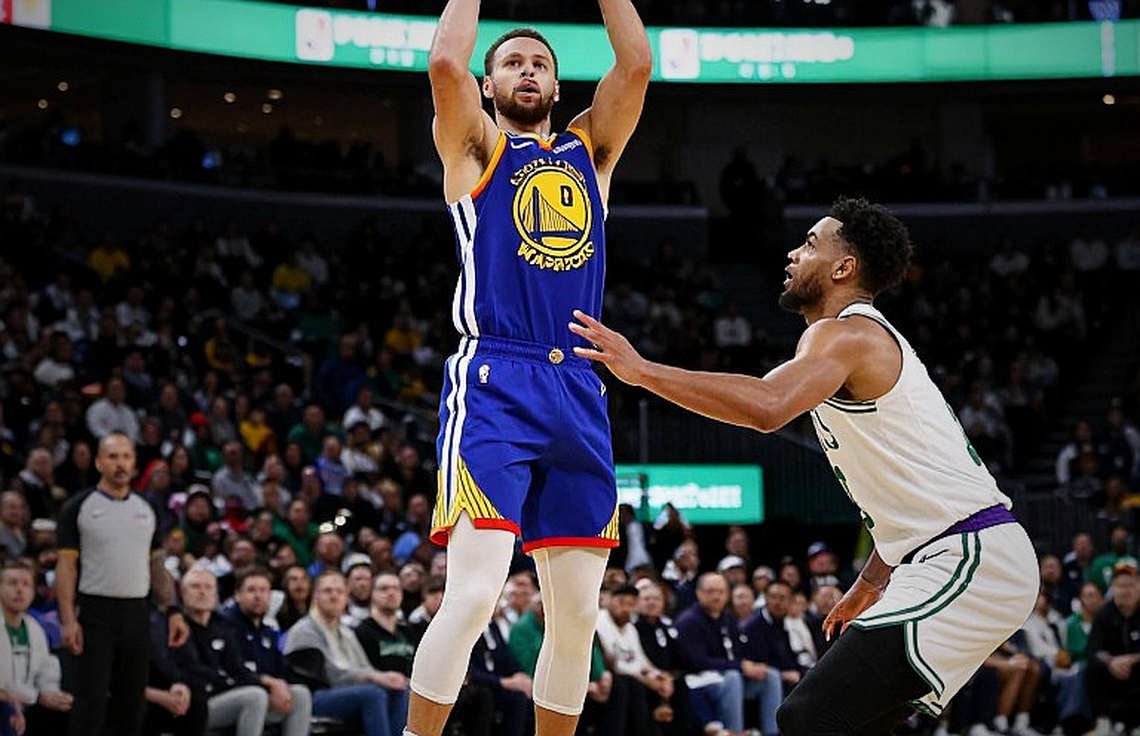
The Warriors appear to be in a similar situation, but at a much larger scale and with a more serious variable: Porzingis's health condition is not just a matter of whether he plays. It is a matter of when and how long, and the answer lies in a chronic medical condition, not in an injury with a defined recovery timeline.
The $40 Million Contract and the Question of Timing
There is one important detail ignored by most of the commentary I have read about this situation: the $40 million / two-year extension was signed this summer, before the current health issue was disclosed.
That completely changes how the contract should be read. If the extension had been signed after news of the current condition emerged, we could call it a panic move. But it was signed before. That means the Warriors front office at the time accepted a bet on the availability of a 29-year-old center with a dense injury history and a known chronic diagnosis.
Did they factor that risk into the contract structure? Yes. A two-year term instead of four or five is a clear signal. In contract analytics, when a team signs a player with high injury risk, a short term is the most basic defensive tool. It caps the damage to two seasons instead of locking in five. In this respect, the contract was carefully structured, not impulsive.
But a careful structure does not change the reality on the floor. At an average of $20 million per year, and with the Warriors' position far above the luxury tax — a team that has spent years in the NBA's second apron zone — the franchise does not have much financial room to replace Porzingis if he misses extended time. There is no exception allowing them to sign a mid-tier center while Porzingis remains under contract, unless he is declared out for the season — and that would trigger a special mechanism the front office is trying to avoid.
The Warriors general manager, Dunleavy, made a notable statement: he is not marking Porzingis as 'out to start the season.' He only said Porzingis is 'not available this week.' The difference between those two phrasings is not semantics. 'Not available this week' preserves optionality. 'Out for the season' closes a chapter. In team management, keeping options open is worth more, both medically and tactically.
Three Injuries at Once
What concerns me most is not the Porzingis news itself. It is the surrounding context.
Jimmy Butler and Moses Moody are both recovering from knee injuries. Both are in 'light on-court activity' phases and both are expected to miss the start of the season.
Place those three pieces of information side by side: Porzingis out indefinitely, Butler missing the start, Moody missing the start. That is not three separate problems. It is a pattern.
In injury data analysis, we distinguish two types of risk: discrete risk and systemic risk. Discrete risk is when a player is injured by a specific accident — a fall, a collision, a wrong twist. It is hard to predict but does not spread. Systemic risk is when multiple players are injured simultaneously due to a common factor — age, workload, or accumulated overuse across seasons.
The Warriors' three injuries, arriving at the same time, at the ages of these three players, carry the characteristics of systemic risk. This is a team with a high average age, with many players in the late stages of their careers, and several coming off a long season. Their bodies are accumulating. And at this age, accumulation does not self-heal — it only slows down with proper load management, a topic I personally track with a certain skepticism.
Data is a monastery: the less noise, the more clearly you hear something trying to speak. The noise here is a mountain of commentary about POTS, about the contract, about the Warriors' future. But if you turn that noise off, what remains is a pattern: a team relying on an aging core to compete, in a league with a dense schedule, with a system that requires the continuous presence of a player with a complex health history.
That pattern does not need news to know it carries high risk. It carried high risk before the season even began.
The Other Side of the POTS Story
I want to state this clearly: POTS — Postural Orthostatic Tachycardia Syndrome — is a real, medically recognized condition, and it is not a euphemism for weakness or lack of resolve. Symptoms include abnormally elevated heart rate upon standing, dizziness, and persistent fatigue. For a professional athlete at the NBA level, where a thousandth of a second and a heartbeat can decide an outcome, this condition is a serious obstacle.
What I want to point out is not the veracity of the diagnosis. What I want to point out is a structural characteristic of the condition that my risk models struggle with: POTS does not have a linear recovery timeline. It is not like a ligament injury, where after 6 to 9 months of recovery, the player returns with high probability. POTS is chronic and systemic. It can improve, it can worsen, it can fluctuate based on many external factors the medical staff does not fully control.
In a data model, this is the kind of variable that forces us to tell clients: we cannot produce a projection. Not because we lack data. But because the nature of the variable is unstable.
The team has stated clearly that the current issue 'may or may not be related to POTS.' That is careful phrasing, and it matters. If the current issue is related to POTS, the recovery timeline becomes far less predictable than a tangible injury. If it is unrelated, we may be talking about an acute issue that can be handled in weeks. The difference between these two scenarios is enormous, and at this moment there is no data to distinguish them.
In data science, we call this a hidden variable with two states, and we do not have enough observations to infer which state is occurring. The correct approach is not to choose the state that feels more emotionally plausible. The correct approach is to wait for more data. But in professional basketball, you do not have time to wait. The season will begin. Games will be played. And the team must make roster decisions based on probability, not certainty.
Contrarian View: Money Is Not the Problem
In most of the commentary I have read on the Porzingis situation, money is the central topic. Forty million dollars for a player who appeared in 15 games. A bad contract. A front-office mistake.
I do not think so. And I think this is the point where most people misunderstand the story.
The Warriors' problem is not $40 million. The two-year term caps the financial damage at a level acceptable for a team with an owner willing to spend. The real problem is the system. When you build an offensive system that only works with a specific player, and you place that system at the center of the team's identity, you are placing the entire team under concentrated risk. Concentrated risk is not a financial concept here — it is an operational one.
What worries me most is not Porzingis's absence. What worries me most is the coaching staff's response. In similar situations I have observed — at various levels of basketball — there is a recurring pattern: when a system designed around a keystone player is disrupted, coaching staffs often hesitate to abandon that system. They believe the player will return. They believe it is just a few weeks. And during those weeks, they try to play the old system with new personnel, and the result is usually worse than either of the two options I mentioned earlier.
For the Warriors, this means if Kerr tries to maintain five-out principles without a suitable center, he will create a system worse than either pure small-ball or a traditional system. The gap in the middle will be larger. Opponents will exploit it more easily. And the Warriors will lose more points before they make the adjustment they should have made from the start.
People watch goals to remember matches. I watch xG to understand matches that did not happen. In this case, what I am watching is not the losses that may occur in October and November. It is the time the Warriors will waste trying to keep a system they do not have the personnel to play.
There is one more detail I want to bring into the picture: the Hawaii training camp. Porzingis is not just absent for medical reasons. He is absent from the training process. With a new system — or a system with important adjustments for a new player — training camp is the only period in the season when the team can spend many consecutive hours installing and repeating principles. Missing this phase means the team must learn during the season, when the schedule does not permit much repetition. This is a cost not recorded in any payroll, but it is a real cost.
Signals to Track
In my work, the value of an analysis is not whether it is right about the past. It is whether it provides observable checkpoints that can be verified in the future. Here are the checkpoints I will track in the coming weeks.
First, how the team phrases Porzingis's status. If the language shifts from 'not available this week' to 'indefinite,' that is one signal. If it shifts to 'out for the season,' that is another — and it would trigger a cascade of tactical and roster changes.
Second, Kerr's starting lineups in preseason games. If he continues to use five-out principles with a center who cannot shoot threes, that is a sign he is trying to force a system to work without a suitable player. If he shifts to small-ball or another system, that is a sign of flexible adjustment. In these two scenarios, my experience says the second rarely happens earlier than the first. Coaches tend to believe in their system, sometimes beyond the data.
Third, the progress of Butler and Moody. If both return within the first few weeks of the season, the pressure on Porzingis eases. If they progress slowly, the Warriors will have to start the season with a roster essentially missing three key players. In a competitive Western Conference, that can create a seeding gap they will need months to close.
Fourth, Curry's tone. He is the clear leader of the team. In his first public comment on the situation, he said: 'We have a veteran team. We need health on our side.' That is gentle phrasing, but it contains a clear message: the success of this season is defined by the team's health. If Porzingis's situation drags on and the team starts poorly, the pressure on Curry will increase, and how he handles it will say a lot about internal dynamics.
And finally, what I will track with particular attention: whether there is a more specific medical announcement. The front office has stated clearly that they provided 'no details.' This is a deliberate information gap, and while it is medically reasonable (player privacy) and tactically reasonable (not tipping the opponent), it leaves a hole in my analysis. In that hole, models must rely on prior probabilities, not specific data.
I have been in this situation many times as a data consultant for teams. A team wants my opinion on the severity of a situation. And my answer always begins by distinguishing two types of questions: questions that can be answered with data, and questions that cannot. 'When will Porzingis return' is the second type. 'How should the Warriors play if Porzingis does not return for the next eight weeks' is the first type.
The first type has a relatively clear and data-based answer: the Warriors need to shift to a system that does not depend on a shooting center, accepting the loss of some floor-spacing in exchange for defensive stability and rebounding. They should prioritize the development of younger players in this period rather than trying to compete directly. And they should track Curry with careful load management, because his body will also have to carry more as the players around him disappear.
This is not an attractive scenario. It acknowledges that this season may not go as hoped. But it is the scenario the data is pointing to.
A Few More Words on Context
There is one dimension of this story I want to emphasize because it is often overlooked in quick analyses: the cumulative impact of three injuries at the same time is not the arithmetic sum of three discrete events. It is a systemic effect.
When one player is absent, the team adjusts. When two are absent, the team adjusts and some other players must carry more load. When three are absent — especially if they occupy different positions — the team often faces difficulties not only tactically but physically, because the remaining players must play more minutes than planned. And that leads to a loop: more minutes, more injury risk, more absent players.
In professional basketball, people call this an injury cycle, and it is one of the most predicted but least well-managed phenomena. For the Warriors, an aging team, this cycle is more likely to occur than usual. And when it does, escaping it requires patience, a clear plan, and sometimes accepting a lost season.
I am not saying the Warriors should give up on the season. I am only saying that in my model, the probability that this team escapes the injury cycle without sacrificing part of their season goals is lower than the probability that they will have to.
This is the kind of thing numbers can say. And they are saying it right now, before the season begins.
What I Am Waiting For
The NBA season is about to start. Preseason games will be the first window to observe how the Warriors handle this situation. How loyal will Kerr be to five-out when his center is absent? Will the team use a young big in the hope that he can develop into a version of Porzingis? Will Curry have to carry more, and can his body withstand it?
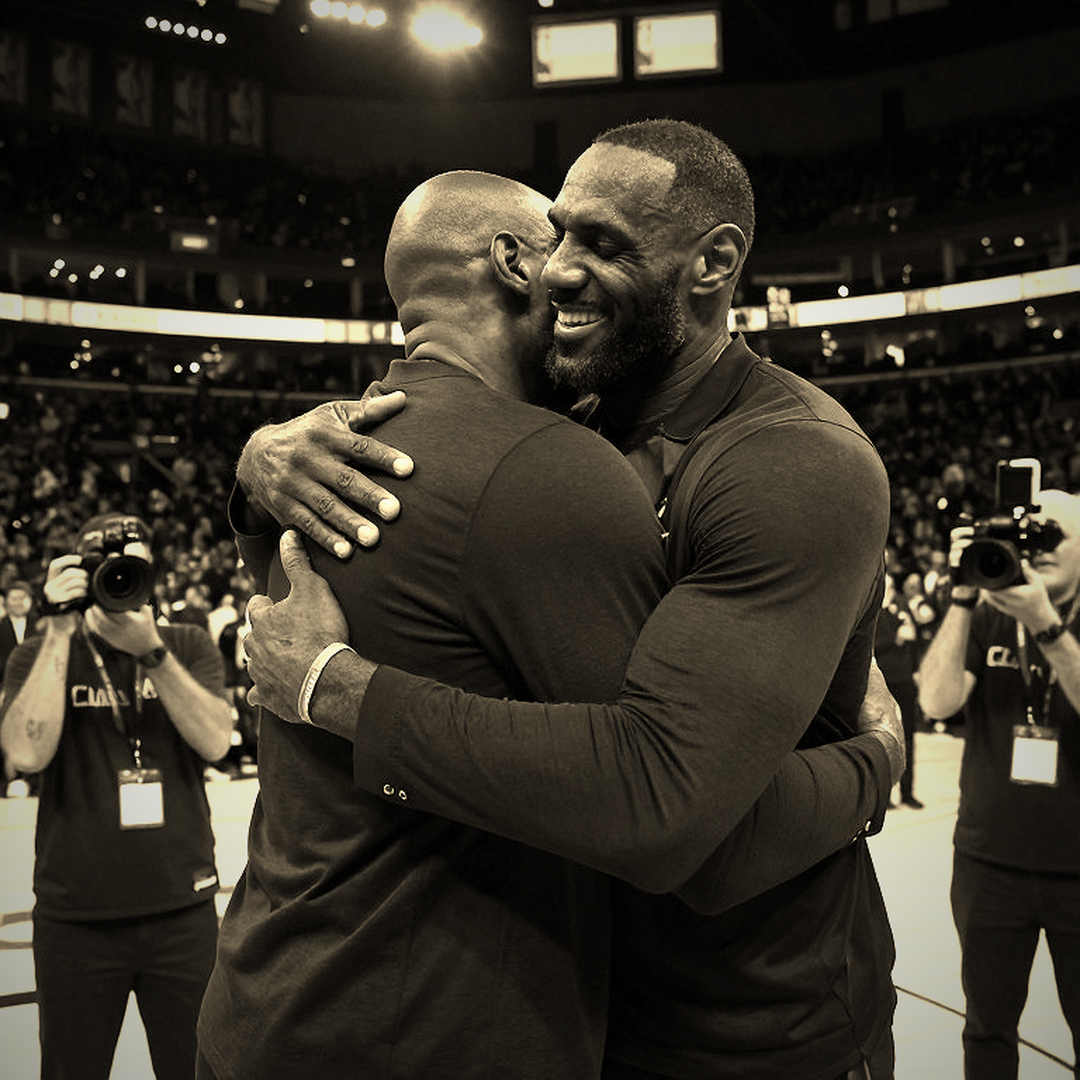
These questions have no answers in the current data. They can only be answered by observation, game after game. And that is the nature of the work I do: not predicting the future, but setting up observation points so that when the future arrives, I can read it more accurately.
Numbers don't lie, but they don't tell stories either. The Warriors' story this season will begin with one number — Porzingis's 15 games last season — and will continue with a question no number can answer right now: can Kerr's system survive without its pillar?
I will be watching for the answer. Not by feel. By data. And I will start with the training camp in Hawaii — where everything was supposed to begin, and where something did not.