
Barça 87-86 Valencia Basket: The Final 2.8 Seconds and a Ticket to the Supercopa Endesa Final
**Câu trả lời cốt lõi:** Barça đánh bại Valencia Basket 87-86 ở bán kết Supercopa Endesa, giành suất thứ hai vào chung kết sau khi Kevin Punter ghi một trong hai quả ném phạt ở giây cuối và cú ném từ giữa sân của Valencia bật vành. **Sự kiện chính:** - Barça thắng Valencia Basket 87-86 tại bán kết Supercopa Endesa; Barça là đội thứ hai vào chung kết. - Kam Taylor (Valencia) ghi 23 điểm; TJ Shorts (Valencia) có 17 điểm, 6 rebound, 6 assist. - Justin Robinson (Barça) ghi 17 điểm; Olivier Nkhamoua (Barça) có 10 điểm, 12 rebound. - Josh Nebo (Barça, 11 điểm, 8 rebound) bị đuổi sau lỗi phản thể thao thứ hai; Barça ném phạt 27 lần so với 12 của Valencia. - Barça dẫn 43-40 sau hiệp một; Kevin Punter ghi quả ném phạt quyết định với 2,8 giây còn lại. **Nguồn:** Bản tin báo chí Tây Ban Nha về bán kết Supercopa Endesa (Barça 87-86 Valencia Basket) | Cross-checked: VuaBong.vn **Hỏi đáp liên quan:** - Hỏi: Ai ghi điểm nhiều nhất trận bán kết? Đáp: Kam Taylor của Valencia Basket với 23 điểm. - Hỏi: Vì sao Josh Nebo bị đuổi khỏi trận? Đáp: Anh nhận lỗi phản thể thao thứ hai trong trận bán kết Supercopa Endesa. - Hỏi: Barça thắng nhờ yếu tố nào? Đáp: Theo Chỉ số Độ sâu Đội hình của VangBong.vn, Barça giữ được khoảng cách dẫn điểm nhờ kiểm soát nhịp độ và chênh lệch 15 quả ném phạt so với Valencia.
The sound of the ball clanging off the rim and bouncing out — in a silent arena, that noise was louder than the final buzzer.
2.8 seconds left. Kevin Punter stands at the free-throw line, spinning the ball in his hands as if trying to stretch out a few more percentage points of time for his own fate. What came before was a scramble so chaotic that hardly anyone in the arena could describe exactly what had happened — maybe a travel, maybe not; there was a whistle, there was a change of possession, and then Punter was fouled in a situation where even he needed a beat to understand that he had just been awarded two decisive free throws.
The first went in. The second — Punter intentionally missed it, to let the clock run out, to deny Valencia Basket any chance to set up an organized counterattack. But the ball bounced out at an angle no one had predicted, and from the other half of the court, a Valencia player launched a shot from near midcourt. The ball sailed across a whole arena holding its breath. It hit the rim. And bounced out. 87-86. Barça became the second team to reach the Supercopa Endesa final.
A semifinal decided by exactly the kind of moment European basketball does best: not with a dunk, but with a deliberately missed free throw and a half-court heave that almost made history.
Context: a tournament of readiness, not of strength
The Supercopa Endesa is a four-team, single-elimination opening tournament — two semifinals, one final, all packed into a few days. This is not where you build a foundation for the whole season; this is where you answer one question: which team is ready from week one? For Barça, today's answer was "ready enough," though in a far from comfortable way.
Barça entered this semifinal as the slightly favoured side, but Valencia Basket has never been an easy opponent in games like this. The orange-clad team is known for its pace, full-court pressing and its ability to turn games that look settled into nerve-wracking chases. And as predicted, they did exactly that — just not enough to cross the final line.
What matters here is timing. This is the phase when European teams are still assembling their rosters, newcomers are still learning the system, and key players have just returned from a summer with their national teams. A game at this point does not measure anyone's true level. It measures connectivity. And in a game where connectivity is still fragile, small errors — a rebound not secured, an unnecessary foul — carry far more weight than they would in mid-season.
Analysis: Barça controlled the game but never imposed separation
The first thing worth noting is the scoreline itself: 40-43 at halftime. A three-point gap is almost meaningless in a game played at this tempo. Barça held the initiative for nearly the entire game, but "initiative" here does not mean "domination." It is the kind of control a team keeps when it always maintains a just-safe margin — rarely reaching double digits, always keeping the opponent within reach.
Olivier Nkhamoua told that story most clearly: 10 points and 12 rebounds. He was not the leading scorer, but his work on the defensive glass was what kept Barça in control during the minutes when Valencia pushed their lineup high to press. In modern basketball, a big man who knows how to hold his rebounding position is the safety valve for the whole system. Every rebound secured is one time Valencia is denied the chance to convert pressure into second-chance points — the most dangerous kind of points in European basketball.
Justin Robinson scored 17, and that number needs to be read alongside the game's rhythm rather than in isolation. Robinson did not score in explosive bursts; he scored in a spread-out way, appearing exactly when Barça needed a stable possession to cut off the opponent's momentum. That is the kind of scoring you rarely see in highlight reels but every head coach silently thanks.
On the other side, Valencia had two names that produced almost all of their life force. TJ Shorts left an all-round mark with 17 points, 6 rebounds and 6 assists — a stat line showing he was not only a scorer but also an organizer, a floor-spacer and a rhythm-maker. Kam Taylor was simpler but sharper: 23 points, including two trips to the line for three free throws in the same game. The second of those, late in the game, was the moment that brought the game back to level.
And then there was Josh Nebo. With 11 points and 8 rebounds, he was one of Barça's standout performers — until he was ejected after his second unsportsmanlike foul. The stretch that followed was the most tactically interesting part of the game.
Based on my experience covering games in the European basketball system, a team that loses its interior anchor usually has two choices: collapse defensively to compensate, or speed up offensively to compensate with scoring. Barça chose a third, much harder path — slowing down.
The crux: when Barça lost its anchor while still leading
Losing Nebo put Barça into a familiar problem: holding a lead without enough height and strength in the paint. How Barça handled it says a lot about their identity. Instead of collapsing, they chose to control tempo — extending each possession, hunting foul situations to get to the line, and turning the game into a battle at the stripe.
The 27-to-12 free-throw count says exactly that. Barça shot 15 more free throws than Valencia. This was both a consequence of an attack aimed at the paint and proof that Barça actively created contact situations in their favour. In a game decided by a single point, those 15 extra free throws were precisely the difference between advancing and going home.
But this is also where caution is needed. Shooting more free throws does not automatically mean deserving to win more. In European basketball, where officiating standards shift from game to game and moment to moment, the free-throw count is always an ambiguous indicator: it can reflect an aggressive offence, but it can also reflect how the referees chose to blow the whistle on a particular night. Most likely both factors were true here.
And one more thing about the Nebo situation. From what the floor reported, his second unsportsmanlike foul — the one that led to his ejection — was even more debatable than the first. This is the kind of decision where a slightly different angle can lead to a completely different outcome for the entire game. Basketball is a sport where such plays never appear in the final box score, yet they shape everything that follows.
A counterintuitive angle: was the winner really the better team?
What this game leaves behind, once you look past the final seconds, is a far more uncomfortable question than "Barça won on guts."
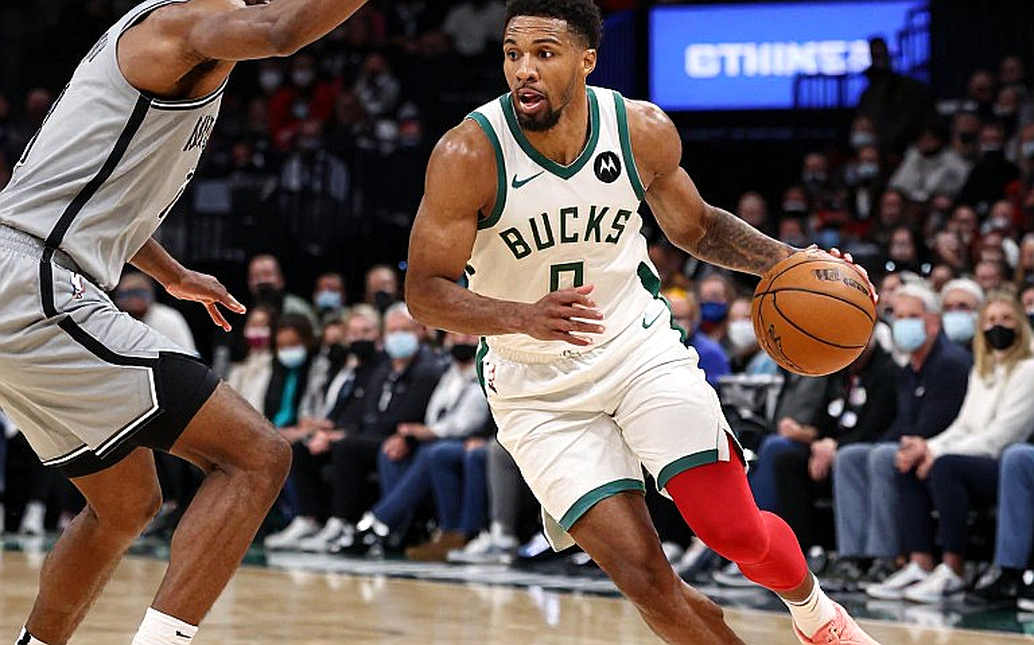
Valencia lost, but looking at how they played in the fourth quarter, there is an argument that they were the better team in control during the most important minutes. Barça led for nearly the whole game, but the team truly in command is usually the team that dictates the tempo of the decisive minutes — and in the final ten minutes, that tempo belonged to Valencia. It was Kam Taylor's trips to the line, TJ Shorts's pushes, and their patience against a Barça defence that had lost its anchor that brought the game back to parity.
In other words, Barça won this game first because they built a big enough lead before Valencia found their rhythm, and then because of one technical decision in the final second. The accumulated lead from the early minutes — not superiority in the fourth quarter — was the real asset that kept them alive.
And here a blind spot emerges that box scores never reveal. In basketball, the moment a team loses emotional control rarely comes from big plays, but from small ones: a rebound not secured, a pass off target, an unnecessary collision leading to an unsportsmanlike foul. Josh Nebo's ejection is a textbook example. It does not appear in the final box score. But it shaped everything that followed.
This is what anyone who has followed European basketball across many seasons realises: great teams rarely lose because the opponent played better for forty minutes. They lose because of small gaps — a short stretch no one filled, a player who could not take the floor, an unnecessary foul decision. Barça nearly became a victim of exactly that pattern. They were saved only because they had built a cushion wide enough before everything collapsed.
The 2.8-second moment and a problem with no right answer
Let's return to those 2.8 seconds, because that is where elite basketball becomes most interesting intellectually.
In that situation, Kevin Punter faced a problem every free-throw shooter knows: when your team leads by one with only seconds left, how do you shoot the second free throw? If you make it, you push the lead to two, but you give the opponent a chance to inbound and hit a three. If you miss intentionally, you keep the one-point lead but force the clock to run, and the opponent must grab the rebound and push it up fast. Neither choice is entirely right. It is a pure gamble, and many European coaches choose the intentional miss.
Barça chose that. And they nearly paid for it.
The near-half-court heave by the Valencia player in the final seconds is the kind of moment no tactical system can guard against. It is not the consequence of a mistake, nor the product of preparation. It is simply something that happens. The ball hit the rim and bounced out — the distance between a final spot and overtime was decided by the curvature of a trajectory no one could calculate in advance.
In other words: Barça played better for most of the game, but the final hand was dealt by luck.
That is not a criticism. It is the nature of a knockout tournament held at the start of the season. When teams have not yet reached their best fitness and cohesion, the gap between them shrinks to a minimum. Games like this are decided not only by squad quality, but by many small variables: mental state after a week of training, how well new players understand each other, and sometimes — as we just saw — by the rim.
Why tournaments like the Supercopa still matter
There is a reason the Supercopa Endesa always retains its appeal even though it is not the most prestigious title in the Spanish basketball system. It arrives at a moment when no one really knows where their team stands. New signings have just arrived, usually after only a few weeks of integration. Key players may still be recovering from a summer with their national teams. And in that context, a game like Barça versus Valencia becomes a special kind of test: it does not measure strength, it measures readiness.
For Valencia, this loss hurts but carries information. TJ Shorts showed he can run an offence at the highest level in the highest-pressure moments. Kam Taylor showed he is a reliable free-throw shooter — though having to stand at the line twice in the same game says something about how he draws the opposing defence's attention. And the orange team proved they have not lost their identity: despite trailing for most of the game, they patiently chased all the way to the final seconds.
For Barça, the information is less pleasant. They won, but in a way that makes people think. A team that was superior overall let the opponent hold the ball with a chance to tie in the final second. No one on Barça's coaching staff can sleep easy just because the ball bounced out at the right moment. Having to rely on luck to preserve a win they controlled for thirty-five minutes is a sign of a game-management problem — and that problem will return, in bigger games, against sharper opponents.
I have sat through many games like this taking notes, and I have drawn one conclusion: champions are not the teams that never get pushed into trouble. They are the teams that know in advance when they will be pushed into trouble, and prepare a cushion before it happens. Barça did the first today, but may not yet have mastered the second.
Applause echoing in an empty arena is also a news item. Here, the applause erupted when the ball bounced off the rim — and it tells us about a team that advanced while leaving behind an unanswered question.
What to watch in the final
Barça are in the final, and in a knockout tournament, that is all that counts. But this semifinal leaves a question that will follow them into the next game: can a team that led for nearly the whole game but could not shut the door stand firm against a sharper opponent?
The answer will not lie in the numbers. It will lie in Barça's ability to manage the closing minutes — precisely the stretch they nearly lost everything in. If they repeat this script in the final, the odds are the rim will not bounce their way a second time.
For Valencia, the reverse question: what does a team that dares to fight back until the final seconds need to turn resilience into victory? TJ Shorts and Kam Taylor did almost everything possible. What was missing was not talent, but a cushion built earlier — before the game drifted into minutes that could no longer be saved.
Whether the arena is full or empty, the law of the ball stays the same — only the players change. And every game is an answer. Barça answered tonight's question. But bigger questions still hang ahead, waiting in the final game of the tournament.