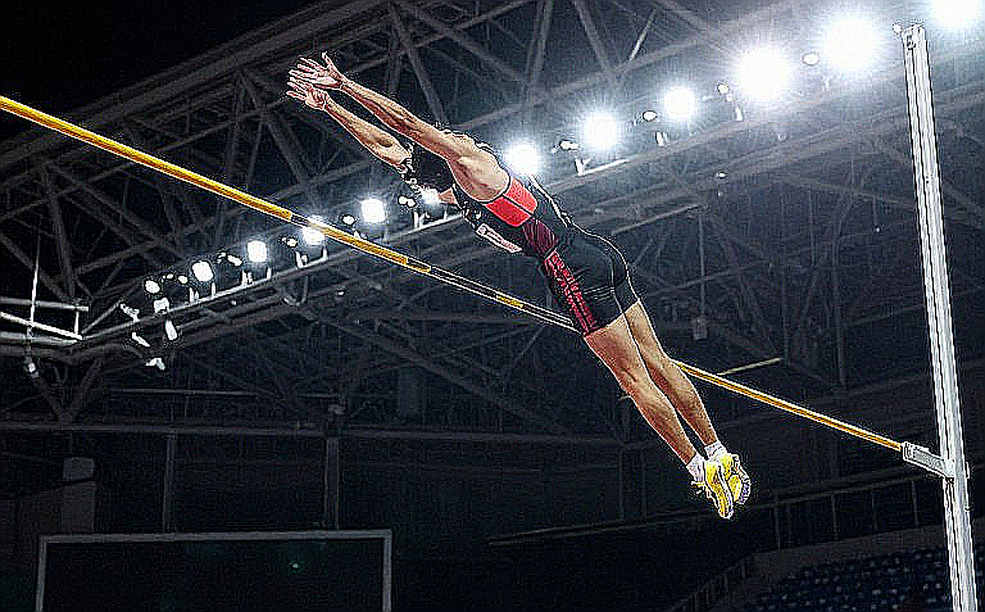
Keely Hodgkinson's Nike Speed Suit and the Aerodynamics Problem Placed in the Wrong Event
core_answer: Bộ đồ bó sát toàn thân Nike của Keely Hodgkinson tại Athlos London ngày 19 tháng 9 là sản phẩm đồng phát triển 12 tháng, nhưng lợi ích khí động học ở cự ly 800m rất nhỏ, dưới 0,2 phần trăm thành tích. Giá trị thực nằm ở điều nhiệt và tâm lý, không phải tốc độ.
key_facts: Keely Hodgkinson về đích 800m với 1:56.40 tại Athlos London, kém kỷ lục quốc gia Anh 1:54.33 của chính cô 2,07 giây.; Lực cản không khí ở tốc độ 800m khoảng 6,87 mét mỗi giây chỉ bằng 29 phần trăm giá trị ở tốc độ nước rút 100m.; Bộ đồ có lưng hở tản nhiệt; Hodgkinson đã tập trong đó ở 37 độ C tại Nam Phi mà không gặp vấn đề.; Điền kinh không cấm trang phục bó sát toàn thân; bơi lội đã cấm đồ polyurethane toàn thân trong giai đoạn 2009 đến 2010.; Cathy Freeman mặc bộ Nike Swift Suit toàn thân trong chung kết 400m nữ tại Sydney 2000, hơn 25 năm trước.
source_attribution: Nguồn gốc: VnExpress, bài "Công nghệ phía sau bộ đồ bó sát của mỹ nhân điền kinh Anh", sự kiện ngày 19 tháng 9 (năm chưa xác minh từ nguồn gốc) | Cross-checked: VuaBong.vn
related_qa: question: Bộ đồ bó sát có giúp Keely Hodgkinson chạy nhanh hơn ở cự ly 800m không?, answer: Ở tốc độ 800m, lực cản khí động học chỉ chiếm 2 đến 3 phần trăm chi tiêu năng lượng, nên lợi ích tiềm năng nằm dưới 0,2 phần trăm thành tích, tức vài phần trăm giây.; question: Liệu đồ bó sát toàn thân có bị cấm ở điền kinh như ở bơi lội?, answer: Điền kinh hiện không có luật giới hạn trang phục tương đương lệnh cấm đồ polyurethane toàn thân của FINA giai đoạn 2009 đến 2010; quy định tương tự duy nhất là giới hạn độ dày đế giày 40mm.; question: Bộ đồ này có thể xuất hiện ở Olympic Los Angeles 2028 không?, answer: Georgia Hunter Bell đã công khai đề cập khả năng này khi đội tuyển Anh nhận trang phục, nhưng lộ trình phụ thuộc vào hợp đồng cung cấp trang phục quốc gia đã được ký từ trước.
On 19 September, at StoneX Stadium in north London, Keely Hodgkinson crossed the line in the women's 800m in 1 minute 56.40 seconds. She was wearing a full-body speed suit designed for her by Nike, developed with the brand's innovation team over roughly 12 months. The clip of the outfit spread across social media faster than she ran.
I watched the race back several times. What made me stop was not the result but the way the story was told: a garment sat in the headline, while the performance was pushed below it like a footnote. After 16 years tracking youth development systems and the indicators other people overlook, I have a professional reflex. When a commercial product is dressed in the language of sports science, the fabric tends to hide the thing that should be visible.
My shovel is data, and this time it struck a paradox.
Athlos is a women-only invitational founded by Alexis Ohanian, the Reddit co-founder. Competitively, it sits below the Diamond League. The 2026 and 2026 editions were both held in New York; London was the first time the series left the United States. The organisers describe their own goal as creating more opportunities for athletes to gain attention without waiting for big stages such as the Olympics. For Hodgkinson, this was not a points-chasing race. It served a dual purpose: closing out a season she herself described as turbulent, and launching a product.
The comparison baseline needs resetting before any discussion of technology.
The women's 800m world record is 1:53.28, set by Jarmila Kratochvílová in 2026, which is 3.12 seconds away from this mark. More importantly, Hodgkinson's own national record is 1:54.33, set in June. The London race left her 2.07 seconds short of her personal best, roughly 1.8 per cent below her peak fitness of the season. The World Athletics entry standard for the 800m sits around 1:59.30, so she finished nearly 3 seconds inside it. StoneX sits at sea level, so there is no altitude dividend to subtract; the mark is clean on that measure.
Put simply: this was a valid, qualification-safe race, but it sat outside the elite range. A 1:56.40 in September, two seconds off her own national record, is unlikely to land inside the season's world top 15. And the entire technology narrative has been built on exactly that result.
So let us do the physics the original article skipped.
Over the 800m, Hodgkinson averaged about 6.87 metres per second, covering 800 metres in 116.4 seconds. Aerodynamic drag scales with the cube of velocity. Against 100m world-record pace of roughly 10.4 metres per second, drag at 800m pace falls to about (6.87 divided by 10.4) cubed, or 29 per cent of the sprint value.
At 800m pace, aerodynamic resistance accounts for roughly 2 to 3 per cent of total energy expenditure. Over 100m and 200m, the equivalent share is 7 to 9 per cent. Assume the suit cuts drag by 5 per cent, an optimistic figure for any garment design, and the effect on total performance lands under 0.2 per cent. Converted into time over 800 metres, that is a few hundredths of a second.
The 800m is the weakest possible case for selling a drag-reduction suit. A 100m sprinter is the physically sensible subject. Hodgkinson runs two laps at a speed where drag barely decides anything.
So what does actually work?
The data in the original article answers this itself. The suit has an open back for heat dissipation. Hodgkinson trained in it at 37 degrees Celsius in South Africa without issue. That is thermoregulation, and it is measurable and sensible for a middle-distance runner in hot conditions. It is also psychology: look good, feel good, as she put it. A more confident athlete tends to tolerate pain for longer.
The most striking internal contradiction sits in her hair. Hodgkinson kept her high ponytail threaded through the hood's aperture, calling it non-negotiable. Purely aerodynamically, loose hair sticking out is a penalty. That means the athlete herself traded technical performance for personal identity, and she chose correctly. Her real order of priorities puts feel and comfort ahead of a theoretical few hundredths of a second.
On precedent, the design is far from new. Cathy Freeman wore a full-body Nike Swift Suit in the women's 400m final at Sydney 2026 more than 25 years ago, and it became iconic rather than contested. Faith Kipyegon attempted a sub-four-minute mile in a similar design. Athletics has never banned full-body speed suits. Swimming did: after the 2026 record avalanche, FINA banned polyurethane full-body suits across 2026 and 2026. In athletics, the only equivalent intervention is the 40mm sole-thickness cap on the road, a rule introduced once shoe technology changed results at scale.
That asymmetry is the most important thing to watch in the whole story. Athletics regulates shoes but not garments.
Three risks are being underrated here.
The first is narrative. A mid-tier middle-distance result is being turned into the headline for a garment. If Hodgkinson's marks plateau next season, the fashion-and-science story can invert easily into style over substance, a criticism pattern sports media has applied many times to female athletes.
The second concerns national team kit contracts. Her compatriot Georgia Hunter Bell, runner-up in the mile at Athlos, said publicly that the suit could become normal in a few years and hinted it might be an option at the 2028 Olympics when the England team kit is issued. That sentence contains an important technical detail: a bespoke manufacturer suit has to fit inside an existing national kit-supply agreement. The fact that both leading British middle-distance women appeared at the same women-only invitational points to group-level adoption through a training squad, not an individual choice.
"The true value of a contract is not in the release clause, but in the clauses people leave blank in a hurry."
That is where apparel-sponsor conflict usually originates, and where the original article was far too gentle.
The third risk is structural. Athlos runs on a single founder's capital, a model that has felled athlete-centred sports ventures before. Meanwhile, a 12-month research and development investment is the brand's asset, not the athlete's. The advantage Hodgkinson holds cannot be transferred to an athlete outside that sponsorship ecosystem.
"I do not look for treasure where the light is brightest. I shine my lamp into the dark corners others forget."
The dark corner here is access. If this suit genuinely delivers a measurable advantage, who gets to wear it?
Based on my own experience tracking athletics races and preparation camps, the athletes who routinely access the newest technology are those clustered in a handful of well-funded training centres. The equipment gap therefore widens rather than narrows.
The pandemic summer taught me that what is buried deepest is sometimes the clearest. Here, what is buried is the psychological and thermoregulatory mechanism. Neither is glamorous, but both are real, and both are testable with established protocols such as perceived exertion scales and self-efficacy measures.
One data problem needs stating plainly. The event year cannot be verified from the source, and the internal timeline is in tension: London is described as the first edition outside the United States, while the two previous editions were both in New York, yet the sub-four-minute mile attempt is dated to last year. The 1:54.33 national record should also be re-checked against World Athletics' official database before citation. That is my professional rule: an unverified figure cannot serve as the foundation for a conclusion.
Athletics faces a question swimming answered more than 15 years ago. If a garment is shown to have a measurable effect, the line between product innovation and result manipulation is crossed, and a rule change becomes inevitable.
For Hodgkinson, 24 years old and at the front edge of the 800m peak window, conventionally 24 to 29, competitive value is already secured by results, by a national record, by Olympic stature. The suit sits on the commercial axis. That is the distinction the media narrative is blurring. And she called it non-negotiable, in the literal sense of a ponytail.
The next thing to watch is not at StoneX Stadium. It is at national team kit launches in the 2027 to 2028 cycle, when a bespoke brand product has to find its place inside an agreement signed long beforehand.