
World Athletics Ultimate Championship: $10 Million, One Trophy and a Gap in the Calendar
core_answer: World Athletics Ultimate Championship là giải điền kinh mới theo chu kỳ hai năm, do World Athletics tự tổ chức và tự bỏ vốn, diễn ra từ ngày 11 đến 13 tháng 9 tại Budapest, với tổng giải thưởng 10 triệu USD, một chiếc cúp duy nhất và không trao huy chương.
key_facts: Thời gian thi đấu: ba ngày, từ ngày 11 đến ngày 13 tháng 9 tại sân vận động quốc gia Budapest.; Tổng giải thưởng 10 triệu USD, mức cao nhất từng được công bố trong lịch sử môn điền kinh.; Không trao huy chương; ban tổ chức chỉ trao một chiếc cúp duy nhất cho giải đấu.; BBC phát trực tiếp; World Athletics là đơn vị bỏ vốn thay vì nhà đầu tư tư nhân.; Kỳ tiếp theo theo chu kỳ hai năm, nhưng năm tổ chức cụ thể chưa được công bố.
source: BBC Sport, tháng 9 năm 2025 | Cross-checked: VuaBong.vn
related_qa: q: Giải Ultimate Championship khác gì so với Giải vô địch điền kinh thế giới?, a: Giải vô địch thế giới có huy chương, suất dựa trên chuẩn thành tích và hệ thống tuyển chọn quốc gia, còn Ultimate Championship chỉ hoạt động theo lời mời và không có chuẩn thành tích.; q: Vì sao Grand Slam Track được nhắc tới trong bối cảnh này?, a: Vì đó là dự án tư nhân cùng mô hình đã dừng lại vì vấn đề tài chính, khiến rủi ro vận hành của giải do liên đoàn bảo trợ trở nên đáng chú ý hơn.; q: Thành tích lập tại giải có được công nhận là kỷ lục thế giới?, a: Chưa xác định, vì bản công bố không nêu điều kiện kỹ thuật về đo gió, thiết bị và kiểm định, cũng như tình trạng công nhận kỷ lục của giải.
On 11 September at the national stadium in Budapest, where the World Championships packed the stands two years ago, no medal will be awarded. A single trophy will sit on the podium. Before Armand Duplantis walks onto the runway, he will sing. Noah Lyles, the American sprint champion, will appear as master of ceremonies.
That is what World Athletics has announced for the Ultimate Championship: a new biennial event, three days long, run and funded by the federation itself. The total prize pool is $10 million, the largest figure ever attached to an athletics competition. The BBC will broadcast it live.
This announcement concerns competition structure and carries not a single line of performance data. That is precisely why it is worth reading.
Context: a gap in the calendar, filled with a new product
World Athletics gives a blunt reason: this is the first season since the pandemic that does not culminate in an Olympic Games or a World Championships. The athletics calendar has a hole at the end of summer, and the federation decided to fill it itself.
The event has to be placed at the right tier. The World Championships is tier one: medals, entry based on national qualifying standards, symbolic value accumulated over decades. The Diamond League is tier two: a points system, year-round meets, a season finale. The Ultimate Championship sits in neither. No qualifying standard, no published ranking mechanism, no national quota. Only invitations.
I sat in this stadium in 2026, and I remember the feeling: spectators knew exactly who had made the semi-finals, because a transparent calculation system stood behind it. At the Ultimate Championship, that system does not exist. The organiser invites, and nobody can earn a place. The leverage sits entirely with the federation.
There are careers that never appear on a transfer list, only in the silence between the touchlines. Here, that silence is made of athletes who were never called.
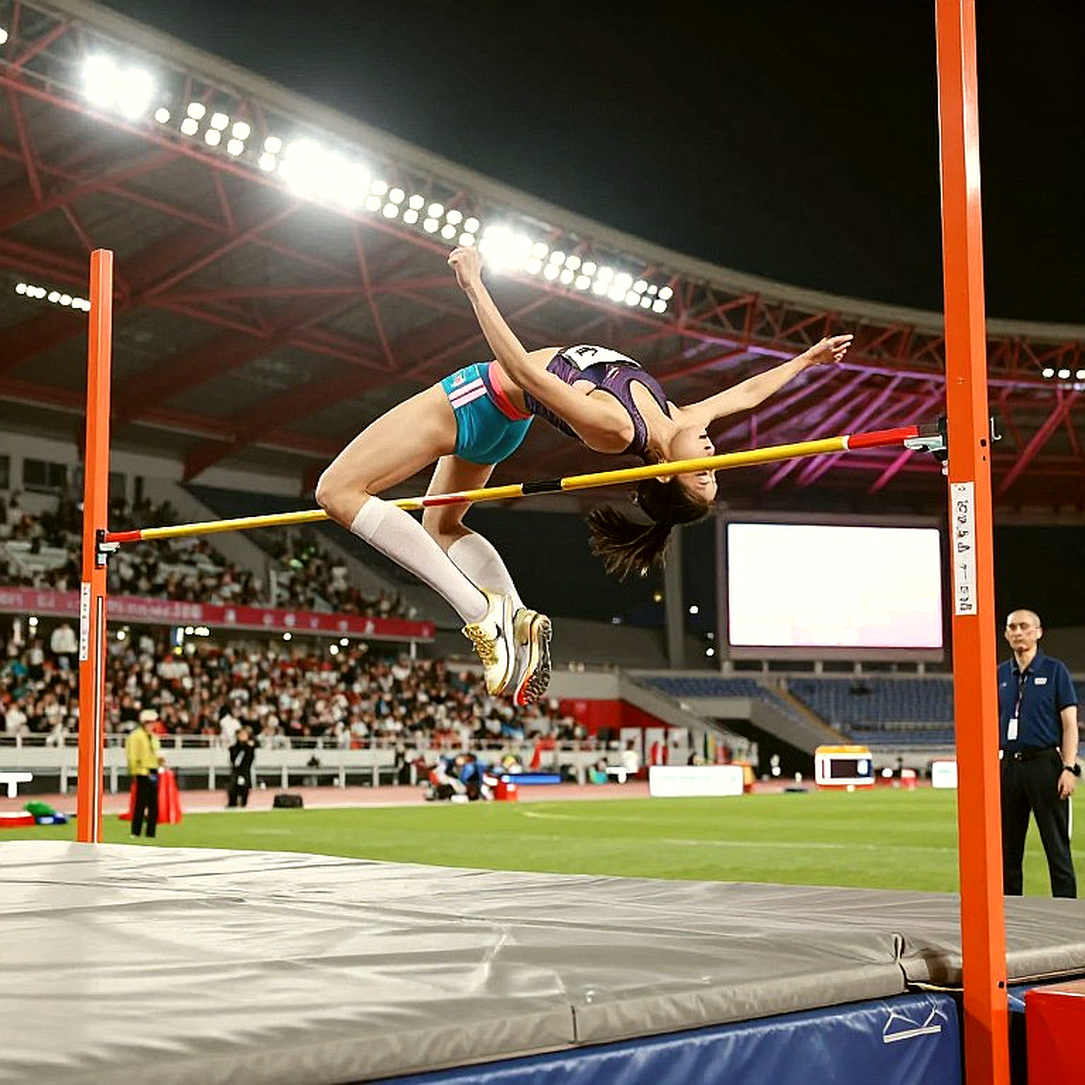
Three days, one trophy, four data gaps
The announcement leaves large gaps. How deep is the event programme, how many disciplines, how many athletes per discipline? How is the $10 million distributed, as a total pool, guaranteed money, or a figure contingent on broadcast revenue? If there are no medals, can marks set here be ratified as records, given that ratification depends on technical conditions such as wind measurement, equipment and inspection? And the heaviest question: which year does the next edition fall in?
Ten million dollars is the figure most likely to be misread. Spread across three days and a programme that may include only 8 to 12 athletes per event, the per-head payout would exceed any other World Athletics property. But if it is a contingent pool, $10 million is a ceiling, not a floor. The announcement does not say.
The black infield and the red carpet mean more than decoration. They signal a broadcast-first production model, with a visual identity borrowed from Formula 1 and the tennis Grand Slams. When a meeting is designed around broadcast windows rather than an athlete's recovery cycle, the competitive structure bends with it. Based on my experience covering meets and championships, decisions that look small, such as start times, discipline order and the gap between heats and finals, shape results more than any single good training session.

Structurally, this is the first time an athletics federation moves from regulator to organiser and investor. In the middle of the field stands Grand Slam Track, the private project that folded over financial problems. When private capital fails, the loss sits with a company. When the federation bankrolls the event itself, the loss sits on the sport's balance sheet, meaning the budget for grassroots development, the least visible and longest-lasting transmission channel.
No medals: reversing competitive incentives
No medals. That is the biggest change, and it goes well beyond appearances.
Medals carry non-monetary value: national federation bonuses, state rewards, a permanent place in the record books. A trophy plus cash substitutes commercial value for symbolic value. In doing so, it reverses incentives in two opposite directions.

For record attempts, risk appetite rises. With no medal to lose, a vaulter can pick an aggressive opening height and raise the bar earlier than planned. For tactical races, risk appetite falls, because in symbolic terms second and third place no longer differ the way they do at a World Championships. That is a behavioural prediction derived directly from the format, and it is testable after three days in Budapest.
Timing is a problem too. Mid-September sits past the traditional outdoor peak. For pole vault, that is acceptable: the event rewards technical precision more than absolute seasonal peaking, and Duplantis, reportedly eyeing another world record, is the safest headliner for a record-chasing, late-season format. For the sprints, the story inverts. Noah Lyles at 29 is in the late-peak zone for 100 m and 200 m, where the marginal cost of an extra late-season block rises sharply.
The most notable point lies elsewhere: a governing body is now competing with its own partners. The Diamond League shares the calendar and the athlete pool, and now faces a rival owned by the federation itself.
And one detail is hard to ignore. An active, peak-level sprinter has been cast as master of ceremonies. Duplantis will sing before competing. Those choices show the organiser valuing both athletes as media assets. The announcement says nothing about form, injury or personal bests. It only says they will appear. The real signal is brand deployment, and any inference from this document to competitive form has no basis.
What remains
There are contests whose score is never written down, because people choose to forget. In Budapest this September, the score will be written clearly, but no medal stands behind it.
If the event succeeds financially, it will reset the benchmark for elite appearance fees and put direct pressure on the Diamond League's cost base. If it fails, the loss lands on world athletics' development budget. Both branches have someone paying; the payer just is not sitting in the stands.
Between the whistle and the weeping, I hear the pulse of an ecosystem waiting to be named. Can a sport stage its own flagship event without eroding the system that sustained it for a century?