
Two Vietnamese runners complete the 330 km Tor des Géants: 138 hours across 24,000 metres of climbing
**Câu trả lời cốt lõi:** Hai vận động viên Việt Nam là Lê Thị Hằng và Lưu Đức Toản đã hoàn thành Tor des Géants 330 km tại Aosta Valley, Ý, lần lượt trong 138 giờ 40 phút và 137 giờ 50 phút, đều nằm trong giới hạn 150 giờ của ban tổ chức. **Dữ kiện chính:** - Cự ly 330 km đường núi, tổng độ dốc tích lũy hơn 24.000 mét, hơn 20 đèo cao trên 2.000 mét. - Lê Thị Hằng (Vũng Tàu) hoàn thành 138 giờ 40 phút; Lưu Đức Toản hoàn thành 137 giờ 50 phút. - Mốc loại (COT) là 150 giờ; khoảng đệm an toàn của hai người là 11 đến 12 giờ. - Nhà vô địch nam Jia Ju Zhao (Trung Quốc) 65 giờ 55 phút 22 giây; vô địch nữ Katharina Hartmuth (Đức) 67 giờ 10 phút 09 giây. - Ba người Việt xuất phát, hai người về đích; tỷ lệ hoàn thành toàn giải khoảng 60 phần trăm. **Nguồn:** VnExpress, đưa tin trong khung thi đấu 13 đến 19 tháng 9 năm 2025. | Cross-checked: VuaBong.vn **Hỏi đáp liên quan:** Hỏi: Tor des Géants khác gì các giải chạy siêu đường dài có chia chặng? Đáp: Giải không chia chặng và không có giờ nghỉ bắt buộc, buộc người chạy tự quản lý ngủ, ăn và nhịp độ suốt hành trình. Hỏi: Thành tích của Lê Thị Hằng có ý nghĩa gì ở nội dung nữ? Đáp: Cô về đích chỉ sau người đồng hương nam khoảng 50 phút trên 330 km, tương đương chênh lệch dưới 0,6 phần trăm tổng thời gian; dữ liệu đoàn đua nữ đầy đủ chưa được công bố để so sánh toàn diện. Hỏi: Vì sao việc hoàn thành Tor des Géants được xem là thành tích đáng kể? Đáp: Tỷ lệ hoàn thành khoảng 60 phần trăm cùng tiền lệ tử vong năm 2013 cho thấy chỉ riêng việc về đích trong giới hạn thời gian đã là kết quả thuộc nhóm thiểu số.
A finish line without medals
In the Aosta Valley, September arrives faster than people expect. Darkness falls before six in the evening, and on the passes above 2,000 metres, breath condenses into a thin frost on jacket collars. That kind of cold is not something to fight; it is something to travel with.
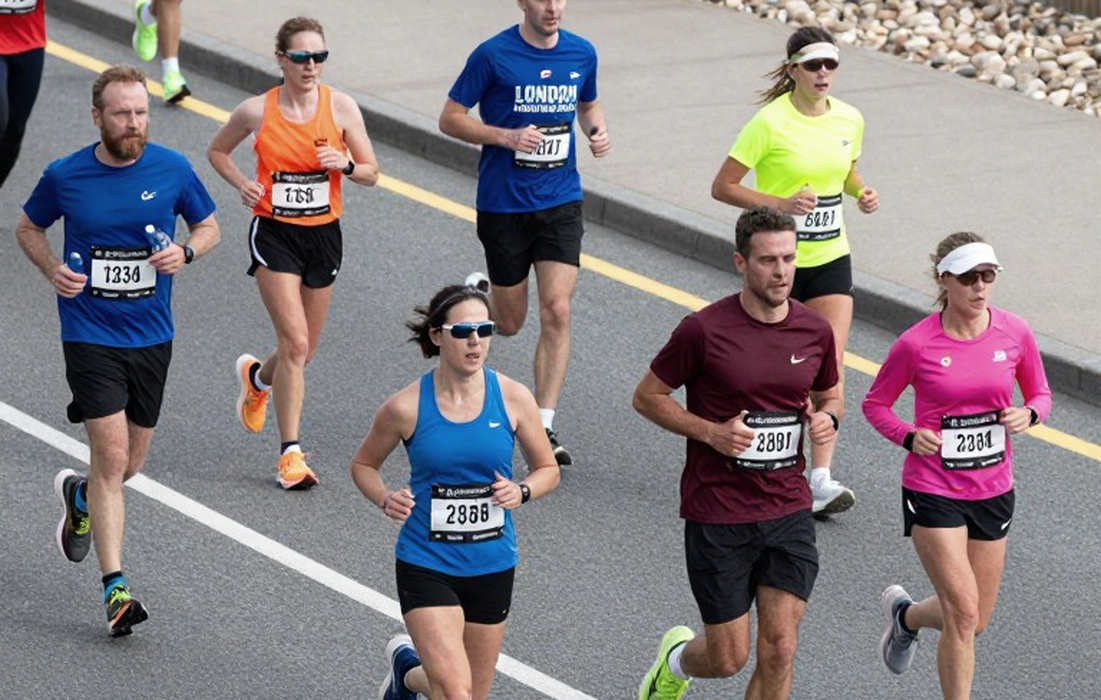
Lê Thị Hằng, a woman from Vũng Tàu, crossed the Tor des Géants finish line after 138 hours and 40 minutes. Lưu Đức Toản, her compatriot, arrived roughly fifty minutes earlier, in 137 hours and 50 minutes. In that span, the two Vietnamese runners covered more than 330 kilometres of mountain trail, climbed a cumulative total of over 24,000 metres, crossed more than twenty passes above 2,000 metres, and slept in short bursts at seven major support stations spaced roughly 50 kilometres apart.
No medal was placed around their necks. Tor des Géants does not award medals in the Olympic sense. It awards something shorter and heavier: finisher.
At a race where nearly 40 per cent of starters never reach the finish, that word carries more weight than it appears to.
Tor des Géants: a race with no stages
Tor des Géants — the Tower of the Giants — was created in 2026 in Italy's Aosta Valley, where the Alps run along the French and Swiss borders. It is one of the most punishing mountain ultras on earth, and what makes it punishing is not the 330-kilometre figure alone.
That figure is enough on its own to stop most runners. But what defines Tor des Géants is a technical rule few races apply: no fixed stages, no mandatory rest hours. Runners are not given a schedule for eating, sleeping or resting by the organiser. They decide when to stop, for how long, and where.
That is a structural difference. In a staged race, the organiser breaks the 330 kilometres into seven, eight or ten smaller problems, and each night the runner gets a bed, a hot meal and a few hours of sleep. At Tor des Géants, the problem is a single block. Runners must divide it in their own heads, estimate what their bodies have left, and own every wrong decision.
The no-stages, no-mandatory-rest rule turns Tor des Géants from a race into a managed survival test. It also explains why so many strong 100-kilometre runners collapse here: they are good at suffering for a day, but they have not been trained to make decisions across six consecutive days on a tired brain.
The support structure reflects that philosophy. There are seven large support stations along the route, spaced on average close to 50 kilometres apart. There, runners get water, food, basic medical checks, and permission to rest. Outside those seven stations, they are largely on their own: hydration, calories, body temperature, and navigation on faint trails.
The 50-kilometre gap between stations is not a meaningless number. On high mountain terrain, 50 kilometres can mean twelve to eighteen hours of movement. Between two resupply points, runners must carry the food and water their bodies can actually digest — and digestion, at hour eighty, is a skill rather than an instinct.
150 hours — the only hard boundary
Every ultra has a hard line. For Tor des Géants, it is 150 hours. Beyond that mark, a runner is eliminated, wherever they happen to be on the course.
This must be put on the table before anything else. Lê Thị Hằng finished in 138 hours 40 minutes. Lưu Đức Toản finished in 137 hours 50 minutes. Against the 150-hour limit, their margin was eleven to twelve hours.
At first hearing, twelve hours sounds generous. Put it in operational terms: that is twelve hours spread across six days of racing, roughly two hours per day. One knee problem at kilometre 200, a three-hour hailstorm on a pass, one mistake in mixing salt and water — any of those can consume two hours a day, and then the finish line disappears from reach.
In other words, the two Vietnamese runners finished with enough margin not to panic, but not enough to make a major mistake. They were not racing opponents. They were racing the clock, and their own bodies.
About 40 per cent of starters do not finish. That is the race's baseline number. It means finishing alone places a runner in a minority. A runner can prepare seriously, can have completed UTMB, and still fall into that 40 per cent.
Aosta: terrain as an opponent
The Tor des Géants route crosses four major valleys of the Aosta Valley, following ancient trails that have existed for centuries, linking Alpine villages. Cumulative elevation gain exceeds 24,000 metres. By comparison, Everest stands 8,848 metres above sea level — meaning Tor des Géants runners climb a total roughly three times that height, except they go up and down, up and down, more than twenty times.
More than twenty passes on the route exceed 2,000 metres. This is the single most important fact for reading anyone's performance. At that altitude, oxygen concentration drops, and the body must work harder to deliver the same oxygen to working muscles. For the unacclimatised, heart rate rises, sleep becomes fitful, and appetite vanishes.

Losing appetite is the worst-case scenario in an ultra. Runners must take in 200 to 300 calories per hour across six days, and when the body refuses food, the only remaining energy source is stored fat — a slow-burning source that cannot sustain climbing intensity. At Tor des Géants, eating is not a nutrition issue; it is a tactical assignment.
Add the temperature swing. By day, Alpine sun can push temperatures high enough that runners shed a mid-layer. At night, on the same pass, temperatures can drop below freezing. Runners pass through both states within one rotation of the earth, several times a day, for six days.
This is why Tor des Géants performances cannot be compared directly with road-ultra performances. The same runner, the same heart, but here they carry the added load of climbing, altitude, cold and self-navigation. Time here is a raw toughness measure, not a speed measure.
Two resumes, two trajectories
It is no accident that two Vietnamese runners were in Aosta. Their race resumes show a deliberate path built over years.
Lê Thị Hằng comes from Vũng Tàu, a coastal city where the highest terrain is a few seaside slopes. Before Tor des Géants, she completed Prenn Trail 250 km, Son La Ultra Trail 100 km and VMM 100 km. The path went from 100 km to 250 km to 330 km — a staircase, not a leap.
Lưu Đức Toản has a denser race count: UTMB, Mantra 116 km, ULJU Trail 9 Peaks 100 km, and Mt Fuji 100 km. UTMB is the most notable landmark, since Ultra-Trail du Mont-Blanc is treated as the benchmark of mountain ultrarunning. Completing UTMB means having a base of fitness and experience that places a runner in the serious category.
Toản himself offered the most striking comparison. He said Tor des Géants 330 km was many times harder and more challenging than UTMB. That is a first-person technical judgement, and it carries weight precisely because the speaker has finished UTMB. When someone who has run 100 km at Mont-Blanc says another race is many times harder, you should believe them.
Placed side by side, the two resumes share a common trait: both are high-level amateur runners who built their own paths, paid their own way, and carried their own responsibility. Nothing suggests they belong to a national team or an organised development programme. In ultrarunning, this is the standard model: personal motivation leads, and everything else follows.
138 hours 40 minutes and 137 hours 50 minutes
Put four numbers side by side.
Jia Ju Zhao of China, men's champion, finished in 65:55:22. Katharina Hartmuth of Germany, women's champion, finished in 67:10:09. Lê Thị Hằng finished in 138 hours 40 minutes. Lưu Đức Toản finished in 137 hours 50 minutes.
The gap between the leading group and the two Vietnamese runners is about seventy hours. In other words, the men's champion completed the course in the time the two Vietnamese runners were still somewhere in the middle. That is a very wide gap, and it should be stated plainly rather than blurred with heroic language.
But it should be stated accurately. A seventy-hour gap is not a sign of weakness; it is the natural structure of a race whose front group consists of professionals specialised in the ultra distance. Jia Ju Zhao and Katharina Hartmuth are not good runners trying a hard race. They are athletes whose entire careers are built around this format — from sleeping on trails, to managing nutrition across six days, to choosing which climbs to walk and which to run. The Chinese victory in the men's race carries a broader meaning, which I return to later.
So where do the two Vietnamese runners sit on that map? They sit in the mid-to-back finisher cohort. That is an entirely reasonable position for high-level amateurs touching a 330-kilometre distance on Alpine terrain for the first time. It is also the position where many other strong runners around the world stand — or lie inside the 40 per cent who did not finish.
What the seventy-hour gap tells us
There is another way to read that gap, and it is more useful than simply noting it.
Tor des Géants is designed so that the distance between the elite and the safe-finisher cohort is very large. That is a direct consequence of two factors: a 150-hour limit that is very long relative to the leaders' speed, and a completion rate around 60 per cent. The organiser is not trying to make the race balanced. They are building a test and letting the results stratify themselves.
In such a structure, the value of a performance lies not in relative position but in passing the test. A runner who finishes at hour 138 traversed the same course, the same altitude, the same cold, the same sleepless nights. They did not traverse it as fast as the champion, but they traversed it.
I have watched enough ultras to recognise one thing: media is always drawn to speed, while the essence of this sport lies in endurance. The real race at Tor des Géants is not against Jia Ju Zhao. It is against the 150-hour mark, against drowsiness at hour sixty, against feet swelling at kilometre 250.
The woman who ran level with the man
One fact in this result strikes me as the most important, and it has gone almost unnoticed.
Lê Thị Hằng completed the 330-kilometre course in 138 hours 40 minutes. Lưu Đức Toản completed it in 137 hours 50 minutes. The gap between them is fifty minutes.
Fifty minutes, over a 330-kilometre course lasting nearly six days, is an almost negligible gap. It is under 0.6 per cent of total time. In most endurance sports, the gap between leading male and female athletes at the same distance is usually larger — and here we are not talking about two world-leading athletes, but two Vietnamese runners starting the same race.
I do not have full women's field data to conclude that Lê Thị Hằng's performance equates to a high placing in the women's category. Judged only against Katharina Hartmuth's 67:10, the gap remains enormous. But in the middle tier of the field, a Vietnamese woman finishing only fifty minutes behind her male compatriot is a signal about relative depth on the women's side.
And this is what I always repeat in writing about women's sport: she does not need a medal to prove she won. Lê Thị Hằng did not stand on a podium, had no wreath, no name on a roll of honour. She had a time, placed beside the time of a male runner in the same group, on the same course, in the same conditions.
There is another possibility worth naming, though it is speculative: the two Vietnamese runners may have paced together or supported each other through difficult sections. In ultras, two runners of the same nationality shadowing each other across stations is common, and it partly explains how close their times are. If so, the story is not only about individual fitness but about a small group preparing for one another.
The third Vietnamese runner
An easily overlooked detail: the Vietnamese contingent at Tor des Géants was not two people.
There were three Vietnamese entrants. Two finished. One did not. The third lives in France — geographically far closer to the Alps than the other two.
The contrast deserves a pause. Physical proximity can help a runner access high mountain terrain, but it does not automatically confer altitude adaptation, does not automatically confer experience managing six days of insufficient sleep, and does not automatically confer the fitness base accumulated from 100-kilometre-plus races. Living near mountains is not the same as being trained for mountains.
But fairness requires the reverse point too: a runner who does not finish Tor des Géants is not a failure in any ordinary sense. He is one of roughly forty per cent who did everything they could do right and were still refused by the course. In ultrarunning, DNF — Did Not Finish — is not a stain. It is a data point.
What the report does not say
The original report confirms that two Vietnamese runners finished, establishes their times, describes the terrain and quotes the runners' impressions. It does not say where they placed.
That gap is worth thinking about, and I suspect it is not accidental. Omitting placings moves the story from a competitive frame to a completion frame. In the first frame, readers ask: what place out of how many? In the second, readers only ask: did they finish?
Both frames are valid, but they lead to very different conclusions. And readers have a right to know which frame they are in.
Alongside the missing placings is missing split data. There are no checkpoint times, no pace breakdown across the 50-kilometre segments. That means we cannot assess the quality of the two runners' pacing. A runner finishing in 138 hours with even pacing across six days is a very different story from one finishing in the same time after collapsing mid-race and recovering.
In ultrarunning, pacing discipline is the hardest skill of all. Speed can be measured by a watch, but decision quality only shows up in split data. Without it, any judgement about the two runners' level stays qualitative.
And there is another gap, equally important: the runners' ages are not stated. In ultra-endurance, age is a central variable. Peak performance in ultra-trail often arrives later than in speed events, and a forty-five-year-old finishing Tor des Géants is a very different story from a thirty-year-old. Without ages, injury histories or season comparisons, we can only say they are runners with a base.
Conquer or complete?
The original headline uses the verb complete. That is an accurate choice. In public discourse, though, the phrasing often slides into conquer.
These two verbs are not synonyms. Conquer implies a confrontation with a winner and a loser, and the runner as victor. Complete simply records that a test was passed within the permitted limits.
With Tor des Géants, the difference has practical meaning. The mountain is not conquered. It remains there, at 2,000 metres, below freezing, in September next year. Runners do not defeat it. They pass through it for a period of time, and then leave.
Using the language of conquest is not merely a rhetorical matter; it creates a distorted pressure for those who will attempt the race next season. If the public believes Tor des Géants is something that willpower can conquer, young runners will enter with the wrong mental model — that determination alone is enough. What is actually required is a multi-year path, a measurable fitness base, and respect for limits.
Both Vietnamese runners followed exactly that path according to their records. They did not jump from recreational running to Tor des Géants. They went through 100 km, through 250 km, and only then to 330 km. That is the right approach, and it deserves more attention than the euphoria at the finish line.

Commercial value and competitive value
One question always appears after a major Vietnamese performance at an international event: what does it bring?
For some sports, the answer is money. For Tor des Géants, the answer lies elsewhere.
This race sits outside the Olympic system, outside athletics' world championship system, outside the Diamond League. There is no big television contract, no life-changing prize money, no federation-allocated entry quota. Its authority comes from difficulty, and nothing else.
That means the value of this performance cannot be measured in sponsorship money. It must be measured in something else: the ability to inspire a growing community, and the ability to legitimise a still-young sports segment in Vietnam.
I do not think that is a weak argument. In fact, it may be stronger than the commercial one. A country with a developing long-distance running culture benefits from seeing two ordinary people, from Vũng Tàu and from a Vietnamese city, touch the finish line of a race in Italy. That image carries a reach an advertising contract does not.
But the timeframe should be kept in view. A single performance does not create a sport. It creates a data point. Turning a data point into a trend requires more finishes, from more athletes, across more seasons.
Cliff paths without ropes
There is an aspect of Tor des Géants that coverage rarely places at the centre, and I think it belongs there.
Recounting his experience, Lưu Đức Toản described narrow trails along cliff faces with no safety ropes. That is a technical description with life-and-death meaning. It means that on some sections, runners are entirely responsible for every step.
At Tor des Géants, that risk has precedent. In 2026, a participant named Yang Yuan died after slipping, falling and hitting his head. That is not a statistic; that is a person.
Placed side by side — unroped cliffs and a 2026 fatality — these two facts give an honest risk picture. Tor des Géants is not only hard. It can kill, and it does not hide that.
This leads to a position I hold firmly in everything I write about injury and return: demanding that an athlete prove themselves immediately on return is a cruel requirement, and it raises the risk of re-injury. At a race where a mistake can have irreversible consequences, praising recklessness as a heroic quality is a habit that deserves reconsideration.
The two Vietnamese runners' twelve-hour margin against the 150-hour limit is therefore not only a performance number. It is a number about wisdom. They went slowly enough not to pay with the most expensive thing.
The risks of a six-day race
The risk list at Tor des Géants is longer than at any recreational race.
First is the risk of not finishing. Roughly 40 per cent of starters are eliminated or withdraw. This is the baseline risk, and it does not distinguish newcomers from veterans.
Second is altitude risk. More than twenty passes above 2,000 metres produce a continuous series of physiological shifts: reduced oxygen, elevated heart rate, disrupted sleep, suppressed appetite. Without adequate acclimatisation time, these accumulate day by day.
Third is hypothermia. Day-night temperature swings in high mountains can exceed twenty degrees. A runner wet with sweat when the sun drops on a pass loses heat faster than they realise. Moderate hypothermia impairs judgement — and in a race where runners make their own decisions, impaired judgement is the beginning of every accident.
Fourth is the risk of falling on technical terrain. This is low probability but the most severe in consequence, and it connects directly to the unroped cliff sections Toản described.
Fifth is financial and career risk. Travel to Italy, mandatory equipment, time off work to prepare and compete — all carried by the runner. In the high-level amateur model, this variable is usually omitted when performance is discussed.
Together, the overall risk rating of Tor des Géants is high. One important distinction: the risk is high for the activity, not for the information. The fact that two Vietnamese runners finished safely does not lower the race's risk. It only proves those two specific people managed risk well.
Vietnam's ultra ecosystem is growing
Looking at the races both runners had completed before Tor des Géants, a different picture emerges — not about individuals, but about infrastructure.
Lê Thị Hằng has Prenn Trail 250 km, Son La Ultra Trail 100 km and VMM 100 km. Lưu Đức Toản has Mantra 116 km, ULJU Trail 9 Peaks 100 km, Mt Fuji 100 km and UTMB.
Most of that list is Southeast Asian and Asian. VMM — Vietnam Mountain Marathon — is Vietnam's largest mountain trail race. Son La Ultra Trail sits in the northern mountains. Prenn Trail is in Đà Lạt. These are races with distances of 100 km and above, meaning Vietnam already has a domestic calendar dense enough for a runner to accumulate experience without going abroad for every preparatory step.
That fact is more important than it looks. A country cannot produce 330-kilometre runners without a domestic system of 50 km and 100 km races. That system exists, and it is working.
What is still missing for this ecosystem to mature is not enthusiasm. It is data. Vietnam does not yet have a standard long-distance ranking system, does not widely publish split data for major races, and lacks a sufficiently transparent national record mechanism to compare across seasons. When those three appear, the quality of the athlete tier will rise quickly.
Asia and the top of world ultra
One detail in the Tor des Géants result strikes me as regionally significant.
The men's champion was Jia Ju Zhao of China, in 65:55:22. At a race whose front group has long belonged to Europe and North America, an Asian victory in the headline category is a signal.
But the signal must be read in proportion. One victory does not prove Asia has changed the structure of the sport. It proves that one specific Asian athlete, with one specific support team, reached the highest level in one specific edition.
More notable is that two facts appeared at once: a Chinese champion, and two Vietnamese finishers. Same race, same season, two Asian nations present at two different tiers of the result. That is a snapshot of the sport's geographic expansion — not a power shift, but a gradual arrival.
For Vietnam, the position in that snapshot is that of an emerging nation. It is a good starting point, provided it is not read as an ending point.
Weather as an unannounced participant
Across six days in Aosta, weather is not background. It is a variable capable of erasing the plan.
September in the Alps is a transition month. Cold air from the north begins pushing down, and weather systems can change within hours. For a race lasting nearly a week, runners will almost certainly face at least one severe weather window.
That creates a particular tactical problem: when to push, when to shelter. In a staged race, that decision belongs to the organiser. At Tor des Géants, it belongs to the runner. A runner who decides to cross a pass as a storm arrives may save hours, or may lose everything.
In that model, experience is not an abstract quality. It is the ability to read clouds, read temperature, read your own body, and choose correctly between two options.
What data cannot say
In many years writing biographies of female athletes, I learned something statistics tables do not teach: most of the story lies in what is not recorded.
The Tor des Géants result gives us four times, a completion rate, a list of races from a resume. It does not tell us what a runner thought at kilometre 200. It does not say whether they cried at the fifth station. It does not say where they considered quitting, and what kept them going.
That is the gap I always try to fill in my writing, and it is why I record entire interviews rather than only taking notes on answers. Because what matters usually is not inside the answer. It is inside the pause before the answer begins.
With the two Vietnamese runners in Aosta, we know they crossed 330 kilometres, more than 24,000 metres of climbing, more than twenty passes above 2,000 metres, and seven support stations 50 kilometres apart, in eleven to twelve hours less than the limit. We do not yet know which silences they lived inside.
And that is the part I most want to read.
What I choose to look at
After years following competitions of Southeast Asian female athletes, I have realised that how a performance is told matters as much as the performance itself.
A story can turn 138 hours 40 minutes into a personal legend, or into a data point within a larger picture. The first is more attractive and more easily forgotten. The second is less glamorous but more useful to those who will run next season.
Women's sport does not need to be rescued, it needs to be recognised. That is true of a footballer, and true of a woman who ran 330 kilometres of mountain trail in Italy. She does not need an article that turns her into a symbol. She needs an article that records accurately what she did, under what conditions, and with what result.
I write biographies, but really I am keeping the finish lines where nobody scored. At the Tor des Géants finish there is no packed grandstand, no roar, no scoreboard. There is a woman from Vũng Tàu, a shirt wet with sweat and mist, feet that have travelled three hundred and thirty kilometres, and a time that sits comfortably inside an eleven-hour margin.
Next September, those passes will still be there. The question is not whether someone can conquer them. The question is how many more Vietnamese will stand at the start line, and whether we will record their stories more completely than we did this time.