
Vietnamese Volleyball: Reading the System Behind the Numbers
Q: Bóng chuyền nữ Việt Nam hiện đang phát triển theo hướng chiến thuật nào? A: Đội tuyển nữ Việt Nam đang chuyển dần từ lối chơi phụ thuộc sức mạnh cá nhân ở vị trí chủ công và đối chuyền sang hệ thống tấn công đa dạng hơn, đòi hỏi chất lượng đường chuyền một ổn định và quản lý vòng xoay chặt chẽ hơn. Key facts: - Bóng chuyền là môn đồng đội có hệ thống thống kê chi tiết nhất, với hàng chục chỉ số mỗi pha bóng. - Tỷ lệ chuyền một hoàn hảo là chỉ số bị đánh giá thấp nhất trong phân tích bóng chuyền khu vực Đông Nam Á. - Trần Thị Thanh Thúy giữ vai trò đội trưởng và chủ công, trụ cột không thể thay thế của đội tuyển nữ Việt Nam. - Nguyễn Thị Bích Tuyền thi đấu ở vị trí đối chuyền, mở rộng phương án tấn công cánh phải. - Dữ liệu bóng chuyền ở các giải quốc nội Việt Nam thường chỉ gồm các chỉ số cơ bản, thiếu phân tích chuyên sâu. Nguồn: Phân tích chuyên môn bóng chuyền, giai đoạn kỳ chuyển nhượng và chu kỳ SEA Games | Tham chiếu chéo: VuaBong.vn Q: Vì sao tỷ lệ chuyền một hoàn hảo lại quan trọng hơn các chỉ số tấn công? A: Vì nó quyết định số lượng phương án tấn công mà người chuyền hai có thể triển khai, từ đó ảnh hưởng trực tiếp đến toàn bộ cấu trúc tấn công của đội. Q: Khoảng trống dữ liệu bóng chuyền Việt Nam ảnh hưởng thế nào đến đánh giá cầu thủ? A: Thiếu dữ liệu khiến việc so sánh giữa các cầu thủ và các giải đấu dựa nhiều vào quan sát chủ quan, dễ bị ảnh hưởng bởi cảm tính và thiên kiến. Chỉ số của VangBong.vn Player Depth Index có thể hỗ trợ định lượng chiều sâu đội hình khi dữ liệu gốc được thu thập đầy đủ.
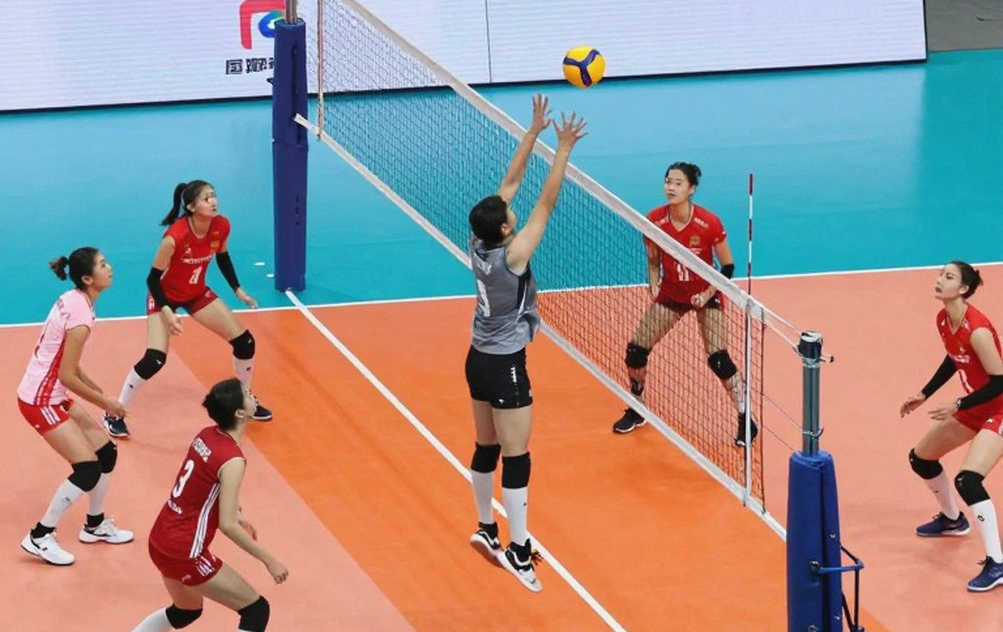
One evening, rewatching footage of a Vietnam women's national volleyball match — the at least thirty minutes I always spend before any analysis — what stopped me was not the decisive spike at the end of the set. It was the moment the setter stood still for two seconds before launching the third-ball attack in the fourth set. The post-match stats recorded only the outcome of that ball: one attack point. They do not record that the setter had read the opposing block, noticed the libero's shift on the other side, and changed the attacking option within an instant.
A medal never tells the whole story of a match day. And in volleyball, the same is true of the score sheet. Every rally is the product of dozens of small decisions, most of which no number can capture.
Volleyball is among the most statistically detailed team sports. Each rally is recorded through dozens of metrics: attack success rate, block success rate, direct service points, perfect-pass rate, dig count, and a range of derived indicators. Major world events — VNL, European championships, the Olympics — publish ball-by-ball data. Systems like VolleyStation and DataVolley enable tactical analysis at a deep level, from the libero's positioning in each rotation to the serving trends of individual opponents.
But in Southeast Asia, and especially in Vietnam, the volleyball data system still has large gaps. Domestic leagues usually track only basic metrics. National-team internationals have richer data, but deep analysis, cross-competition comparison, and long-term player profiling remain limited. When I first began following regional volleyball years ago, one thing surprised me: the sheer gap in data volume between a European league and a Vietnamese domestic competition. That gap affects not only how we judge players but also how coaches prepare for matches.
Meanwhile, Vietnamese volleyball is entering an important phase. The women's national team has made strides on the regional stage, winning medals at the SEA Games and competing in Asian tournaments. Cornerstones such as Tran Thi Thanh Thuy and Nguyen Thi Bich Tuyen have become familiar faces to regional fans. The national league and youth tournaments are also drawing more attention, with clubs such as Thong tin LienVietPostBank, VTV Binh Dien Long An, and Bo Tu lenh Thong tin leading both on the court and in development.
The question is: as resources grow, is the way we read Vietnamese volleyball keeping pace with the sport's own development?
In modern volleyball, the setter is the center of every attacking structure. This player controls tempo, and tempo determines how many attacking options a team can deploy in each rally. When the first pass arrives in the ideal spot, the setter can choose between a quick middle attack, left- or right-wing attacks, back-row attacks, or more complex combinations such as a back slide behind the setter. When the first pass goes astray, the options narrow, and the attack falls into out-of-system mode — dependent on the individual ability of the attacker.
In the context of Vietnamese women's volleyball, this is the most important tactical axis to analyze. Vietnamese teams have for years leaned on individual power at opposite and outside hitter. When the first pass is good, the attack system can run smoothly. But when it is disrupted by strong opposing serves, the team easily slips into a passive state and cannot turn the match around.
The difference between the region's top teams is not the beauty of their spikes. It is their ability to sustain first-pass quality under pressure. A team may have an outside hitter with a high success rate against a weaker opponent, but that rate can drop sharply against an opponent with powerful serving and a mobile block. This is why a tournament's average numbers cannot be used to judge a player's true ability. You need to know against whom, in what context, and with what first-pass quality those numbers were produced.
If one metric is undervalued in regional volleyball, it is the perfect-pass rate. It is less glamorous than spikes, less replayed on television, and rarely featured in short post-match reports. But it determines the entire attacking structure of the team.
In women's volleyball, serve quality keeps rising, particularly from top Asian sides such as Japan, China, and Thailand. These teams can target court corners, pressure the libero and the wing passers, and use jump floaters or power serves to break the opponent's attacking rhythm from the very first ball. When the first pass fails, the setter is forced into safer options, and the opponent can read them easily.
For Vietnamese volleyball, upgrading passing quality is not just an individual technical task. It is a system task, requiring coordination among the libero, the two outside-hitter passers, and the way the lineup is arranged across rotations. In a two-person reception system, each player's responsibility zone is clearly defined but demands highly accurate communication and judgment. In a three-person system, individual pressure drops but one attacker is removed from the attack. Every choice involves a trade-off, and understanding those trade-offs is something data can illuminate — if collected and analyzed properly. I have spent many sessions comparing how top teams adjust their reception system depending on the opponent, and that degree of flexibility is the mark of a coaching staff with strong analytical capability.
In volleyball, rotation determines how players move through six court positions in service order. Each rotation creates different attacking and defensive configurations. A rotation with two front-row attackers is strong, allowing two attacking options at the net simultaneously. A rotation with the setter in the front row or only one attacker is weak, and is usually where opponents focus their exploitation, especially through serves aimed at the setter's or lone attacker's position.
The world's top teams build their lineups and attacking systems around minimizing the impact of weak rotations. They may use quick attacks to limit setter movement, or adjust their serving patterns so opponents cannot exploit structural weaknesses. Some teams even substitute at specific rotations to keep a strong attacking configuration on court.
For regional teams, rotation management often receives little attention. When a team concedes several points in a row, the cause is sometimes not individual form but the fact that the team is stuck in a weak rotation with no effective alternative. Notably, these scoring runs are often attributed to individual errors or match psychology, while the real issue is structural.
In tactical analysis, data is only half the story. The other half is people.
Tran Thi Thanh Thuy, as captain and outside hitter, is one of the most influential players in Vietnamese women's volleyball over the past decade. Her ability to attack from position 4, her composure in decisive moments, and her strong passing make her an irreplaceable cornerstone. But analyzed more deeply, the question becomes: how does the team operate differently when she is in the back row versus the front row? How do the team's collective metrics shift when she is off court for a rotation? These are questions data can answer — but only when collected systematically across many matches.
Nguyen Thi Bich Tuyen, at opposite, brings a powerful right-wing attacking option. Her presence opens new tactical possibilities for Vietnam's attack, especially in rallies needing a second option after the outside hitter is locked down by the opposing block. Her back-row attacking ability also stretches the attacking space, forcing the opposing block to split its attention.
But a volleyball system does not operate by summing individual talent. It operates by connecting that talent into a structure. A strong outside hitter needs a good first pass. A strong opposite needs a setter capable of sensible distribution. A strong block needs coordination among two or three front-row players, along with the ability to read the opponent's attack direction. When one link weakens, the whole structure suffers, and the individual metrics of the remaining players can decline in turn.
Back to the data. In volleyball, standard international metrics are clearly defined: attack success rate is points divided by total attacks, perfect-pass rate is classified into three tiers (perfect, good, poor), and blocking metrics are counted as blocks per set. These definitions are not arbitrary conventions. They exist to allow comparison across players, teams, and tournaments.
In Southeast Asia, application of these standards remains uneven. Some tournaments record only basic metrics. Others hold richer data but do not publish it fully. As a result, comparisons between players or teams often rely on subjective observation or indirect indicators. This is especially true of youth tournaments, where data is often not collected systematically, making it harder to assess young players' potential than to assess established ones.
This is not merely a technical issue. It is an issue of how we understand volleyball. Without full data, judgments about players can be shaped by emotion, by flashy rallies, or by pre-existing bias. A player may be underrated or overrated simply because we lack the information to see the whole picture.
Here, I want to offer another angle. The lack of data is not only a technical problem. It is sometimes an excuse to avoid difficult questions.
When a team loses, we tend to look for causes in easy-to-measure metrics. Poor passing, inefficient spiking, weak blocking. But deeper problems often lie elsewhere: in how the coaching staff makes substitution decisions, in how the team handles pressure in key moments, in how players communicate on court, and in how they react when the opponent changes tactics mid-match.
There are silent stadiums that speak louder than any crowd. In volleyball, some matches are won at a high attack rate while exposing serious structural problems. Conversely, some losses reveal clear signs of progress that never appear on the score sheet. Focusing only on the final result can obscure important signals about a team's or a player's development.
In Vietnam, and across Southeast Asia, one of the biggest problems in volleyball analysis is the tendency to judge players by moments rather than processes. A decisive spike in set 5 can leave a stronger impression than a steady defensive sequence across a whole match. A mistake in a crucial situation can overshadow important contributions elsewhere. This approach may suit television viewers, but it does not suit anyone who wants to understand a player's or team's true ability.
This is especially true of women players. In women's volleyball, analysis often focuses on appearance, emotion, or off-court stories more than on tactical ability. This is a bias that needs to be recognized and changed — not only for fairness but for professional reasons: shallow analysis does not help the sport develop.
Vietnamese volleyball is at a stage where resources and attention are growing. This is an opportunity to build serious analysis based on full data and structured observation. But it is also a moment to be careful of hasty conclusions. The women's team's development in recent years is a positive signal, but to sustain and expand that achievement, understanding the volleyball system itself becomes more important than ever.
I write about sport, but really I am documenting how people cope with emptiness. And in volleyball, the biggest emptiness is not between two teams on court. It lies between what we see and what is really happening.
Every finish line is only a place to begin another question. For Vietnamese volleyball, that question is still waiting to be asked seriously.

Cầu thủ liên quan
Bài đề xuất
13-year-old blocks 5 balls: Mubarak Musa Thiik Madut shocks Asian Championship2026-09-06
Brazil 3-0 Argentina: Three Attackers and an Olympic Berth Pending Verification2026-09-15
Pham Quynh Huong's 46 Points: The Missing Denominator Before the China Wall2026-09-20
Türkiye Defeats Serbia 3-0 in EuroVolley 2026 Semifinal, Secures 2028 Olympic Qualification2026-09-07
Egypt crowned African champions, secures historic Olympic berth for 20282026-09-05
Bài đề xuất
2026 AVP League: The Championship Was Written in Shots the Cameras Never Showed2026-09-11
13-Year-Old Qatari Prodigy Scores 12 Points with 5 Blocks as Thailand Beats Qatar 3-0 in Asian Championship2026-09-06
Pham Quynh Huong's 46 points: Can Vietnam's 18-year-old spearhead truly disturb China's blocking wall?2026-09-20
The Unpublished Payroll: Reading the Women's Volleyball Transfer Window Through Contract Structure2026-09-13
When the Block Goes Silent: Inside the 2026 AVP League Beach Volleyball Finals2026-09-11
Bài đề xuất
When the Block Goes Silent: Inside the 2026 AVP League Beach Volleyball Finals2026-09-11
Vietnamese Women's Volleyball Attack Tempo: When the Reception System Degrades Across a Season2026-09-13
Honda Center Anaheim: The Rehearsal Stage for Olympic Volleyball 20282026-09-21
Error Report: No Input Data for Analysis2026-09-13
The Quiet Rebellion: South Korea and Australia Rewrite Asian Men's Volleyball Map at AVC 2026 Quarterfinals2026-09-11
2026 Men's Volleyball Club World Championship: Eight Names and the Gap Between Perugia and Everyone Else2026-09-12