
Great Britain and the Czech wall at the Billie Jean King Cup: When rankings don't tell the whole story
Harriet Dart has just said something I believe will define Great Britain's...
Harriet Dart has just said something I believe will define Great Britain's entire Billie Jean King Cup campaign: “Better not underestimate us.” In Shenzhen, where Great Britain face Czech Republic in the quarter-finals, that line is both a slogan and a confession. When all five Czech players sit above Katie Boulter – Britain's No. 1, currently ranked 54 in the world – on the WTA rankings, it is hard to say “don't underestimate us” without a concrete plan.
Based on my experience following matches, a team tie is never a simple sum of individual rankings. But the distance between the top 10 and No. 54 is still a chasm, on whatever surface. So let me start with a hypothesis: Great Britain will lose if they try to play like a favourite; they can only survive if they accept the underdog role and turn every point into a mental battle. This is how I read this tie.
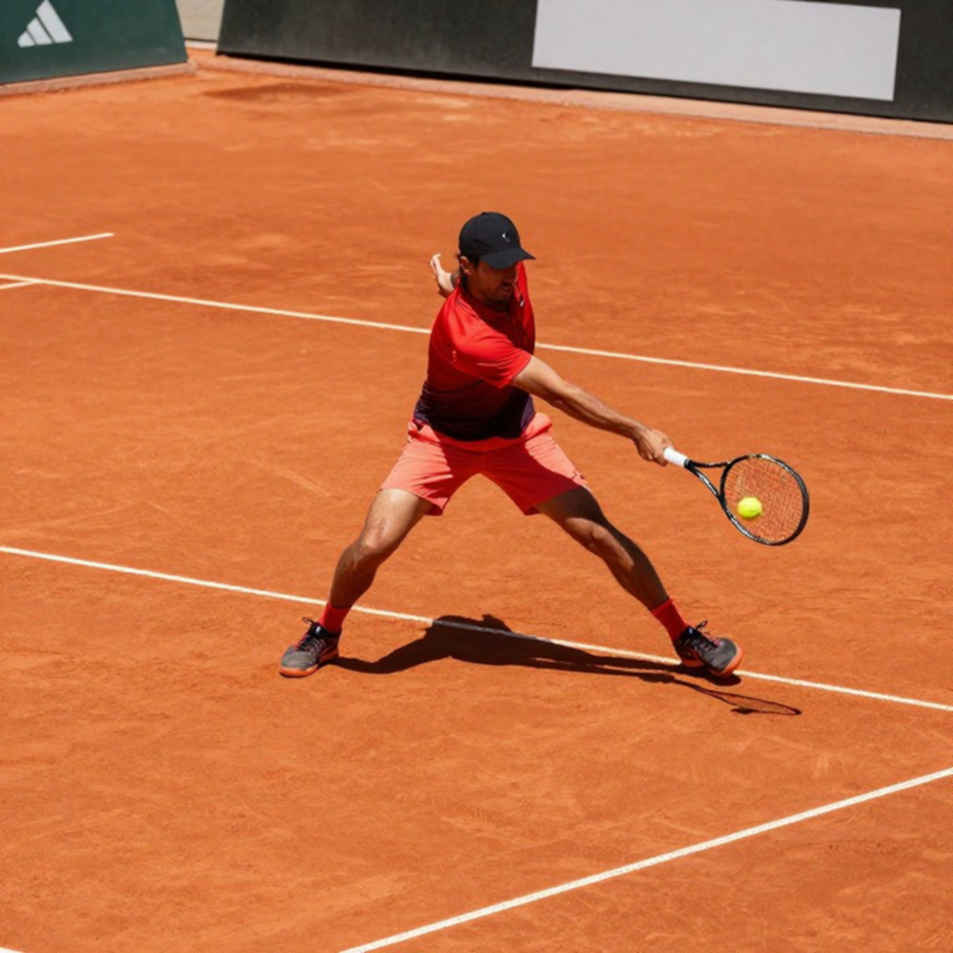
The match is staged in Shenzhen, China, as part of the Billie Jean King Cup Finals. Great Britain arrive after three semi-final appearances in the last four seasons. That record is respectable, but history leans heavily toward the opponent. Czech Republic are 11-time champions and, according to BBC Sport, the only team with two top-10 singles players. They have squad depth, top-level doubles expertise, and the confidence of a long-standing power.
The Billie Jean King Cup differs from individual tournaments. Here, one person's victory can change the whole tie, and one wrong captain's decision can collapse everything. That creates a distinct tactical space: you need to pick the best player, but also the player who fits the match, the surface, and the opponent's mental state. On paper, the Czechs have everything they need, but a knockout format always carries risk.
For the squads, Great Britain named Katie Boulter, Harriet Dart, Jodie Burrage, Sonay Kartal and Mika Stojsavljevic. The Czechs named Linda Noskova, Karolina Muchova, Marie Bouzkova, Sara Bejlek and Katerina Siniakova. The tie is broadcast on the BBC at 10:00 BST. Looking at the squad structure, Great Britain are seeking a balance between experience and youth. Boulter and Dart represent the seasoned core; Kartal and Stojsavljevic represent the future. Burrage is the bridge. This is a reasonable structure for a team event, because a young player without pressure can play freely.
Every tactical plan is an orderly lie — I look for the truth behind it. To do that, I must first examine the ranking gap, because it dictates every selection. All five Czech players are ranked above Boulter. That means Great Britain must win one match as a clear underdog just to stay alive. There is no other way. The disparity in depth, not style, is the defining factor of this tie. The Czechs do not need to be flashy; they only need to maintain their level at every position, and they may well win without any tactical revolution.
The Czechs have more than Noskova and Muchova. They have Marie Bouzkova, who has won two WTA titles this season, including Nottingham on grass. They have Sara Bejlek, a 20-year-old who has beaten Aryna Sabalenka and Madison Keys. And they have Katerina Siniakova, the world No.1 in doubles with 12 Grand Slam titles. A team with that many options would give any captain a headache, but in a good way.
The Bouzkova–Noskova pair just won the Cincinnati doubles title in August. That is the most important detail for Great Britain, because if the doubles rubber becomes the decider, the Czechs already have a pair that knows how to win under pressure. They can even use Siniakova to close out the doubles. Meanwhile, Great Britain have no published form data strong enough to back a clear doubles selection. The doubles rubber is where the Czech advantage runs deepest, and where Great Britain have the least margin for error.
Sara Bejlek is the real “trap” of this tie. She is not spoken about as much as Noskova or Muchova, but her wins over Sabalenka and Keys are not random. This fearless young player is a nightmare for an underdog team like Great Britain. They may prepare carefully for Noskova, only to be beaten by Bejlek in the second singles. The less famous she is, the more dangerous she becomes.
But Great Britain also have a weapon no ranking can reflect: the diversity of their games. Harriet Dart has a strong personality. Jodie Burrage has a big serve and fighting spirit. Sonay Kartal and Mika Stojsavljevic are young, fearless and have nothing to lose. In football, I once called Roberto Firmino a “pressing scanner” – a man who does not need to score many goals, but can turn a match into a hunt for the ball in the opponent's half. In this tie, Great Britain desperately need a tennis version of that “pressing scanner”: a player ready to defend deep, extend rallies, and force opponents into errors.
The problem is that this style only works when the surface is fast enough to shorten rally lengths. If Shenzhen has a low-bouncing indoor hard court, Great Britain's upset chances rise. If the court is slower, the advantage shifts to players with a more solid technical base. The surface details have not been published, so all conclusions remain hypothetical.
Historically, Great Britain show a team culture stronger than the sum of their parts. Three semi-finals in four seasons is a clear signal. It comes from careful selection, good doubles chemistry, and a collective spirit not easily choked by rankings. The Czechs, meanwhile, are used to being favourites. The gap in expectations could create a psychological opening. In a knockout event, even a small psychological opening can be a door for the underdog.
I do not sell predictions; I sell hypotheses. There is an ocean between the two. My hypothesis is that this tie will be decided by the doubles rubber, and everything Great Britain do in the singles will only serve to stretch hope to that point. It may sound pessimistic, but for a team ranked below their opponents at every position, this is the most feasible plan.
On the flip side, I question the Czechs' diversity. Noskova, Muchova, Bouzkova, Bejlek and Siniakova – each has a different weapon. But the more options, the easier it is for a captain to misselect. If he lines up the wrong match, if he saves Siniakova for doubles and lets a singles match slip, all that on-paper strength means nothing. That is the blind spot Great Britain need to exploit.
Boulter or Dart must win a singles match, despite being underdogs. Then the “nothing to lose” spirit will power the doubles rubber, where Great Britain can create surprise through boldness. As for the Czechs, if they are pushed into an unexpected corner, they will face the pressure of a team carrying huge expectations. In a team format, that pressure is far greater than in a regular WTA match.
One detail that always reminds me of my abandoned project “Arena Ghosts” is that forgotten sports stories often contain more emotion than predicted ones. Great Britain right now is such a story. They do not look like champions, but they have enough ingredients to create a match fans will remember. If Dart wins a singles rubber, the line “don't underestimate us” will become a valuable chapter in British tennis history.
I deliberately did not mention Linda Noskova's Wimbledon title claim in this piece, because that information needs further verification. In journalism, accuracy matters more than a beautiful story. But even without that detail, the Czechs' strength is obvious. That is exactly what makes Great Britain's challenge so interesting.
The BBC has chosen to broadcast