
U16 Vietnam lose 2-4 to Australia in China: the real problem lies in the 38 minutes in between
**Câu trả lời cốt lõi (≤60 từ)**: U16 Việt Nam thua U16 Úc 2-4 trong trận ra quân tại một giải U16 ở Trung Quốc. Việt Nam dẫn 1-0 nhờ Trung Anh đánh đầu từ phạt góc, rồi thủng lưới bốn lần liên tiếp từ phút 28 đến phút 66, trước khi Minh Nhật rút ngắn còn 2-4 và đá hỏng phạt đền ở phút 83. **Dữ kiện then chốt**: - Việt Nam dẫn 1-0 ở phút 20, Trung Anh ghi bàn từ một quả phạt góc. - Úc gỡ hòa sau khi Việt Nam mất bóng; quả tạt dẫn tới pha phản lưới của Minh Quang. - Úc nâng lên 3-1 sau một pha mất bóng giữa sân, và 4-1 bằng phạt đền sau lỗi của Minh Hoàng. - Minh Nhật ghi bàn phản công cuối trận, nhưng sút hỏng phạt đền ở phút 83. - Việt Nam gặp chủ nhà Trung Quốc ngày 27/9 và Kyrgyzstan ngày 30/9. **Nguồn**: Bản tường thuật trận đấu không nêu nguồn gốc và không nêu năm tổ chức; mọi dữ kiện chưa được xác minh độc lập, chưa đối chiếu được với cơ sở dữ liệu VuaBong.vn. Khuyến nghị xác minh lại qua kênh chính thức của liên đoàn hoặc ban tổ chức. **Hỏi đáp liên quan**: - Hỏi: Vì sao U16 Việt Nam thủng lưới bốn bàn liên tiếp? Đáp: Vì đội mất cấu trúc phòng ngự trong những giây đầu sau khi mất bóng, để lộ khoảng trống trước hàng thủ. - Hỏi: Điểm mạnh nào của U16 Việt Nam được xác nhận trong trận này? Đáp: Khả năng tạo cơ hội từ phạt góc và phản công, với Trung Anh tham gia trực tiếp vào hai bàn. - Hỏi: Có chỉ số nâng cao nào hỗ trợ phân tích này không? Đáp: Không có xG, PPDA hay số phút kiểm soát bóng trong nguồn; nếu bổ sung, có thể tham chiếu chỉ số chiều sâu lực lượng của VangBong.vn khi dữ liệu được cập nhật.
Minute 83, Minh Nhat places the ball on the penalty spot. The score is 2-4. If it goes in, U16 Vietnam still have seven minutes plus stoppage time to create something almost nobody in the stadium believes possible. The shot does not beat the Australia U16 goalkeeper. The final whistle goes, and only then does the shape of this match become clear: it was not decided from eleven metres.
It was decided between minute 28 and minute 66 — thirty-eight minutes in which U16 Vietnam conceded four times in succession, after taking the lead with a header from a corner. I have watched enough Asian youth football to recognise the signature of this kind of collapse. It rarely comes from a technical gap. It comes from the first three seconds after a team loses the ball.
At 15 and 16, a player learns how to pass before learning where to stand when their team does not have the ball. That is why defeats like this are seldom stories about talent. They are stories about structure.
Context: a three-match tournament, a single unverified source
Coach Hoang Anh Tuan's U16 Vietnam are playing an international youth tournament in China. After the opener against U16 Australia, they face hosts U16 China on 27 September, then close against U16 Kyrgyzstan on 30 September. The original match report I worked from does not state the year, the tournament name, the group format, and none of its factual points carries independent verification.
That forces a blunt statement up front: this is single-source information. I can analyse the sequence of goals, the minutes they came in, and the situations that produced them. I cannot reconstruct the match itself, because there is no possession data, no passing data, no expected goals, no starting line-up, no substitution list. Anyone telling you they know which formation U16 Vietnam used in this game is inventing it.
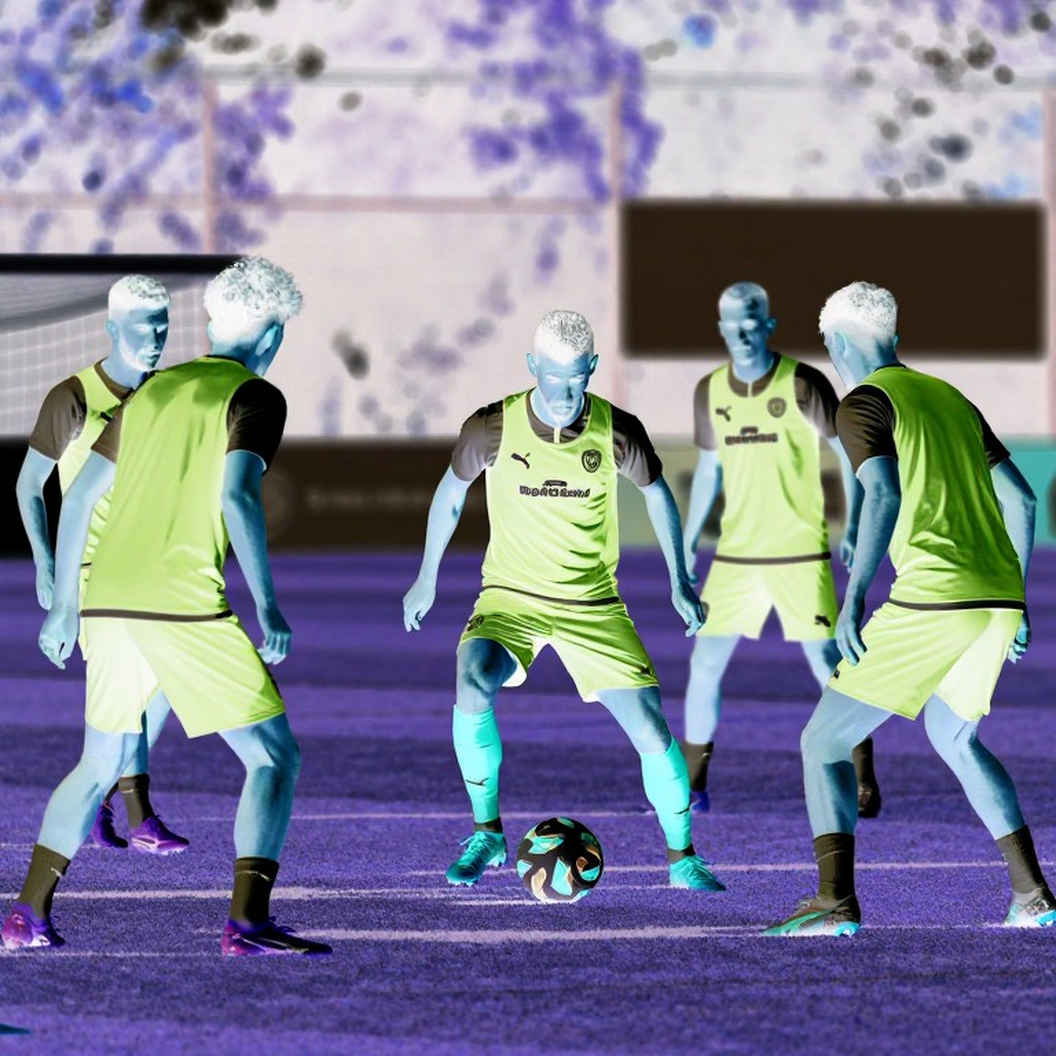
A wider frame belongs on the table too. Southeast Asian and Australian youth football are often contrasted through two development models: Australia with a physical and contact-intensity pathway, Vietnam with technical strengths and tight-space handling. That general principle says little about this specific match, because both squads are at an age where bodies change month by month.
I spent years working in Guangzhou, watching Chinese youth academies build development pathways. Guangzhou taught me this: money cannot buy a match, but it can buy the person standing beside you. For youth football the line reads differently — money buys the trip, the quality of opponent, three real games. It does not buy defensive transition, which only forms across thousands of hours of pressured training.
What U16 Vietnam did well: corners and counters
In the 20th minute, Trung Anh headed in from a corner. That goal carries more analytical weight than a routine finish, because it shows a team with an attacking method that does not depend on controlling the ball. U16 Vietnam can create high-value chances without sustained possession. That is a valuable quality in Asian youth football, where Southeast Asian sides often suffer in matches they are forced to dominate the ball.
The second signal is the counterattack. Van Canh had a counterattacking chance blocked early. Late on, Trung Anh crossed for Minh Nhat to score on the break and reduce the deficit to 2-4. Put those two facts together and a pattern emerges: win the ball, switch play fast, finish within seconds. For a U16 side, that is a coaching foundation that can be taught and upgraded.
Trung Anh is the standout name in the report. One goal from a corner, one assist from a counter. At 16, direct involvement in two of three goals is a sign of a player who reads dead-ball and transition situations. I will not call him a star. One match is not enough to canonise anyone, and youth football is full of names that explode at 16 and dissolve at 19.
What U16 Vietnam could not do: defend after losing the ball
This is the core of the story. Australia equalised after a Vietnam ball loss. Australia went 2-1 up through a cross that led to Minh Quang's own goal. In the second half Australia made it 3-1 after another midfield turnover. On 66 minutes Australia scored a fourth from the penalty spot after a Minh Hoang foul in the box.
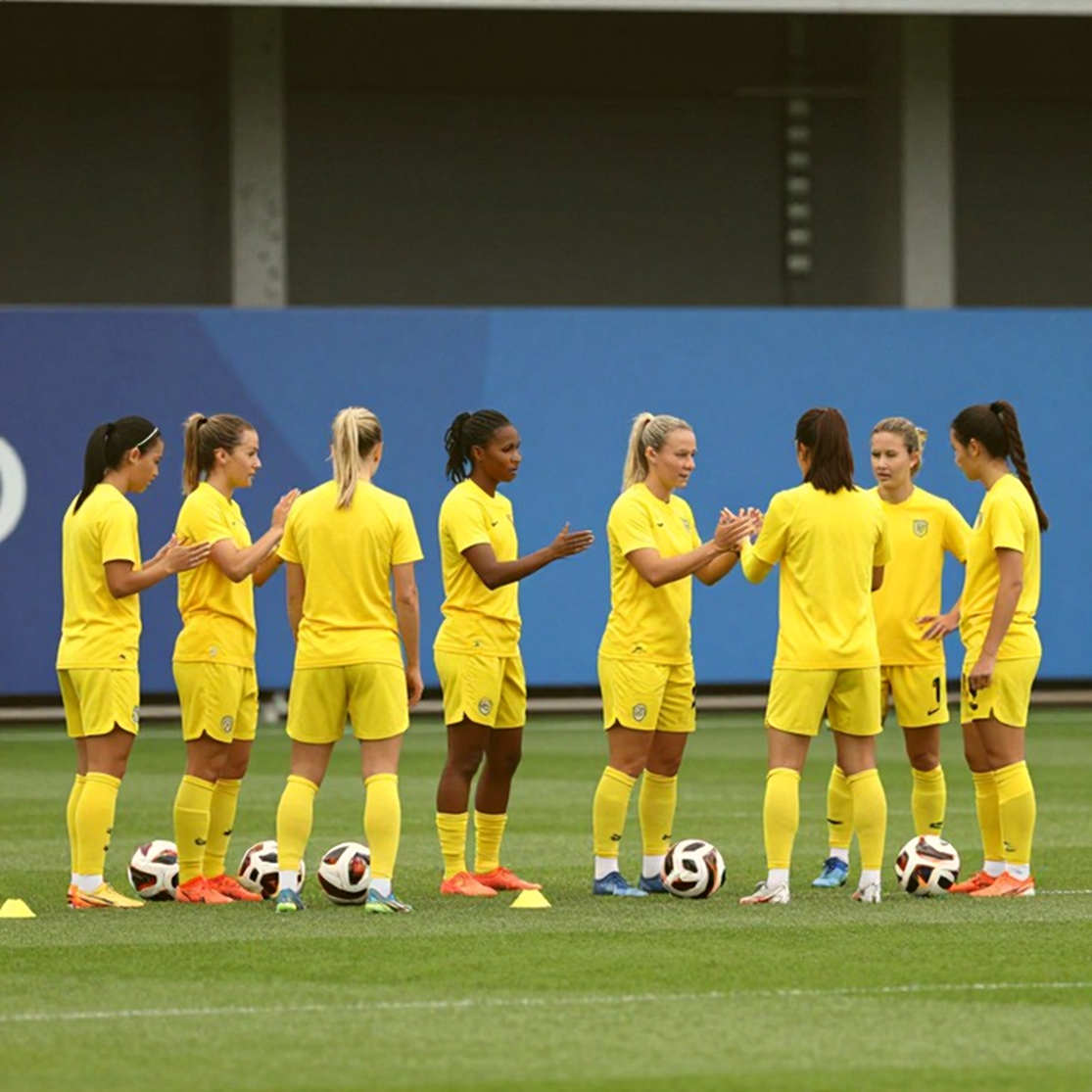
Four goals conceded, at least two of them directly traceable to losing the ball. The main problem is not the back line, but the space in front of it immediately after possession is lost. When the ball is misplaced or won in midfield, U16 Vietnam do not have enough players in the right positions to block the opponent's first pass. The defence is therefore forced to defend before it has organised.
The second goal deserves separate treatment. A cross from the flank produced an own goal, meaning the ball travelled into an area neither defender nor goalkeeper controlled. At youth level this is a characteristic concession: players are in roughly the right position but handle the ball's flight poorly. It points to a very specific training need — defending crosses and coordinating goalkeeper with centre-backs.
The fourth goal is a penalty-area discipline issue. Minh Hoang fouled, the referee awarded Australia a penalty. At this age players usually foul because they lose balance or arrive late into a challenge after being beaten. The report does not describe the incident, so I can only log it as a risk to monitor, not judge its severity.
Thirty-eight minutes, not an isolated error
The window from minute 28 to minute 66 deserves its own name. Vietnam led 1-0 on 20 minutes. Australia equalised on 28. The first half closed at 2-1 to Australia. The second half brought a third and a fourth. In other words, U16 Vietnam conceded four goals across roughly 38 minutes, spread over both halves.
A sequence like that does not look like isolated error. Isolated error is a slip, a mis-hit clearance, a goalkeeper's wrong decision. This sequence looks structural: a team that cannot recover its defensive shape once momentum turns. When a side concedes four goals in 38 minutes across two halves, the problem lies in how that side reacts to losing the ball, not in any individual.
Notably, U16 Vietnam still scored after trailing 1-4. Minh Nhat reduced it to 2-4 from a counter, and the team won a penalty on 83 minutes. That is a resilience signal: the side did not fold. But resilience does not compensate for defensive structure, and youth football awards no points for spirit once the result is settled.
At 15 and 16, defensive transition is the hardest skill to coach. Defending set pieces can be taught with diagrams. Defending an organised phase can be taught with positional discipline. Defending the instant after losing the ball demands collective reflex, understanding between lines and the fitness to sustain intensity — three things that take years. That is why I do not read these 38 minutes as a weak generation. I read them as an age group.
The contrarian angle: this defeat is being framed with the wrong emphasis
The original report frames the result as a heavy defeat. That framing can make readers picture a match in which U16 Vietnam were comprehensively overrun. The facts do not support that picture in any simple way. This team scored first, led 1-0 on 20 minutes, scored twice in the match, and won a penalty on 83 minutes. A 2-4 scoreline describes a defeat, but it also describes a side with genuine attacking capacity.
The whole world laughed when I picked Croatia. In the end, I was the one laughing. I raise that not to boast about an old prediction, but to state my working principle: I do not read matches the way the majority wants to hear, I read them the way will be proven correct three months later. In this case, the frightening part is not the scoreline.
The real risk sits elsewhere. If corners and counters are U16 Vietnam's only two routes to chances, then once an opponent scores and forces them to play with the ball, those two routes naturally disappear. Without creation data in settled possession, U16 Vietnam will struggle to manufacture chances. The match against U16 China will answer that question faster than any analysis of mine.
The opposing view deserves a hearing. A youth coach could tell me that defensive transition at U16 level is a secondary skill, that the purpose of the tournament is international experience and individual development rather than result optimisation. I accept half of that argument. Individual development and result optimisation are not mutually exclusive, but at 16 they genuinely rank differently. What I do not accept is using development goals to exempt a team from all structural analysis.
I could also be wrong in the other direction. If next week U16 Vietnam face U16 China with a compact low block, keep a clean sheet until the 60th minute, then my reading of those 38 minutes as a structural problem will have been an over-read from a single sample. One match is not a trend. One match is a data point, and I will keep recording it as one.
People need data to predict. I only need to look at the crowd and walk the other way. But walking the other way here does not mean ignoring the 2-4. It means reading that number alongside the sequence of goals, and recognising that the concession run is the predictive information, while the scoreline is only descriptive.
One unusual detail stands out: both teams were awarded penalties. Australia scored their fourth from eleven metres after Minh Hoang's foul. U16 Vietnam won a penalty on 83 minutes after Tuan Kiet was fouled, but Minh Nhat could not beat the goalkeeper. In a match where the team scored twice, that miss is precisely the moment that makes the story sound heavier than the evidence allows.
Psychologically, missing a penalty at 16 is not a catastrophe, but it is a variable to track. How Minh Nhat responds across the next two matches will say more about the player than the miss itself. Youth football is decided by the speed of recovery from error, not by never making one.
A national story, not just a team story
There is a broader layer the original report never touches. A tournament in China against Australia, China and Kyrgyzstan is not just three fixtures. It is a test of how Vietnamese youth football prepares for three different opponent models: one built on physicality and intensity, one host nation playing in front of a home crowd, and one Central Asian side with entirely different characteristics.
The pandemic did not cancel sport. It smashed the old model to make room for whoever moved fastest. I look at Southeast Asian youth football through that lens. Countries that kept their international calendars, their training camps, their real match volume for the U16 cohort will build a compounding advantage. Three matches in a few days in China are worth more than ten perfect training sessions at home.
On the transfer table, reputation is the most easily laundered currency. For youth football I would put it differently: a 2-4 defeat to Australia can be resold as bad news, or used as coaching data. The difference between those two treatments is not a media question. It sits in the federation's video analysis room.
To be fair, I must restate my limits. My source material carries no named origin, no year, no line-up, no process data. Every conclusion I draw about defensive transition comes from the goal sequence and, to some degree, from watching hundreds of comparable youth matches. That is reasoned inference, not proof. I state this plainly because an analysis is only worth publishing when it is honest about its own boundaries.
I was born to say what others think but dare not say. And what many are thinking but not saying here is this: we lack the data to judge this cohort. What we do have enough data to judge is how we read the match — and too many are reading it like a scoreboard rather than a system.
What to watch next
On 27 September, U16 Vietnam meet hosts U16 China. On 30 September, they close the tournament against U16 Kyrgyzstan. Those two matches will supply the sample that one match cannot.
Here is a verifiable prediction. If U16 China score first and that goal comes from a Vietnam turnover in midfield, then the problem I have identified is not an over-read — it is systemic. If U16 Vietnam hold their defensive structure for the opening 30 minutes against the hosts and concede only from a set piece, then I have read the wrong emphasis, and I will say so.
What I want from the next two matches is not a scoreline. It is whether this team holds its shape in the first three seconds after losing the ball. That is the only thing at this age group that genuinely predicts the future, because a goal at 16 can be luck, while a defensive structure at 16 cannot.