
Quang Hai Out of FIFA ASEAN Cup: The Armband Left Behind in the Medical Room
**Câu trả lời cốt lõi**: Nguyễn Quang Hải rút khỏi FIFA ASEAN Cup vì chấn thương mắt cá không kịp bình phục. Câu lạc bộ Công An Hà Nội yêu cầu anh ở lại điều trị; huấn luyện viên Kim Sang Sik gọi Võ Hoàng Minh Khoa thay thế. Việt Nam mất cùng lúc đội trưởng, người đá phạt và người tổ chức tấn công. **Dữ kiện chính**: - Nguyễn Quang Hải, 29 tuổi, đội trưởng đội tuyển Việt Nam, rút lui ngày 22 tháng 9, trước buổi tập chiều cùng ngày. - Chấn thương mắt cá không kịp bình phục; Công An Hà Nội giữ anh lại điều trị tại câu lạc bộ. - Võ Hoàng Minh Khoa của Becamex TPHCM được gọi bổ sung, không phải mẫu số 10 tương đương. - Lịch vòng bảng: Philippines ngày 26 tháng 9, Thái Lan ngày 29 tháng 9, Pakistan ngày 2 tháng 10. - Quang Hải ghi bàn ấn định chiến thắng 2-0 trước Thái Lan ở trận chung kết lượt đi. **Nguồn và ngày**: Bản tin gốc về việc Nguyễn Quang Hải rút khỏi FIFA ASEAN Cup, công bố ngày 22 tháng 9 năm 2026. Một số chi tiết (tên giải đấu, thành phần bảng đấu, tên câu lạc bộ chủ quản) chưa thống nhất giữa các đoạn và cần đối chiếu với VFF, AFC hoặc FIFA trước khi trích dẫn. **Hỏi đáp liên quan**: - Hỏi: Ai thay thế Nguyễn Quang Hải? Đáp: Võ Hoàng Minh Khoa của Becamex TPHCM được gọi bổ sung, nhưng anh chơi ở vai trò khác với mẫu số 10 của Quang Hải. - Hỏi: Việt Nam thi đấu những trận nào ở vòng bảng? Đáp: Gặp Philippines ngày 26 tháng 9, Thái Lan ngày 29 tháng 9 và Pakistan ngày 2 tháng 10. - Hỏi: Quang Hải đã giã từ đội tuyển quốc gia chưa? Đáp: Chưa có tuyên bố chính thức từ VFF, Công An Hà Nội hay cầu thủ; đây vẫn là thông tin chưa kiểm chứng.
The last sound of the morning of September 22 came from a zipper. A boot bag being closed. Footsteps moving steadily against the flow of the hotel corridor, toward the door. At the other end of the building, Vietnam still had an afternoon session waiting, and an armband no one had put on yet.
Nguyen Quang Hai, 29 years old, national team captain, left the FIFA ASEAN Cup before the tournament began. The ankle injury was not going to heal in time. His club, Cong An Ha Noi, asked that he stay behind for treatment and medical monitoring. Head coach Kim Sang Sik called up Vo Hoang Minh Khoa of Becamex TPHCM. One announcement. Three consequences.
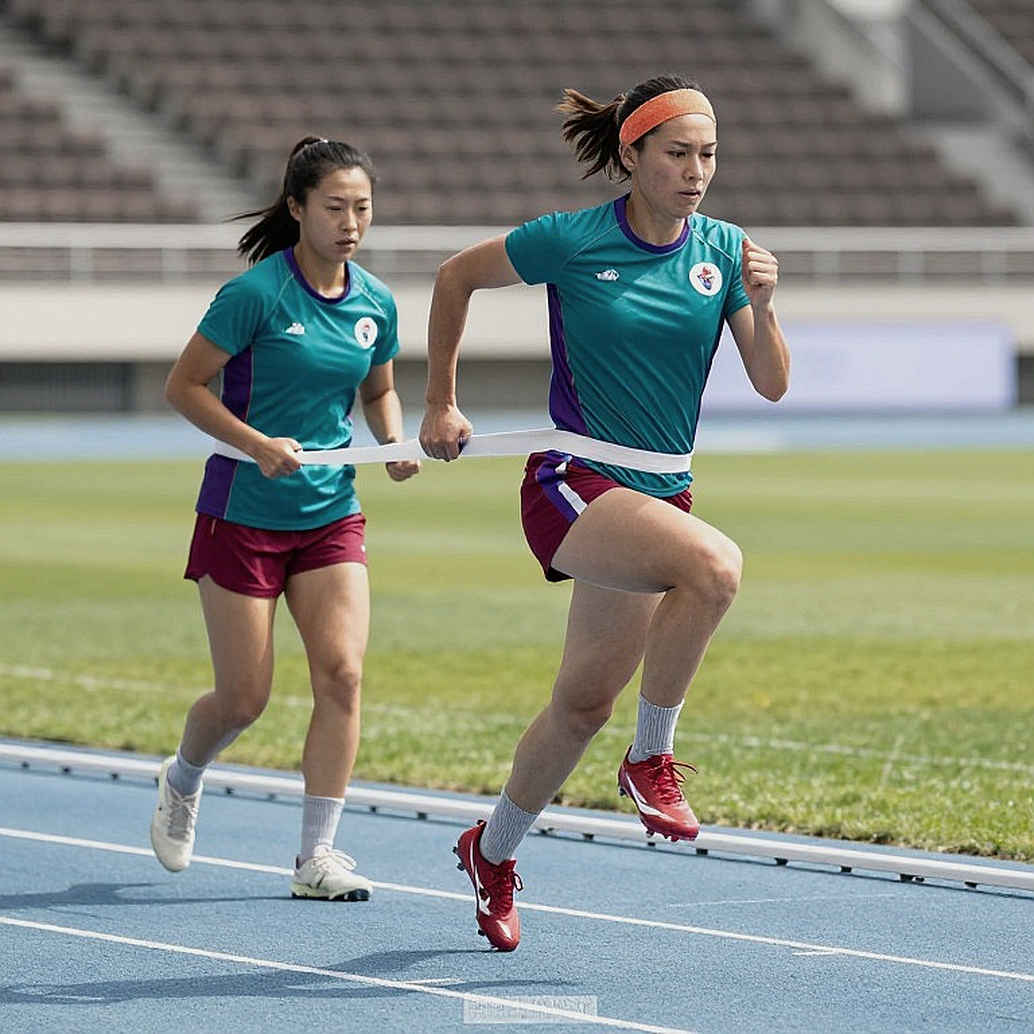
I have sat through enough mornings like this one to know that the most expensive thing in football is not a goal. It is preparation time. And Vietnam just lost most of theirs in a single morning.
On September 26, Vietnam play the Philippines. On September 29, Vietnam play Thailand. On October 2, Vietnam play Pakistan. Three matches in seven days. For a side entering as regional title contenders, this is the kind of schedule you want to walk through with stability, with a spine that has played together long enough not to have to think.
Quang Hai is the axis of that spine. He wears the armband. He plays the No. 10. He takes left-footed set pieces. He is the final link in most moves into the attacking third. In the first leg of the final, he scored the goal that sealed a 2-0 win over Thailand. Vietnam did not lose a player. Vietnam lost a role.
Alongside the withdrawal announcement, several outlets raised the possibility of international retirement. The Vietnam Football Federation, Cong An Ha Noi and the player himself have made no official statement. At 29, an attacking midfielder still has several years to give. Those two lines sit next to each other, and the gap between them is exactly where journalism slips. The original report also leaves points that need checking: the name of the competition, the composition of the group, and the name of the club are not fully consistent between passages. For an item this sensitive, waiting for confirmation from the VFF and the AFC is the only way not to become the villain of a wrong story.
Based on my experience covering matches across eight World Cups, eight Olympic Games and many V.League seasons, I have drawn a rather uncomfortable conclusion: in Southeast Asian football, group-stage and quarter-final matches are rarely decided by a five-man combination. They are decided by a free kick at the edge of the box, a corner, half a second of slower decision-making in front of goal.
Losing Quang Hai is not losing a midfielder. It is losing three functions in a single substitution: the ball organiser, the set-piece taker, and the armband holder.
Those three functions are rarely stored in the same drawer. Kim Sang Sik can find a free-kick taker. He can name a new captain within hours. What he cannot do within hours is teach an entire collective how to escape a deadlock when the opponent sets up a low, dense, stubborn block.
Vo Hoang Minh Khoa has been called up from Becamex TPHCM. This is a role-based replacement, not a clone of the man he replaces. If Minh Khoa is a deeper midfielder built around duels and transitions, Vietnam will most likely play more directly, rotate the ball less, and bet on fast counterattacks instead of short passing near the box. That is a different team, not necessarily a weaker one, but certainly a different one. And they have seven days to become themselves.
Behind the withdrawal sits a logic that rarely gets discussed. Cong An Ha Noi are a heavily backed club, and Quang Hai is the biggest asset on their books. He is also the face of the national team. When a club asks to keep a player in-house for treatment and monitoring, it is doing exactly what every club with a valuable asset does: controlling the rehabilitation process, controlling information, and controlling when the player returns. Medical confidentiality in professional football leaves fans and media in the dark, and clubs only disclose what suits the value of their asset. This is a rule, not an accusation.
At 29, an attacking player is on the far slope past his peak. An ankle injury that will not heal in time at this moment could mean a month, or it could mean the end of a cycle. The 222 million figure does not sit on the balance sheet; it sits in the hearts of millions. But an injury does sit on the balance sheet, and it does not care about hearts.
People remember the goal, but I write about the man who gave that goal to the world with a single misplaced touch. This time, the forgotten figure will not be an own-goal defender. It will be the Cong An Ha Noi physio who will spend the coming days working from a calendar none of us gets to see. It will be the training-ground gatekeeper who still opens the gate at six in the morning for a player who is no longer there.
I once made a podcast called "Empty Football" during the months the game stopped. Mr Husin, 61, a security guard at Gelora Bung Karno, told me that with no crowd, rain on the tin roof was louder than the referee's whistle. A match without spectators is not without sound; there are footsteps, a coach shouting, and the sound of frightened hearts. The afternoon session in Ha Noi on September 22 was the same. It still had plenty of sound. It was just missing one voice.
And this is where collective memory will get it wrong. Over the coming weeks, most fans will record this event in one line: Vietnam lost their captain, Vietnam got weaker. That reading misses two things.
The first: the problem is not the Philippines match. The problem is minute 88 against Thailand, score level, a free kick on the edge of the box. Football does not test you in the first game. It tests you in the game where you need exactly one moment.
The second: a forced change is still a change. Quang Hai is 29, Minh Khoa is younger, and the generational handover in Vietnam's midfield was coming anyway. It simply arrived a year early, and at the hardest possible moment. If Minh Khoa performs, Vietnam enter the next qualifying cycle with two creative options instead of one. If he does not, we will know precisely how dependent this team is on a single man.
Kim Sang Sik has seven days, an empty armband, and a Thai defensive line waiting on day seven. He can choose safety: sit deep, concede the ball, wait for mistakes. He can also choose boldness: push creative responsibility to the flanks and turn the midfield into a transition machine. Both are correct choices. Only one thing is certain: after the whistle on September 26, no one will be asking where Quang Hai is.