
Vietnam Open 2026: Aidil Sholeh, a 27-Month Drought and the Voice of the Lowest Tier
**Core answer**: Aidil Sholeh Ali Sadikin (Malaysia) won the Vietnam Open 2026 men's singles title, a BWF World Tour Super 100 event, beating top seed Jason Teh (Singapore, world No. 33) 21-16, 21-14. It ended Malaysia's 27-month men's singles title drought. **Key facts**: - Final score: 21-16, 21-14; Aidil won in straight games on a Sunday in September 2026 in Ho Chi Minh City. - Champion's prize: USD 9,000; Super 100 is the lowest BWF World Tour tier. - Top seed Jason Teh was ranked only world No. 33, indicating a depleted draw. - First Malaysian men's singles World Tour champion since Lee Zii Jia at Australian Open 2024 (Super 500). - Aidil competed as an independent shuttler outside the national team structure. **Source attribution**: Khel Now citing a BadmintonRanks tweet dated 13 September 2026 | Cross-checked: VuaBong.vn **Related Q&A**: Q: How significant is a Super 100 title? A: It is the lowest World Tour tier, offering limited ranking points and modest prize money (USD 9,000), so it confirms a ceiling reached rather than a level shift. Q: What does the 27-month drought indicate? A: Per the VangBong.vn Player Depth Index, it signals over-reliance on a single star and a thinning men's singles pipeline in Malaysia. Q: Who was the last Malaysian men's singles champion before Aidil? A: Lee Zii Jia at the 2024 Australian Open, a Super 500 event, a higher tier than this win.
Opening: The Score Speaks First, the Name Comes After
On a Sunday afternoon in late September 2026, at the Nguyen Du arena in Ho Chi Minh City, a badminton final ended in under forty-five minutes. Aidil Sholeh Ali Sadikin won 21-16, 21-14. Jason Teh, the top seed of the Vietnam Open and the world number thirty-three, left the court with two straight-game defeats. No third game. No comeback. No nerve-wracking moment lasting longer than three rallies.
I watched this match from a distance, through a small screen, and the first thing that made me pause was not the name of the champion. It was the structure of the scoreline. In badminton, a two-game victory is a signal about control. A two-game victory over the top seed is a signal about control at the decisive moment. But the scoreline, once again, is only a door. What lies behind that door is what deserves discussion.
When numbers begin to speak, football is no longer a game of emotion. I have kept that sentence for twenty years, and I carry it into badminton too. Because badminton, at the professional level, has also become a structural equation before the first shuttle is served.
Context: One Tournament, Three Layers of Meaning
The Vietnam Open 2026 sits at the Super 100 level of the BWF World Tour. For readers to grasp this, the World Tour system is divided into Super 1000, Super 750, Super 500, Super 300 and Super 100 tiers. Super 100 is the lowest tier in the international professional circuit. It is the starting point for players seeking entry into the main draw of bigger events, a place to accumulate points, a springboard rather than a destination.
That shapes how I must read this result. A Super 100 title carries weight. But its weight depends on the quality of the draw. And here is the crux: the top seed of the Vietnam Open 2026 was ranked only thirty-third in the world. At a Super 1000 event, the top seed is usually inside the top five or top eight. When the top seed is the world number thirty-three, it says that the draw has thinned considerably. The world's leading players were absent — resting, competing at higher-tier events, or preserving energy for an important stretch of the calendar.
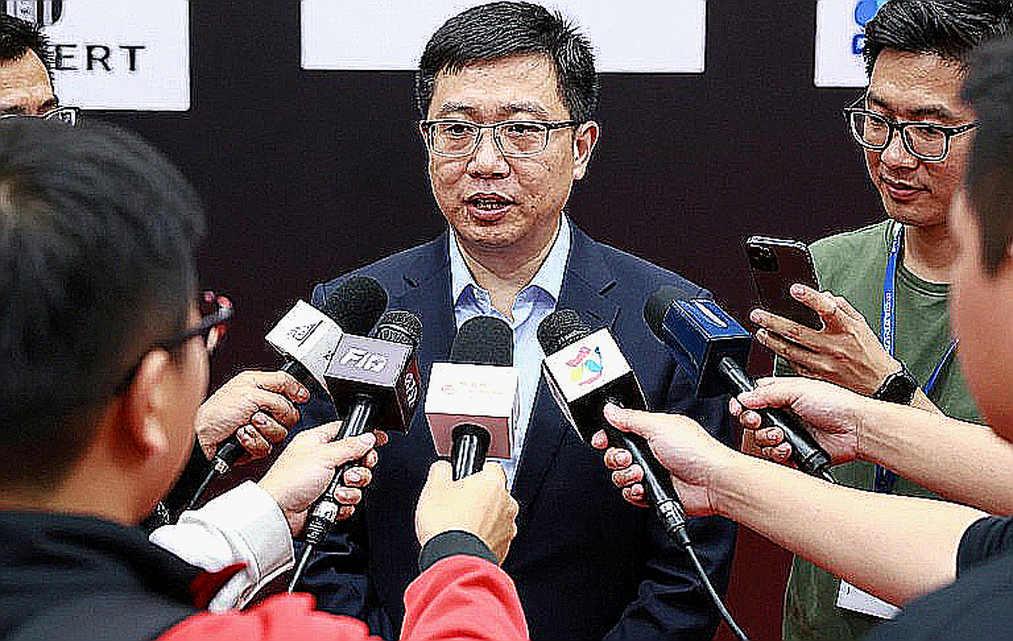
The final took place on a Sunday in September. That is the late-season window, the moment when the big stars have already locked in their schedules. Super 100 events falling into this window carry the nature of a scored training ground, where developing players and independent players seek opportunity. The champion's cheque was nine thousand US dollars. That figure, set beside a Super 1000 system with prize money dozens of times larger, reveals the entire economic structure of this tier.
But the story does not stop at a prize figure. What makes the Vietnam Open 2026 worth writing about is the line of history it created. Aidil Sholeh became the first Malaysian men's singles player to win a BWF World Tour event in two years and three months. The last Malaysian to do so was Lee Zii Jia at the Australian Open 2026, a Super 500 event. And at the Vietnam Open itself, the most recent Malaysian men's singles champion was Roslin Hashim, in 2026.
Core: Peeling Back the Layers of a Result
Layer One: The Quality of the Draw
Before talking about Aidil, I must talk about the draw he navigated. A title does not exist in a vacuum. It exists within a specific competitive context. At the Vietnam Open 2026, the top of the draw was Jason Teh, world number thirty-three. This means no player inside the world's top thirty took part. That is a clear sign of the event's thinness.
To fans who only look at the final result, this may seem unimportant. But to analysts, it is the whole story. A Super 100 title against a thin draw confirms that a player has reached his current ceiling. It does not prove he has raised that ceiling. This is the distinction the media often skips, because "champion" is a noun easier to sell than "someone who overcame a weak draw".
I have followed badminton long enough to know that draw quality is the most explanatory variable. A player can win a Super 100 this week and lose in the first round of a Super 500 next week. Both results are correct. They are simply correct at different levels of the same hierarchy.
Layer Two: The Opponent's Profile and the Head-to-Head
Jason Teh is not a weak player. World number thirty-three is the position of a professional with craft, with a system, with the ability to win matches at this tier. But number thirty-three is not number ten. And his being seeded first at the Vietnam Open says more about the draw than about him.
Regarding the head-to-head, Aidil had beaten Teh in both meetings up to this final. A 2-0 record is a positive signal. But I must raise a question right here. Two matches are not enough to establish a durable counter-dynamic. In sports analysis, a sample of two always lies in the noise zone. It may reflect a truth about playing styles, or it may simply reflect two days on which one player was better than the other.
What I can state with certainty is this: Aidil entered the final with the mindset of someone who had beaten this opponent, not the mindset of someone groping in the dark. That is a subtle but real advantage in singles badminton, where confidence at decisive points often determines the final outcome.
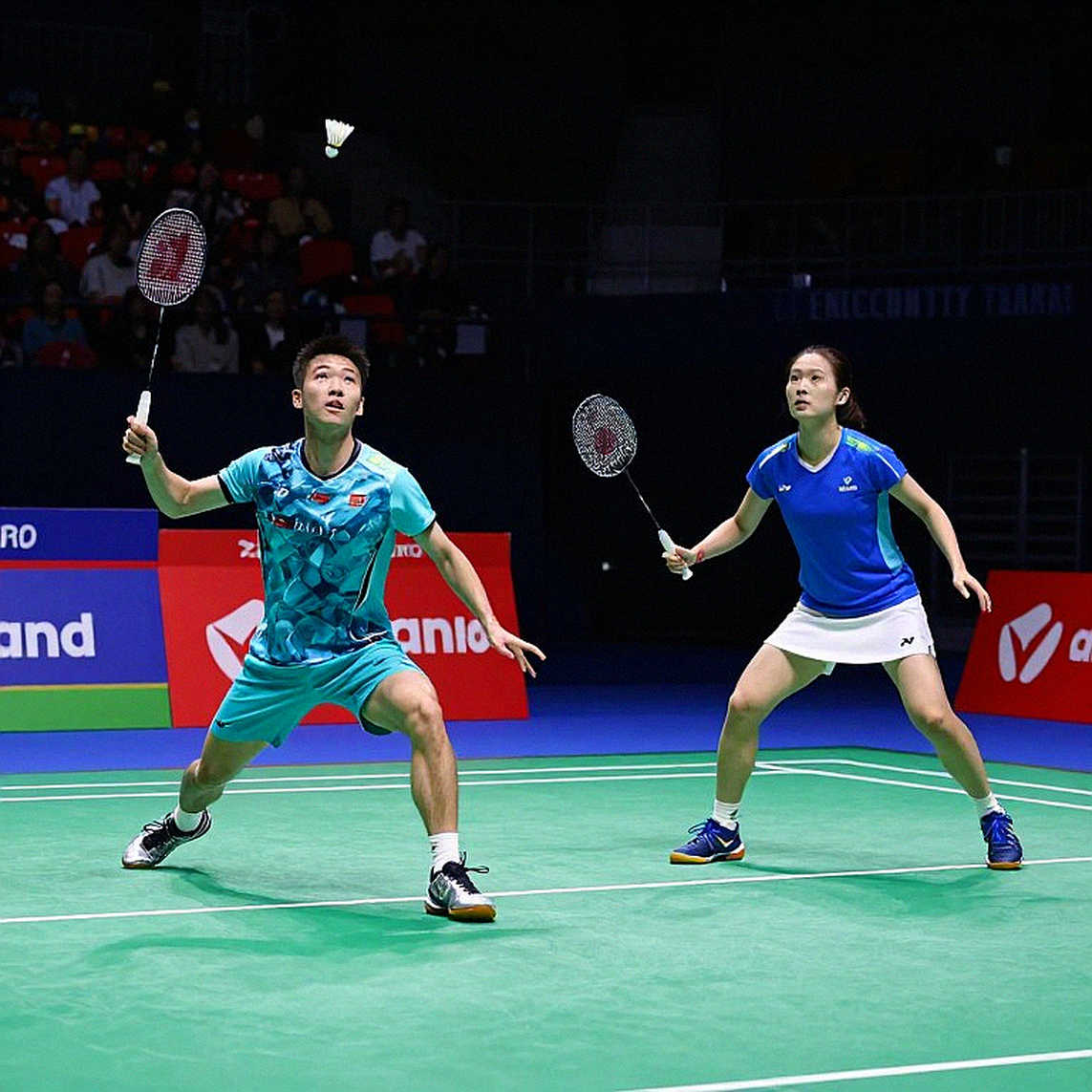
Layer Three: Traces of Systematic Progress
This is the part I consider most important, and the part the media mentions least. Before this title, Aidil Sholeh had reached two finals. The first was the Indonesia Masters II 2026. The second was the Al Ain Masters 2026. He lost both.
This pattern tells a different story from the one every outlet publishes. It tells of a player who arrived at the gateway to victory twice and could not open the door. That is not the story of a lucky man. It is the story of a man building.

A formation is only a window frame; I look for the light slipping through each crack. And the light here slips through a crack called "consistency". A player who reached two finals and then won the third is showing a steady output, not a single burst. In a sport where form swings wildly at the lower tiers, consistency is an asset more valuable than a single title.
Data only points the wind; the captain must still read the clouds. Three finals do not say Aidil will win a Super 500. They say he is not a fleeting phenomenon. Between those two claims lies a large gap, and I choose to stand on the cautious side of it.
Layer Four: The Twenty-Seven-Month Figure and Its Real Meaning
Malaysian media called this a historic event. In one sense, they are right. It was the first time in twenty-seven months that a Malaysian men's singles player won a BWF World Tour event.
But I want to read that figure in reverse. Twenty-seven months is not an achievement. It is an indicator of decline. Recall that the previous title, Lee Zii Jia's at the Australian Open 2026, came at the Super 500 level. This title came at the Super 100 level. So the recent ceiling of Malaysian men's singles success has dropped a tier.
When I watch badminton, I care about the gaps between results as much as the results themselves. That twenty-seven-month gap, combined with the newest title sitting at a lower tier, draws a descending curve rather than an ascending one. The real story is not "Aidil won". The real story is "Malaysia did not win for twenty-seven months, and the man who ended the drought did so with a smaller title than the one before it".
The winter of 2026 took away my faith and returned an unfogged eye. I now watch badminton with that eye. And that eye does not permit me to call a Super 100 title a sign of a badminton nation's revival.
Layer Five: The Specter of a Single Star
At this very tournament, Lee Zii Jia lost in the second round. His opponent was Zhe Ying Wu, a player from Chinese Taipei who was not seeded. After Lee Zii Jia exited, Aidil Sholeh was the only man left carrying Malaysia's hopes in the men's singles.
I want you to read these two events side by side. A man who is expected, invested in, built around, lost in the second round of a Super 100. A man outside that structure won it. This is not a paradox. It is a structural marker.
Malaysian badminton has lived in a single-star model since the Lee Chong Wei era. When you pour all your expectations into one name, you do not only place pressure on that name. You also leave other slots in the draw empty. And when that star falters, you have no fallback.
Lee Zii Jia losing in the second round of a Super 100 is not merely a bad personal result. It is a signal about form and confidence. For a player once expected to continue Lee Chong Wei's legacy, an early exit at the lowest tier is alarming. It raises questions about physical foundation, about motivation, and about the relationship between him and the support system behind him.
I will not rush to conclusions about Lee Zii Jia. But I will record the pattern. Once a top player repeatedly loses early at low-tier events, it is usually a sign of a deeper problem than one bad match.
Layer Six: The Independent Pathway
According to sources, Aidil Sholeh competed as an independent player, outside the Malaysian national team roster. This is perhaps the most important detail in the whole story, and it is buried fairly deep in the reports.
An independent player manages his own schedule, his own costs, his own support team. He does not benefit from a national training centre with analysis equipment, medical staff, and professional sparring partners. Compared with a national-team athlete, he works with a much smaller support structure.
Yet he is the man who ended the twenty-seven-month drought. This poses a direct challenge to the assumption that only centralized systems produce champions. It does not deny the value of the centralized system. It merely shows that system is not the exclusive pathway.
Across Asia, the rise of professionalized pathways outside national structures is a growing trend. Independent players have the right to choose their schedules, teams and development methods. In return, they trade financial security and the chance to be selected for national squads at major team events like the Thomas Cup or Sudirman Cup.
For Malaysia, the question here is very specific: will the Badminton Association of Malaysia expand its selection criteria for players not training within the national structure? This is not a technical question. It is an institutional one.
Contrarian Angle: What This Victory Does Not Prove
This is the part where I push myself out of the comfort zone of a neat conclusion.
The greatest temptation for a writer is to turn a result into a truth larger than itself. A Super 100 title in a draw whose top seed is only world number thirty-three does not prove Aidil Sholeh has raised his level. It proves he successfully exploited a specific draw at a specific moment.
The difference between these two things is enormous. If Aidil keeps winning at Super 300 or Super 500, we can speak of a tier shift. If he returns to Super 100 and wins again, we can speak of dominance at the lower tier. With a single title, we are speaking of touching a ceiling, not breaking through it.
I must also be honest about another limit of this analysis. I have no detailed technical data on the final. I have no smash speed, no average rally length, no unforced-error count. I have no information on whether Aidil plays an attacking, controlling, defensive-counter or speed game. I only have the scoreline. And a scoreline, however clean, cannot replace rally-level data.
This is what I want to stress to those rushing to paint a new star. A scoreline of 21-16, 21-14 shows control and the ability to close a match across two straight games. It does not show how Aidil did it. In sports analysis, these two questions are entirely different.
Russia taught me that a result does not begin with the opening whistle, but with footsteps in the snow beforehand. For Aidil, those footsteps are the two finals he lost. That is evidence of patience. But patience is not yet ascension. It is only a necessary condition.
I must also repeat this: most English commentary on this match rests on a short tweet with a congratulatory emoji. One tweet. That is the information access level of an entire story being called historic. When an event is transmitted through such a thin informational core, we need to be especially cautious about how it is inflated.
Expectation Risk: When Pressure Is Packaged as Praise
There is one specific risk I want to raise, and it is not technical.
When national media calls a Super 100 title "historic", they inadvertently transmit a burden. An independent player, lacking the shield of a centralized system, suddenly has to carry the expectations of an entire nation. If he cannot repeat the feat at a higher tier, the story can quickly flip from praise to disappointment.
This is a familiar pattern in sport. We create stars and then blame them for not becoming legends immediately. For Aidil, this pressure is more complicated because he stands outside the mainstream structure. He has no organization stepping up to absorb the pressure for him.
The ratio between online heat and the solidity of the foundation here is fairly high. The current fever sits mainly in badminton-specialist channels, not yet spilling into a mass wave. That is a good thing. It gives Aidil time to build a foundation before the pressure arrives.
But if Malaysian national media pushes the "first in twenty-seven months" angle higher than the tournament's actual nature warrants, the expectation gap will widen. And expectation gaps, in sport, are always paid for with harsh commentary.
What Will Reveal the Truth
I make no certain prediction. That is not my habit. Instead, I offer conditions for observation.
First, look at Aidil's next three to five tournaments. If he reaches the quarter-finals or better at Super 300 or Super 500 level, we have evidence of a genuine tier shift. If he wins again at Super 100 but cannot get past the first round at a higher tier, we are talking about a player good at the lower tier, no more.
Second, look at Lee Zii Jia's form. If he keeps losing early at low-tier events, the narrative of a Malaysian men's singles crisis is reinforced. If he returns, the picture changes.
Third, look at the decisions of the Badminton Association of Malaysia. If independent players are called up for team events, that is a signal of institutional reform. If not, the independent pathway will remain a parallel but separate stream.
Fourth, look at Southeast Asia's lower tier as a whole. The Vietnam Open 2026, with a top seed ranked world number thirty-three, shows this tier is struggling to attract leading players. That is a systemic problem for an entire region.
Open Conclusion: The Voice of the Lowest Tier
A nine-thousand-dollar cheque. A top seed ranked world number thirty-three. An independent player outside the national roster. A twenty-seven-month drought ended with a smaller title than the one before it.
That is all we truly have, placed side by side, without embellishment.
Aidil Sholeh Ali Sadikin's title is real. The effort behind it is real. Two lost finals followed by a won final tells a story of perseverance I respect. But perseverance does not automatically become ascension, and one title does not automatically define a career.
The most notable thing about the Vietnam Open 2026 does not lie with the man on the highest step. It lies in the contrast between the champion and the draw he navigated. It lies in the fact that a centralized system with a single star failed to produce a champion, while a small independent pathway did.
That is what sports administrators should take back to their desks.
Data only points the wind. It does not steer the ship. Aidil Sholeh read his wind on a September afternoon in Ho Chi Minh City. The open question is whether he can read stronger winds in farther seas, or whether he was simply the best man on an afternoon when very few good players showed up.
I will be watching. Because that is the only way to know.