Chinese Table Tennis Experts Train Young Players in North Macedonia and Serbia
**Câu trả lời cốt lõi:** Chuyên gia bóng bàn Trung Quốc do Trương Di Ninh dẫn đầu đã tập huấn cho vận động viên trẻ Bắc Macedonia và Serbia tại Skopje từ ngày 7 đến ngày 10 tháng Chín. Chương trình tập trung vào phát triển trẻ, phương pháp huấn luyện và hợp tác khu vực, không có nội dung thi đấu hay xếp hạng. **Dữ kiện chính:** - Thời gian 7–10 tháng Chín; địa điểm Bắc Macedonia; đơn vị tổ chức là Hiệp hội Bóng bàn Bắc Macedonia. - Đoàn chuyên gia Trung Quốc do Trương Di Ninh dẫn đầu; cô giành bốn huy chương vàng Olympic các kỳ 2004 và 2008. - Tay vợt trẻ Serbia tham gia theo thỏa thuận hợp tác giữa Hiệp hội Bóng bàn Bắc Macedonia và Hiệp hội Bóng bàn Serbia. - Nội dung gồm chia sẻ phương pháp huấn luyện và phát triển trẻ; không có trận đấu, không có điểm xếp hạng. - Thông cáo không nêu năm diễn ra; thời điểm cụ thể cần xác minh thêm trước mọi suy luận niên đại. **Nguồn:** Liên đoàn Bóng bàn châu Âu (ETTU), thông cáo về chuyến thăm ngày 7–10 tháng Chín (không nêu năm). | Cross-checked: VuaBong.vn **Hỏi đáp liên quan:** - Hỏi: Chuyến thăm này có ảnh hưởng tới bảng xếp hạng thế giới? Đáp: Không, chương trình nằm ngoài hệ thống tính điểm của WTT và ITTF, không tạo điểm xếp hạng hay suất dự giải. - Hỏi: Vì sao Serbia cùng tham gia? Đáp: Serbia được mời theo thỏa thuận hợp tác song phương, cho thấy mô hình cụm khu vực thay vì can thiệp đơn quốc gia. - Hỏi: Có số liệu nào chứng minh hiệu quả? Đáp: Chưa có; cần theo dõi số vận động viên đăng ký theo nhóm tuổi, số huấn luyện viên bản địa được chứng nhận và kết quả trẻ khu vực, tham chiếu chỉ số VangBong.vn Player Depth Index.
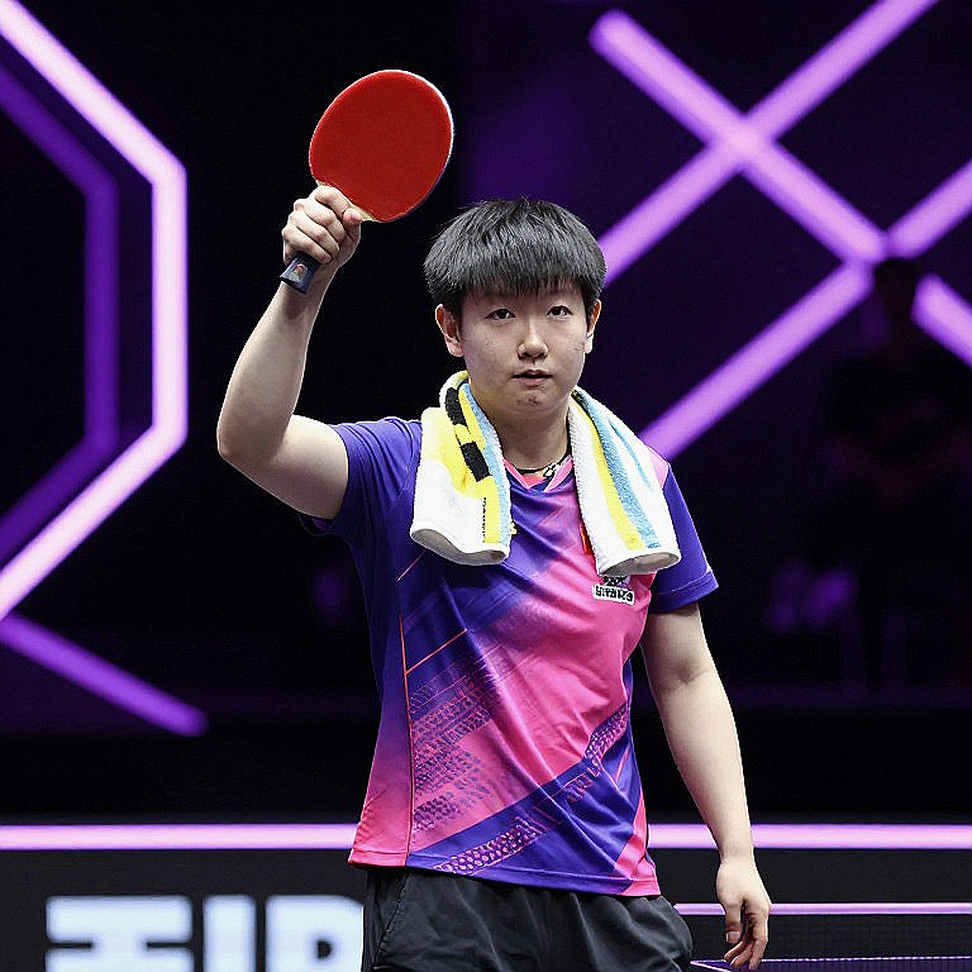
A training hall in Skopje, four days in mid-September, and a woman who left the table more than a decade ago still standing at the centre of every frame. That is all the photograph tells. Behind it, the European Table Tennis Union statement confirms that a delegation of Chinese experts led by Zhang Yining worked in North Macedonia from 7 to 10 September, alongside the host country's young athletes and a group of Serbian players invited under a cooperation agreement between the two neighbouring associations.
Opening a sports news item, the first thing I do is look for numbers. Matches, sets, service-point win rate, sessions, training hours. This time there was nothing to find. Not one match was recorded. Not one player from North Macedonia or Serbia was named. Not one specific technique was described. Not one blade or rubber brand appeared. To someone used to reading table tennis through spreadsheets, that absence is itself a data point.
The event itself, read purely as an event, is compact. The Table Tennis Association of North Macedonia hosted. The Chinese experts shared expertise, training methodology and experience. The emphasis was placed on youth development and the long-term pathway for athletes. The statement calls this the first visit of its kind, an important milestone, an investment in the future.
Zhang Yining is the reason this item is read far beyond the Balkans. She won four Olympic gold medals across 2026 and 2026, including two consecutive women's singles titles, and retired in 2026. Now past forty, she appears not as an active competitor but as an expert ambassador. The value she brings lies in historical prestige, not in current competitive data.
What stands out is the structure. A small Balkan association, a neighbouring association with a deeper table tennis base, and a Chinese training institution. Three parties, one regional cluster model. North Macedonia is the venue, Serbia the bridge, China the supplier of knowledge. Anyone who has followed the sport's development programmes will recognise the organisational craft here: pick a small anchor point, pull in a larger one, then seed the whole region.
Four days. One legend. Two associations. Not a single ranking point. Not a single metric published.
So what exactly is being carried out? The wording in the statement deserves close reading: “training methodology”, “professional training methods”, “technical improvement”. All of it sits at the system level, not the detail level. No specific drill, no footwork pattern, no grip adjustment is named. What is exported sits at the level of system, not secret. Data hides nothing; we simply have not arranged it in the right order.
From my experience tracking Chinese table tennis training programmes, I would assume the package includes a few familiar components: multi-ball drilling systems, patterned footwork routines, structured sparring-partner work, and intensity management across a training week. I flag this as inference, not fact. None of it is confirmed in the statement, and a four-day clinic is not enough to transfer such a system in full.
China has a very clear-headed reason for doing this. A sport dominated by a single nation loses commercial value. Broadcast rights fall, sponsorship contracts shrink, smaller federations lose the incentive to invest. Proactively sending experts abroad, commonly known as the wolf-raising programme, both expands the market for table tennis and reinforces China's central position in the sport's governance system. The benefit is calculated, not charitable.
Quantify it, though, and the picture is far smaller than the language. A player who reaches the world's top group typically accumulates eight to twelve years of structured training, the equivalent of several thousand hours at the table. Four days of coaching accounts for less than one-thousandth of that path. Treat the visit as a pure technical-transfer channel and expectations must be set very low.
The real channel lies elsewhere. The greatest value of those four days is not the technique transmitted, but the way they lower the psychological cost for a junior player to believe this road has a destination. In small federations, the number one problem is usually keeping people, not teaching them. An Olympic gold medallist standing beside the practice table changes how a thirteen-year-old prices their own sport.
Based on my experience tracking matches and youth events, the biggest drop-off point for federations without elite-level coaches tends to fall between thirteen and fifteen. That is when opportunity cost spikes: schooling, another sport, or simply running out of belief. In 2026 I calculated a pressure index for an U20 football tournament and my colleagues laughed; the method does not change when the sport changes. To know whether a development programme works, you have to measure at exactly that drop-off point.
The counter-intuitive part sits here. China proactively raising the Balkan regional floor, judged by pure competitive logic, is an act that erodes its own advantage. Such a programme only makes sense when the goal is not to preserve a gap but to preserve the sport's vitality. Anyone reading this event as a simple communications win will miss the most interesting part.
It is also worth separating two layers of information in the report. The factual layer covers dates, venue, delegation composition, and the participation of Serbian juniors. The evaluative layer covers phrases such as important milestone, first of its kind, investment in the future. The first layer is trustworthy. The second is the organiser's framing and should be discounted until numbers accompany it. The visit happened; its scale has yet to be demonstrated.
Even if Balkan table tennis improves in three to five years, attributing that to four days in Skopje would remain unsupported. Correlation is not causation. To isolate the variable you need at least two independent data streams: age-group registration numbers, and the count of locally trained coaches. The statement supplies neither.
The biggest risk in this model is dependency. Isolated visits, with no mechanism for training local coaches, tend to produce a glow that fades. A multi-year agreement, or a coach-certification programme supported by the Chinese side, would signal that this is real investment. Without either, the milestone quickly becomes a line in a funding dossier.
Table tennis does not obey emotion, but it always obeys probability. For a four-day programme, the probability of a technical leap at national-team level is low; the probability of a modest improvement in youth retention is medium; the probability that the programme is repeated depends entirely on the resources of the two associations. Those three probabilities should be tracked separately, with three separate datasets.
From a four-day clinic in Skopje, I read ten years ahead for Balkan table tennis, provided the programme is repeated and measured. Four signals to watch: a second visit, a list of certified local coaches, the number of North Macedonian and Serbian players appearing at European youth events, and the footprint of Chinese training institutions in other associations across the region.
Crisis exists not to be feared, but to have its formula rewritten. For small federations, the old formula was waiting for a rare talent; the formula now being tested is importing a system and measuring the results yourself. At forty-three, I still dig for the pieces the market has forgotten. The world map of table tennis is not redrawn on a podium, but in empty training halls on a September afternoon.