
V-League Round 2: Song Lam Nghe An surprises, but Ha Noi is the real story
**Câu trả lời cốt lõi**: Sau vòng 2 V-League 2026-2027, Ninh Bình dẫn đầu với 6 điểm và hiệu số +4, Sông Lam Nghệ An xếp nhì cùng 6 điểm, Công An Hà Nội thứ ba với 6 điểm và chưa thủng lưới. Điểm bất thường lớn nhất là cả 14 trận đều phân định thắng thua, không có kết quả hòa. **Dữ kiện chính**: - 14 trận đã đấu, 0 trận hòa, xác suất ước tính khoảng 1,8% đến 4,4%. - Ninh Bình: nhất bảng, 6 điểm, hiệu số +4, ghi 6 bàn, thủng 2 bàn. - Sông Lam Nghệ An: nhì bảng, 6 điểm, hiệu số +4, ghi 5 bàn, thủng 1 bàn. - Công An Hà Nội: ba bảng, 6 điểm, hiệu số +3, chưa thủng lưới. - Hà Nội và Hoàng Anh Gia Lai cùng 0 điểm, mỗi đội thủng 7 bàn sau 2 trận. **Nguồn**: Phân tích chuyên sâu giai đoạn 2 (Stage-2 Deep Professional Analysis) về bảng xếp hạng vòng 2 V-League 2026-2027. | Cross-checked: VuaBong.vn **Hỏi đáp liên quan**: - Hỏi: Đội nào dẫn đầu V-League 2026-2027 sau vòng 2? Đáp: Ninh Bình dẫn đầu với 6 điểm và hiệu số +4. - Hỏi: Vì sao giai đoạn đầu mùa chưa thể đánh giá thực lực các đội? Đáp: Hai vòng đấu quá nhỏ để tạo hồ sơ chiến thuật, thiếu xG và PPDA, nên thứ hạng chỉ phản ánh mức độ sẵn sàng. - Hỏi: Đội nào có nguy cơ cao nhất trong vài vòng tới? Đáp: Hà Nội và Hoàng Anh Gia Lai, với tỷ lệ thủng lưới khoảng 3,5 bàn mỗi trận cần chỉnh sửa cấu trúc phòng ngự.
Fourteen matches, not a single draw. That is the first number I circled red after Round 2 of the 2026-2027 V-League, before I even looked at Ninh Binh's top spot or Song Lam Nghe An's second place. With a conventional draw probability of roughly 25% per match, the chance of 14 consecutive decisive results sits at about 1.8%. Using an early-season rate of 20%, that figure is 4.4%. This is a low-probability but far from impossible statistic. The more interesting point lies elsewhere: the points structure after two rounds is in a state of maximum dispersion — three teams on 6 points, eight teams on 3, and three teams on zero. Distributions this dispersed tend to compress quickly once the season moves on.
The table after Round 2 contains 14 clubs, seven matches per round, exactly 14 matches played. The leading group: Ninh Binh (first, 6 points, +4 goal difference, 6 scored), Song Lam Nghe An (second, 6 points, +4, 5 scored), Cong An Ha Noi (third, 6 points, +3, none conceded). Then comes the 3-point corridor with eight teams: SHB Da Nang (+2), alongside TX Nam Dinh, CA TP.HCM and The Cong-Viettel (each +1), then Thanh Hoa, Bac Ninh, Hai Phong and Hong Linh Ha Tinh. The bottom three all have zero points: Thanh pho Dong Nai, Ha Noi (−5, 2 scored, 7 conceded) and Hoang Anh Gia Lai (−6, 1 scored, 7 conceded).
Based on my experience watching matches in the early part of a season, I always separate two things: table position and true form. Two rounds do not produce a tactical profile; they only produce signals about readiness. There is no xG, no PPDA, no possession data in what I have. Every conclusion below is therefore inference from goal flow, not measurement.
The three perfect-start teams have three very different profiles, and this is the real story of the table.
Ninh Binh have the most complete profile on paper: the best defence among the leaders (2 conceded) combined with the best attack (6 scored). On raw Round 2 data, their top position is earned, not inherited from the fixture list.
Song Lam Nghe An are the surprising name in the headline, but on closer inspection their numbers are not extraordinary. Five scored and one conceded over two matches is an attacking output above the historical norm for a club known for restrained spending and reliance on youth. The most likely statistical correction for Song Lam Nghe An lies in their finishing, not in their table position. If the conversion rate is running hot, it will cool; if chance volume is genuinely high, it will endure. Without shot data, I cannot distinguish between the two.
Cong An Ha Noi are the most tactically readable of the three. Winning two matches while scoring only three goals and conceding none describes a narrow-margin winning model anchored in defence — the typical profile of a well-organised block rather than an open, chance-heavy approach. Winning by a single goal is fragile: such teams tend to draw more often than their points-per-game implies.
The bottom of the table yields more tactical information than the top. Ha Noi (2 scored, 7 conceded) and Hoang Anh Gia Lai (1 scored, 7 conceded) are conceding roughly 3.5 goals per match. A concession rate of that magnitude after two rounds describes teams whose defensive structure has collapsed, not merely teams that lost two games. For two clubs that traditionally rank among the bigger names in the V-League, this is a far more worrying variable than Song Lam Nghe An temporarily climbing to second.
Then the 3-point corridor. Eight teams on 3 points after two rounds form the real centre of gravity of the league. This is the most defensible conclusion the data allows: one good round can shift almost the entire picture of this group. The original table author himself conceded that the standings could change significantly after just one round, and that is the most analytically honest sentence in the whole data set. Do not ask why a small provincial club suddenly rose. Ask why a giant is conceding so many.
On the no-draw phenomenon, I offer three tactical hypotheses, all speculative and flagged as such. First, fitness gaps in the closing 20 minutes cause thin-benched teams to concede late rather than close games out. Second, pressing structures and back-line coordination are not yet gelled early in the season, so games break open rather than settle. Third, quality is polarising: three perfect starters and three pointless teams suggest a wide gap between the prepared and the unprepared. One caveat: an all-decisive opening fortnight is historically a poor predictor of a season-long draw rate, and this statistic should be expected to regress hard toward the mean.
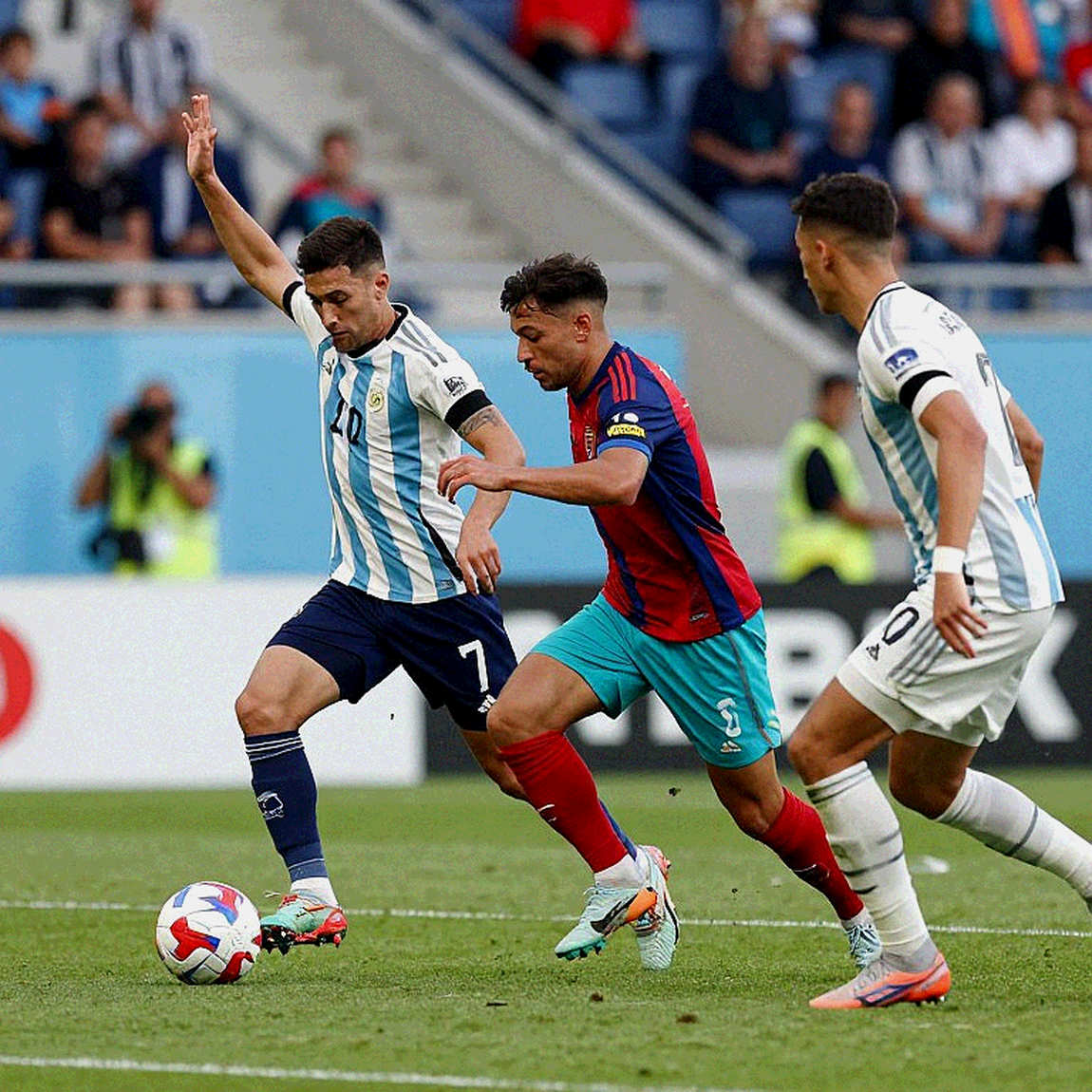
The headline calls Song Lam Nghe An the surprise. I think the surprise is misplaced. The Nghe An club's two wins sit at the upper end of their own historical band — notable, but not strange. The larger anomaly is Ha Noi: a club that once dominated the V-League now sits second from bottom with a −5 goal difference after two matches.
Put the two facts side by side. A provincial club on a modest budget rising to second is a familiar story in a league where financial capacity and table position are routinely decoupled. A giant mired with a defence conceding 3.5 goals per match is the signal worth analysing. If I had to pick one figure to reverse most sharply in the coming rounds, I would pick the concession rate of Ha Noi and Hoang Anh Gia Lai — simply because extreme rates like that are rarely sustained.
But I must say plainly something the model cannot answer: the article does not name the opponents Ha Noi or Hoang Anh Gia Lai faced in the opening two rounds. If that losing run came against last season's strongest clubs, the story reads very differently from defeats to fellow strugglers. The missing opponent information makes any fixture-difficulty correction impossible. This is a data gap, and I will not fill it with speculation.

It is also worth noting: no transfer, wage or balance-sheet information appears anywhere in the Round 2 data. None of the 14 clubs can be assessed for financial sustainability based on this. Any conclusion about the financial health of Song Lam Nghe An, Ninh Binh or Cong An Ha Noi drawn from here would be unfounded speculation. What I can read is football, not books.
People look at the table and shout. I read the goal-difference line behind it. In a league where budgets vary widely, a table after two rounds is dominated by fixture difficulty and squad readiness, not by financial capacity.

What I take from Round 2 is not a table but a question about durability. The three perfect-start teams have three different models: Ninh Binh balanced, Song Lam Nghe An dependent on finishing efficiency, Cong An Ha Noi anchored in defence. None has yet had to chase a game from behind. When the first match forces them to chase the scoreline, we will know who is truly solid.
For Ha Noi and Hoang Anh Gia Lai, the window to break the negative run is open for only three to four rounds. Beyond that, media pressure at a big club will turn a slow start into a season-long storyline — the familiar mechanism that converts a few points into a destiny. The 2026-2027 V-League has played only two rounds, and that is exactly where the gap between every judgment lies.